Clear Sky Science · en
Curing the brain: in search for new astrocyte-specific therapies
Why Brain Support Cells Matter for Everyday Life
The article explores a surprising idea: many brain disorders may be better treated if we stop looking only at nerve cells and start paying attention to their lesser-known partners, astrocytes. These star-shaped support cells help keep the brain’s chemistry stable, defend it from injury, and even shape our ability to think and remember. Because astrocytes go wrong in almost every major brain disease—from stroke and dementia to depression and chronic pain—the authors argue that new medicines should be designed specifically with these cells in mind.
The Hidden Workforce of the Brain
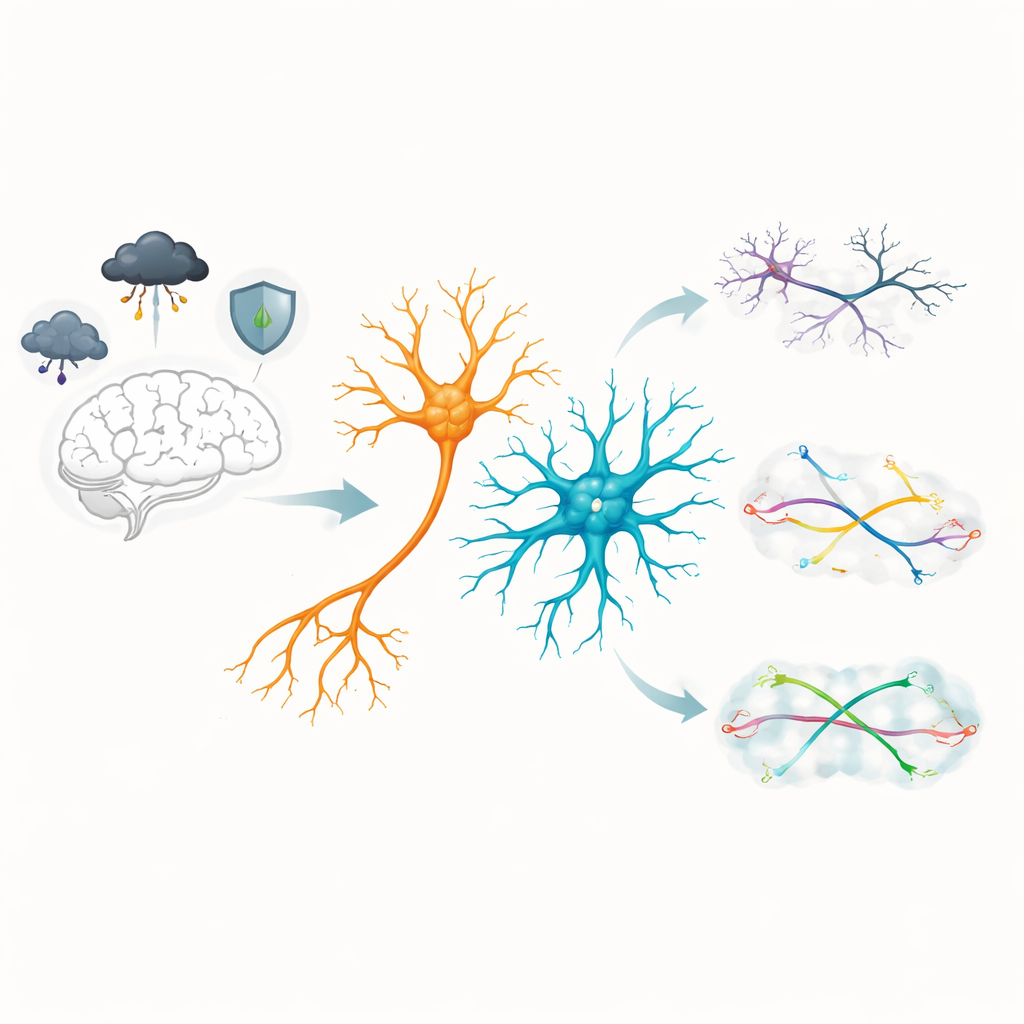
For more than a century, brain science has focused mainly on neurons, the cells that send electrical signals. Yet neurons are outnumbered by neuroglia, a broad family of support and defense cells. Astrocytes are the most versatile members of this family. They control the levels of key chemicals, recycle neurotransmitters, feed neurons with energy, mop up harmful molecules, and help maintain the barrier that protects the brain from the bloodstream. Each astrocyte extends thousands of fine processes that wrap around synapses and blood vessels, forming an intimate bridge between brain activity and brain metabolism. Because they sit at this crossroads, even small changes in astrocyte function can ripple through entire neural networks.
From Simple Helpers to Human Specialists
Astrocyte-like cells appeared early in animal evolution, but they have become especially complex in the human brain. Compared with rodents, human astrocytes are larger, send out more branches, and show distinct gene activity patterns. These evolutionary upgrades seem to have gone hand in hand with the rise of sophisticated cognition—and with vulnerability to uniquely human brain disorders. Modern single-cell genetic tools reveal that astrocytes are not one uniform type: they form many subgroups, tuned to particular brain regions and tasks. The authors propose new ways to classify these subtypes by stripping away generic “stress” signals and focusing on stable molecular fingerprints that define each astrocyte’s identity.
How Astrocytes Shape Brain Balance and Reserve
Healthy thinking depends on a delicate balance between excitation and inhibition in brain circuits. Astrocytes strongly influence this balance. They clear away excess glutamate, the main excitatory messenger, and supply precursors for both glutamate and GABA, the main inhibitory signal. They buffer potassium and chloride ions so that electrical signals fire properly, and they generate low-level “tonic” inhibition through GABA release. Astrocytes also underlie the brain’s “cognitive reserve”—its capacity to resist aging and disease. By supporting synapse formation and maintenance, fueling neurons, limiting oxidative stress, and helping the brain adapt to injury, astrocytes increase resilience. When these homeostatic roles weaken with age or chronic stress, the brain becomes more fragile, even before obvious neuron loss occurs.
Astrocytes in Disease: Too Reactive, Too Weak, or Both
In brain disorders, astrocytes do not simply turn “on” or “off.” They pass through a spectrum of altered states. After acute injuries such as trauma or stroke, they proliferate and reshape themselves to form a protective border around the lesion, helping to restore barriers and limit damage. In chronic conditions—Alzheimer’s disease, Parkinson’s disease, Huntington’s disease, epilepsy, depression, schizophrenia, neuropathic pain and others—astrocytes can become abnormally reactive, structurally shrunken, functionally exhausted, or even outright toxic. Poor glutamate clearance, weak potassium buffering, excessive release of inflammatory factors or GABA, and loss of vascular support are recurring themes. The same disease may show both overactive and atrophic astrocytes in different regions or stages, which helps explain why traditional neuron-only drugs often fall short.
New Windows into Astrocytes in the Living Brain
Until recently, most knowledge about astrocytes came from animal studies or human autopsies. The development of new PET tracers now allows researchers to image astrocyte activity in living people. Several tracers bind to enzymes or receptors that are enriched in reactive astrocytes, revealing when and where these cells become activated in conditions such as epilepsy, multiple sclerosis, traumatic brain injury, Alzheimer’s and Parkinson’s disease, major depression and even long-lasting symptoms after COVID-19. In Alzheimer’s, for example, imaging suggests an early “wave” of astrogliosis that appears years before memory loss, followed later by a second wave tied to more advanced pathology. These tools could help diagnose disease earlier and track how astrocyte-targeted treatments work over time.
Designing Treatments that Talk to Astrocytes
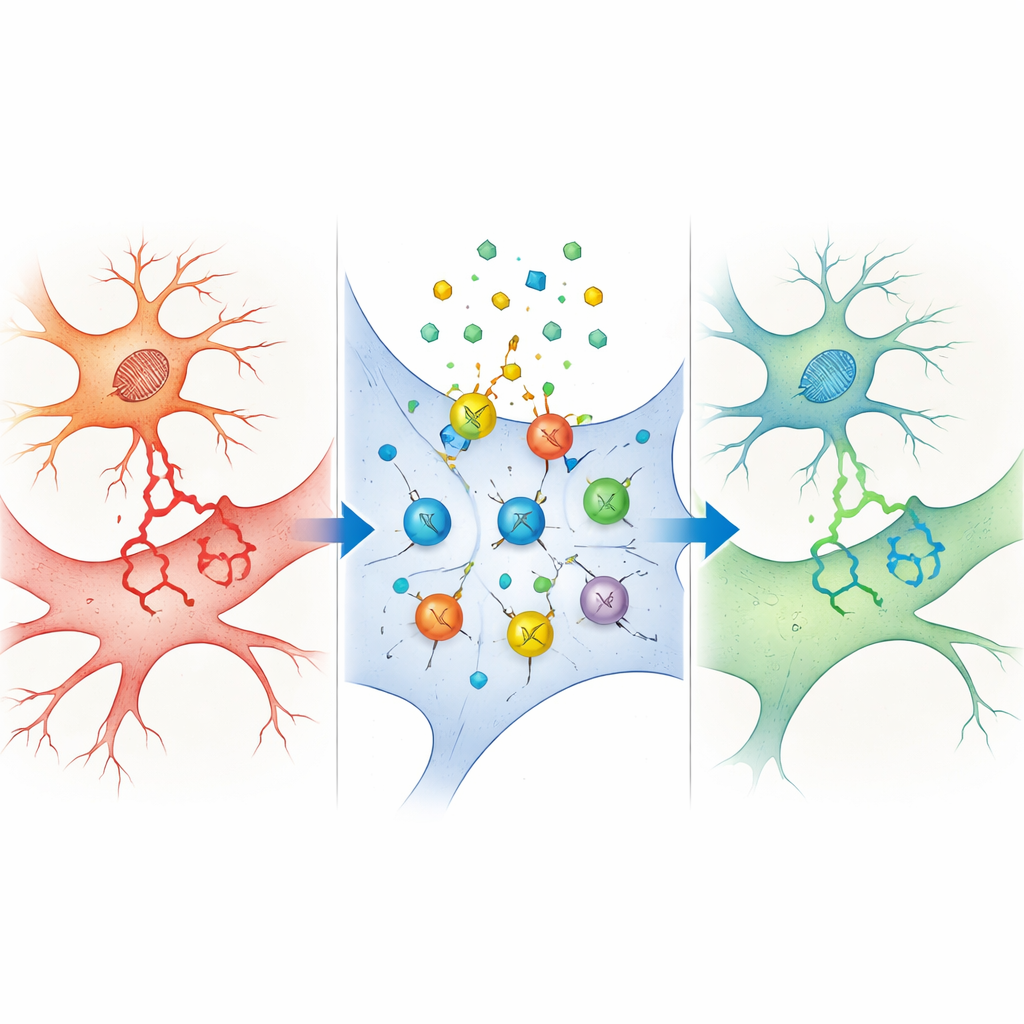
Because astrocytes sit at the center of so many disease mechanisms, the authors outline a menu of promising therapeutic targets. Some approaches aim to tune structural proteins that govern astrocyte reactivity, while others boost glutamate transporters to prevent excitotoxic damage. Blocking specific membrane channels can reduce harmful spread of injury signals or dampen chronic pain. Inhibiting certain astrocytic enzymes may lower oxidative stress, cut excess GABA release, or re-route metabolic cycles to clear toxic proteins such as beta-amyloid more safely. Modulating water channels that control brain swelling, receptors that sense inflammatory or toxic cues, and pathways that adjust astrocyte energy metabolism and waste clearance are additional strategies. Taken together, the review argues that future brain medicines will be more effective when they deliberately engage astrocytes—restoring their homeostatic and protective roles instead of leaving them as overlooked bystanders.
Citation: Verkhratsky, A., Lee, C.J., Chun, H. et al. Curing the brain: in search for new astrocyte-specific therapies. Exp Mol Med 58, 1086–1127 (2026). https://doi.org/10.1038/s12276-026-01712-4
Keywords: astrocytes, neurodegeneration, brain inflammation, glial imaging, astrocyte-targeted therapies