Clear Sky Science · en
Connecting foreign language enjoyment and teachers’ metadiscourse: a teacher–student rapport perspective
Why the Feel of the Classroom Matters
Anyone who has taken a language class knows that the mood in the room can make speaking up feel either exciting or terrifying. This study looks at what teachers actually say in class and how their way of talking can make learning a foreign language more enjoyable for university students. Rather than focusing on tests or textbooks, it asks how small moments of encouragement, gentle guidance, and friendly tone help students feel relaxed, respected, and willing to participate.
Enjoyment as a Fuel for Learning
The researchers start from the idea that positive feelings in class are not just a bonus but a powerful support for learning. When students enjoy their foreign language lessons, they are more likely to stay motivated, join activities, and make progress. Earlier work has shown that enjoyment depends both on who the students are and on what happens around them in class. Teacher personality, classroom atmosphere, and even the way a teacher smiles or jokes have all been linked to how much students enjoy learning another language.
How Teacher Talk Shapes Relationships
A central focus of the article is teacher–student rapport, which means the sense of ease, trust, and mutual respect between teachers and learners. Rapport is not fixed; it is built turn by turn during everyday classroom talk. The authors draw on a model that describes how people protect one another’s dignity, sense of fairness, and feeling of belonging during conversation. In this view, teacher talk does double duty: it explains course content and also signals whether students’ efforts are noticed, their opinions welcomed, and their mistakes treated kindly.

Looking Closely at Teacher Talk
To explore these ideas, the study followed 288 second-year English majors at a Chinese university who were taking a public speaking and debate course. Students completed a questionnaire about how much they enjoyed their English classes. The researchers then chose two classes with clearly different enjoyment levels and recorded about 900 minutes of lessons taught by two instructors. They examined specific phrases teachers used to guide, comment on, and react to classroom events, such as asking if everyone could follow, giving praise, softening criticism, or inviting students to take part.
What Happened in High-Enjoyment Classes
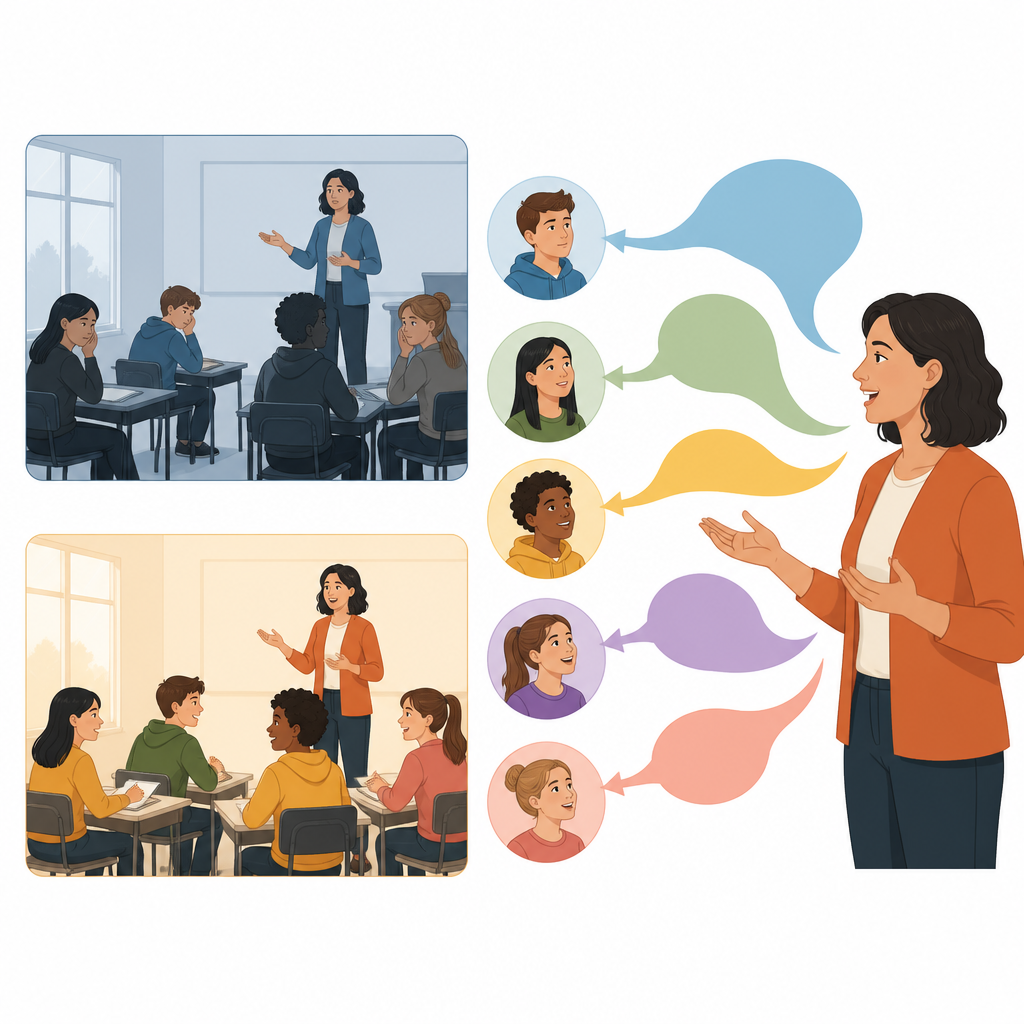
In the class where students reported the highest enjoyment, the teacher used this kind of guiding and relational talk more often and in a wider variety of ways. She frequently signaled what would happen next, linked ideas together, and gave examples to make topics easier to grasp. Just as importantly, she used many friendly cues like “we” and “us” to highlight that teacher and students were on the same team, and she offered quick words of praise or agreement when students contributed. When students stumbled or had not prepared, she softened her reactions, shifted tasks, and created a face-saving way for them to stay involved rather than feel ashamed.
Building a Fair and Welcoming Space
The detailed classroom scenes show that these choices in wording helped students feel that their rights to fairness, inclusion, and respect were taken seriously. The teacher invited different voices into the discussion, adjusted questions when the room fell silent, and used humor and informal address to reduce distance. By carefully steering topics and tone, she turned potentially tense moments into chances for shared understanding and laughter. The study does not claim that her way of talking alone caused higher enjoyment, but it shows that rich, considerate teacher talk goes hand in hand with a warmer classroom climate.
What This Means for Language Learners and Teachers
In plain terms, the article concludes that how teachers talk in class is a powerful tool for making language learning feel safe and enjoyable. When teachers guide conversations clearly, include students in decisions, and respond with warmth and tact, students are more willing to speak, take risks, and enjoy using the language. The findings suggest that paying attention not only to what is taught but also to how it is said can help create language classrooms where students thrive both emotionally and academically.
Citation: Yang, J., Luo, J. & Fu, Q. Connecting foreign language enjoyment and teachers’ metadiscourse: a teacher–student rapport perspective. Humanit Soc Sci Commun 13, 708 (2026). https://doi.org/10.1057/s41599-026-07061-x
Keywords: foreign language enjoyment, teacher talk, classroom rapport, metadiscourse, language teaching