Clear Sky Science · en
Does greenization pay off? Insights from an economic vitality perspective
Why greener business matters for everyone
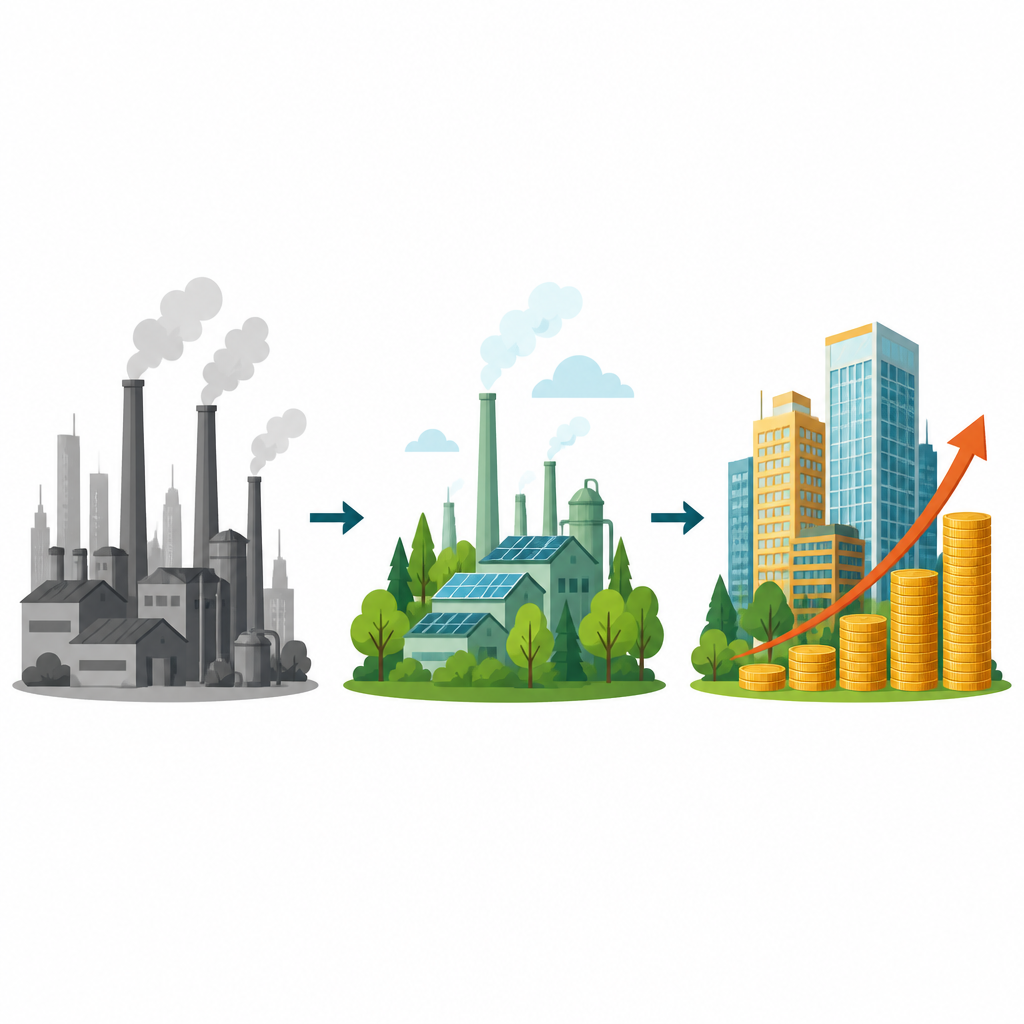
As climate change and pollution reshape our world, many wonder whether companies can really go green without hurting their bottom line. This study looks at thousands of Chinese firms over a decade to ask a simple question with big consequences for jobs, savings, and the wider economy: when businesses clean up their act, does it actually make them stronger and more resilient, or is it just a costly gesture?
Turning green efforts into business strength
The researchers define “greenization” as weaving environmentally friendly ideas into how a firm is run, from cleaner production lines to better resource use and greener investment choices. Instead of treating this only as extra equipment or one-off projects, they view it as building up a stock of “green knowledge” inside the firm: know-how, routines, and management habits that help reduce harm to the environment while supporting growth. Using data on 4584 listed companies in China between 2013 and 2023, they track how often firms talk about green topics in annual reports and link this to hard numbers on profitability, market value, productivity, and supply chain resilience.
Evidence that going green can pay off
Across many different tests, firms that engage more deeply in greenization tend to perform better. On average, greener companies show higher returns on their assets, are priced more favorably by the stock market, and use their resources more efficiently. These patterns hold up when the authors control for factors such as firm size, debt levels, cash flow, ownership structure, and age, and when they adjust their models in multiple ways to rule out flukes. They also exploit policy changes like China’s low-carbon city pilots and national green credit rules as natural experiments, finding that stronger green push is followed by gains in long-term economic vitality rather than losses.
How green moves cut costs and win trust
A key finding is that greenization helps firms by trimming costs and improving their image with investors and the public. Cleaner technologies and smarter use of energy and materials shrink waste and operating expenses, freeing up money that can be channeled into research, development, and skilled staff. At the same time, better environmental, social, and governance (ESG) performance builds trust. Firms with higher ESG scores find it easier and cheaper to raise funds, including through green finance products, and enjoy higher market valuations. Interestingly, when firms only talk green without backing it up in practice, a behavior known as greenwashing, the market eventually punishes them with lower long-term value, suggesting that investors can tell the difference between real change and mere image polishing.
Digital tools and innovation as force multipliers
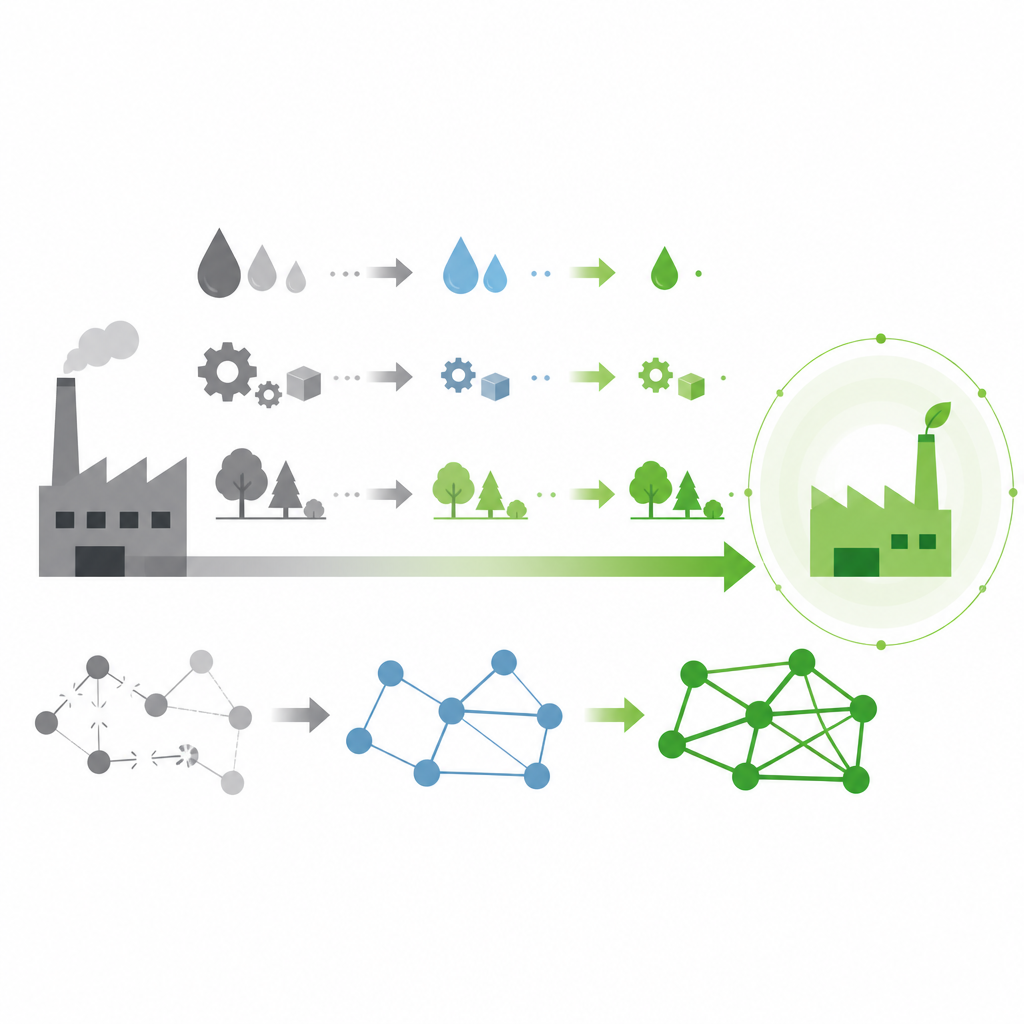
The study shows that digital transformation and innovation amplify the benefits of going green. Companies that use data tools, connected systems, and other digital technologies seem better at spotting where resources are wasted, coordinating green projects, and sharing knowledge internally and across their supply chains. Firms that invest heavily in new ideas and technologies also extract more value from their green moves. In the authors’ framework, digital systems act as “knowledge accelerators,” helping green know-how spread and deepen, while innovation turns that know-how into new products, services, and business models that support both growth and sustainability.
Not all firms gain equally
The advantages of greenization are not evenly shared. Larger companies and high-tech firms benefit the most in terms of profits, market value, and productivity. Big firms can spread the fixed costs of green upgrades over a wider base, have stronger ties to policymakers, and are better equipped to claim green subsidies and tax breaks. High-tech firms typically have stronger research teams and more skilled workers, making it easier for them to absorb and apply new green technologies. Smaller and more traditional firms still gain in productivity, but the boost to short-term profits and market value is weaker, especially once stricter national green finance rules are in place.
What this means for the wider economy
For a lay reader, the central message is straightforward: when done seriously, going green can help make firms more efficient, more trusted, and more resilient, not just more compliant. Real green action tends to reduce waste, support innovation, and strengthen supply chains, which in turn can protect jobs and savings during shocks. The study suggests that policies and business strategies that link environmental goals with digital tools and innovation are more likely to succeed. Rather than being a luxury or mere public relations, greenization emerges as a practical path for companies to stay competitive in a world where both markets and the planet demand cleaner ways of doing business.
Citation: Wu, G., Zhang, T. & Dong, A. Does greenization pay off? Insights from an economic vitality perspective. Humanit Soc Sci Commun 13, 709 (2026). https://doi.org/10.1057/s41599-026-07054-w
Keywords: green transformation, economic vitality, ESG performance, digital transformation, corporate innovation