Clear Sky Science · en
Turning the tide on emissions through circular economy practices, tourism development and innovation-driven climate mitigation
Why this research matters
As the world searches for ways to grow economies without overheating the planet, this study asks a simple question with big consequences: can smarter use of resources cut industrial emissions while still allowing tourism to thrive? By looking at countries that are already leaders in reusing materials and reducing waste, the authors explore how circular economy ideas, tourism, new technology, and human development interact to shape the carbon pollution that comes from making goods and services.
From take make waste to use again
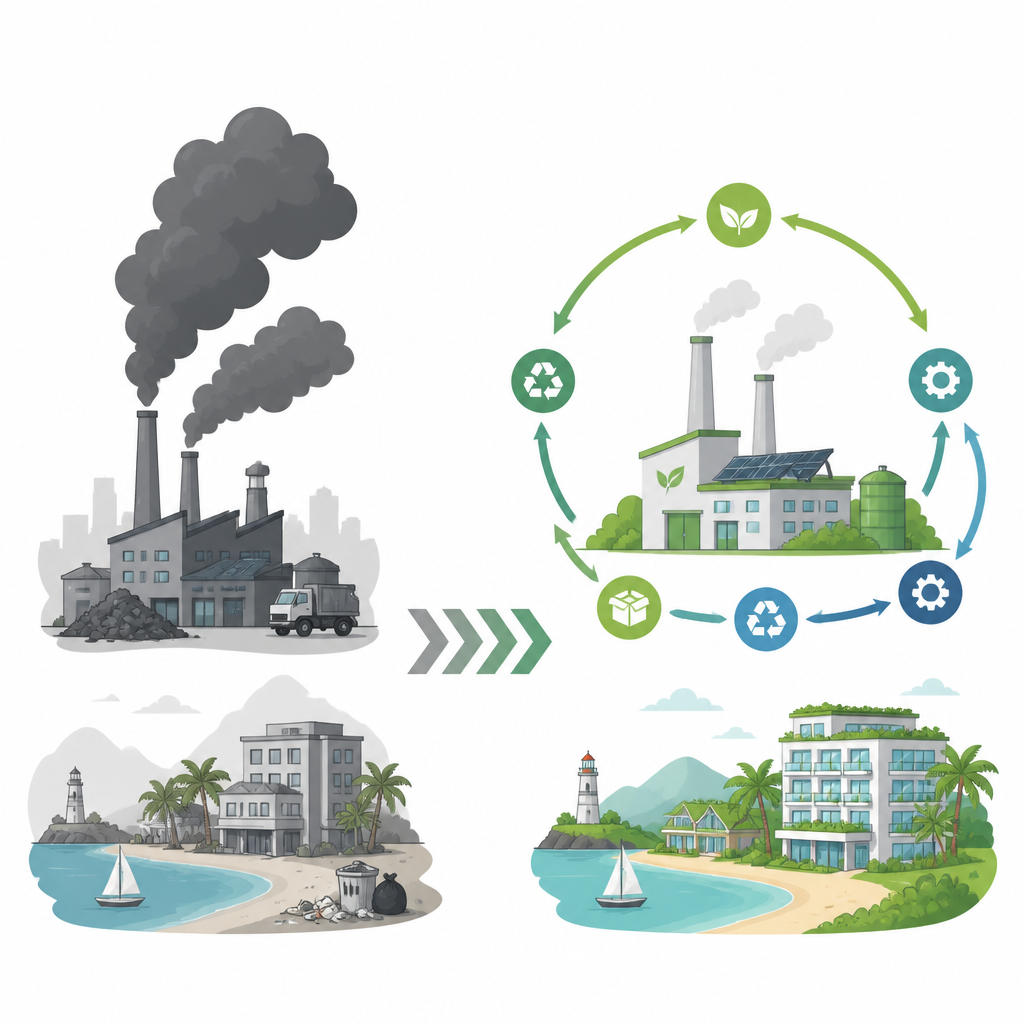
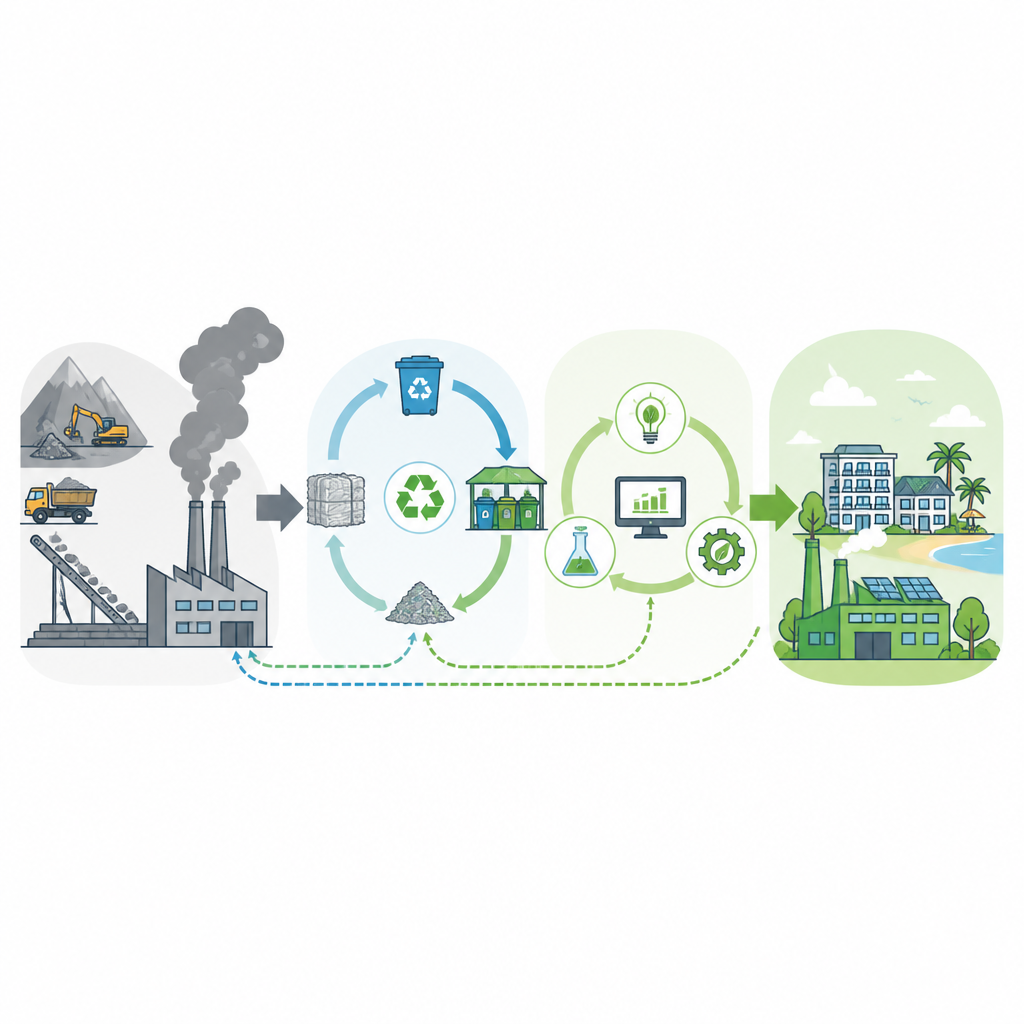
The circular economy challenges the old pattern of “take, make, and throw away.” Instead of extracting raw materials, turning them into products, and discarding them after a single use, circular thinking keeps materials in use for as long as possible through repair, reuse, and recycling. The study explains that this approach is not only about waste bins, but about redesigning production systems, planning for the long term, and involving citizens and businesses in more careful use of resources. These ideas fit closely with sustainable tourism, where destinations try to protect natural areas, limit pollution, and make local communities better off rather than worse.
Tourism as both pressure and opportunity
Tourism is one of the fastest-growing industries worldwide, and it consumes large amounts of energy, water, food, and building materials. More visitors usually mean more flights, more hotels, and more waste, all of which can push emissions higher. At the same time, tourism can encourage investments in cleaner transport, greener buildings, and better waste systems if governments and businesses choose that path. Because of this double-edged role, the authors argue that tourism is a key testing ground for circular ideas, where closed loops for food, water, and materials could lower the footprint of popular destinations.
How the study was carried out
The researchers examined data from 1991 to 2023 for six advanced circular economies, including several European nations, South Korea, and the United States. They combined information on production-based carbon emissions with measures of municipal waste and recycling (their circular economy indicator), tourist arrivals, research and development spending, natural resource revenues, internet use, and human development. Using a range of statistical models designed for long data series, they looked for long-term links and cause-and-effect patterns between these factors and emissions, both across the full group and within each country.
What they discovered
Across most of the countries, stronger circular practices are linked to lower production-based emissions over the long run, meaning that more recycling and better waste treatment tend to go hand in hand with cleaner production. Tourism, surprisingly, also shows a negative long-term relationship with emissions in many cases, suggesting that when destinations embrace greener practices, growth in visitors does not automatically raise pollution. Investment in research and development and better human development scores are associated with cleaner production as well, likely because they support new technologies, higher skills, and more public support for environmental rules. Natural resource revenues can help lower emissions when they are used to support cleaner infrastructure. In contrast, rapid growth in digital technologies often increases emissions unless energy systems are also cleaned up.
What it means for the future
For a general reader, the central message is clear: using resources more wisely really can help bend the emissions curve without shutting down tourism or economic growth. The study shows that in countries with strong recycling systems, smart policies, and investment in innovation and people, circular economy measures are already linked to cleaner production. At the same time, the results warn that digital growth and poorly managed tourism can still drive pollution upward. The authors call on policymakers to back circular tourism, steer research and resource revenues toward low-carbon solutions, and guide the digital boom with clean energy so that prosperity and a stable climate can advance together.
Citation: Mamirkulova, G., Imran, M., Zhang, H. et al. Turning the tide on emissions through circular economy practices, tourism development and innovation-driven climate mitigation. Humanit Soc Sci Commun 13, 689 (2026). https://doi.org/10.1057/s41599-026-07027-z
Keywords: circular economy, tourism emissions, green growth, resource recycling, innovation and R&D