Clear Sky Science · en
Impact of time poverty on sleep quality: an explanation based on the stress process model
Why Feeling Too Busy Matters for Your Sleep
Many people today feel there are never enough hours in the day. This study asks a simple but important question: does that constant rush actually harm how well we sleep? Using a large national survey of more than six thousand Chinese adults, the researchers show that feeling time-poor is closely tied to worse sleep. They also dig into why this happens, tracing a chain that runs from how we think about our lack of time, through our bodies and emotions, and finally into the quality of our rest at night.
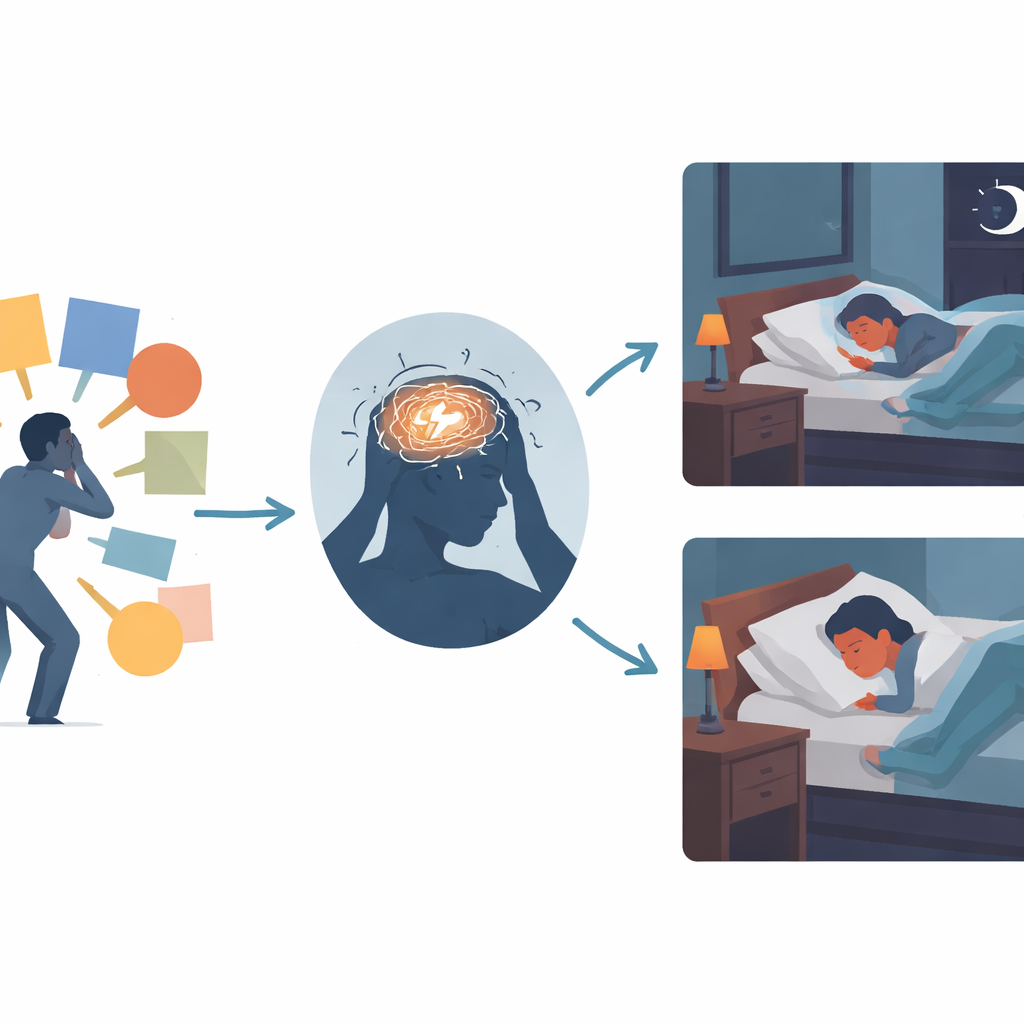
Living in Fast-Forward
The authors focus on “time poverty” as a sense of having too many tasks and too little time, especially when the pace and pressure of those tasks are high. Rather than counting only long work hours, they examine how intense and urgent daily demands feel—how quickly work must be done, how complex it is, and how much time pressure people experience. In modern China, as in many other countries, average work hours have risen and expectations of constant busyness have grown. The study treats this overload as a social stressor that can reach anyone—workers, caregivers, and others—not just people in demanding jobs.
How Time Pressure Turns Into Stress
To understand the link to sleep, the researchers draw on the stress process model, which describes how outside pressures become internal strain. In this view, time poverty is the external event, but what really drives stress is how people mentally evaluate their situation: do they see the demands as greater than their ability and time to cope? The survey measured this cognitive step with how strongly people agreed that they feel stressed by time urgency. Those who felt more squeezed for time were much more likely to report this kind of stressful appraisal. That negative way of viewing time demands then set the stage for changes in both body and mood.
What Happens to the Body and Mind
The team then looked at two kinds of stress responses. On the physical side, they asked people to rate their overall health. On the emotional side, they used a standard set of questions to measure symptoms of depression and anxiety. People with greater time poverty tended to see their health as poorer and reported more depressive and anxious feelings. In turn, worse self-rated health, higher depression, and higher anxiety were each linked to worse sleep quality. The analyses show that time poverty affects sleep both directly and indirectly, by first shaping stressful thoughts about time, which then erode physical well-being and emotional balance.
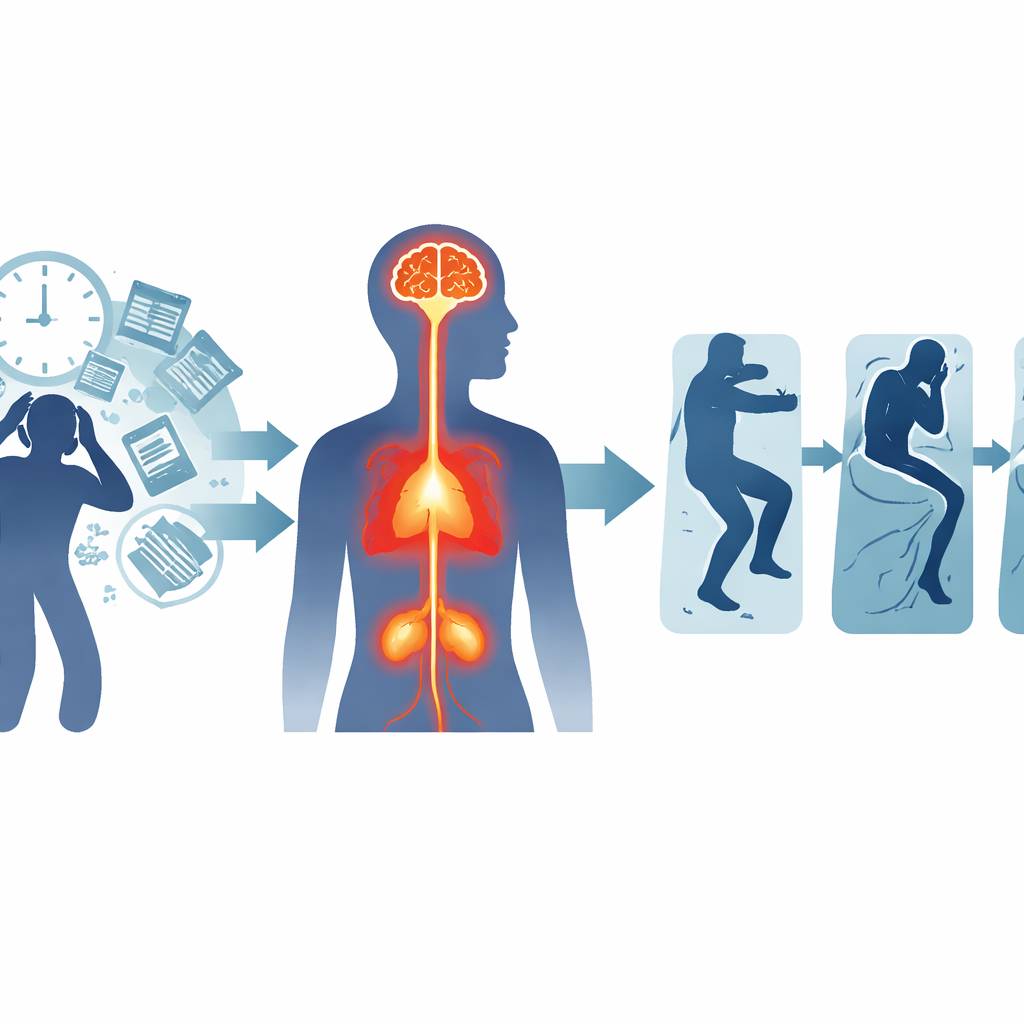
Which Pathways Matter Most
By running a series of chain mediation models, the researchers could estimate how much each pathway contributed. They found that time poverty has a clear direct association with poorer sleep, but an even larger share of its impact flows through the indirect routes. Stressful thinking about time combined with declining physical health accounted for about one sixth of the link, while chains running through depression and anxiety each explained a bit more than one tenth. Overall, physical health was the single strongest predictor of sleep quality in the model, stronger than depression or anxiety, highlighting how everyday strain can show up in the body before turning into full-blown illness.
What This Means for Everyday Life
For non-specialists, the message is straightforward: constantly feeling rushed is not just an inconvenience—it is a health risk that can rob you of good sleep. The study suggests that tackling time poverty is about more than shaving minutes off your schedule. How you interpret your busyness, the room you have to recover, and the support your workplace or family provides all shape whether time pressure turns into stress, bodily wear and tear, low mood, and restless nights. Interventions that improve time control, encourage healthier thinking about demands, and protect recovery time may all help people sleep better, even in a fast-paced society.
Citation: Liu, N., Wang, J. & Zang, W. Impact of time poverty on sleep quality: an explanation based on the stress process model. Humanit Soc Sci Commun 13, 565 (2026). https://doi.org/10.1057/s41599-026-07025-1
Keywords: time poverty, sleep quality, stress, mental health, workload