Clear Sky Science · en
Relationship between logistics resources and perceived performances in Vietnam logistics service industry
Why better logistics matter to everyday life
When you click “buy now” and a package arrives quickly and safely, a hidden web of trucks, warehouses, computers, and people has worked smoothly in the background. This paper looks at how logistics companies in Vietnam can use their internal strengths in technology and new ideas, together with social media, to give business customers more reliable, satisfying service. By understanding what really drives customers’ perceptions of performance, the study offers clues for making deliveries faster, information clearer, and relationships more trustworthy in a fast-growing economy.
Vietnam’s growing shipping backbone
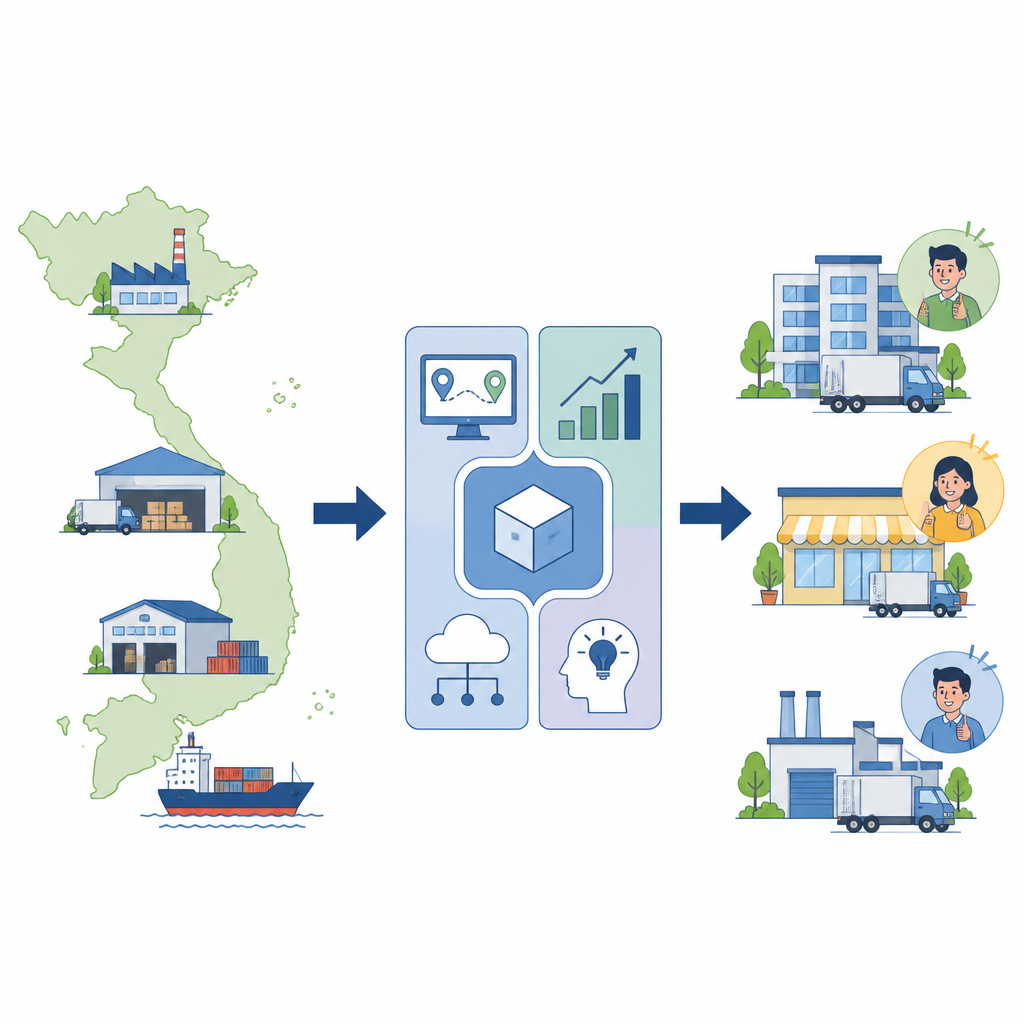
Vietnam’s logistics sector has expanded rapidly as the country trades more with the world and e-commerce takes off. Yet many local firms still provide mostly basic services and struggle with fragmented supply chains, limited money for upgrades, and high operating costs. The authors argue that to move beyond these limits, firms need to look inside their own organizations at the resources they already have, such as information technology systems and the ability to innovate, and then see how these can be turned into better service for customers and, in turn, better perceived performance.
From tools and ideas to service quality
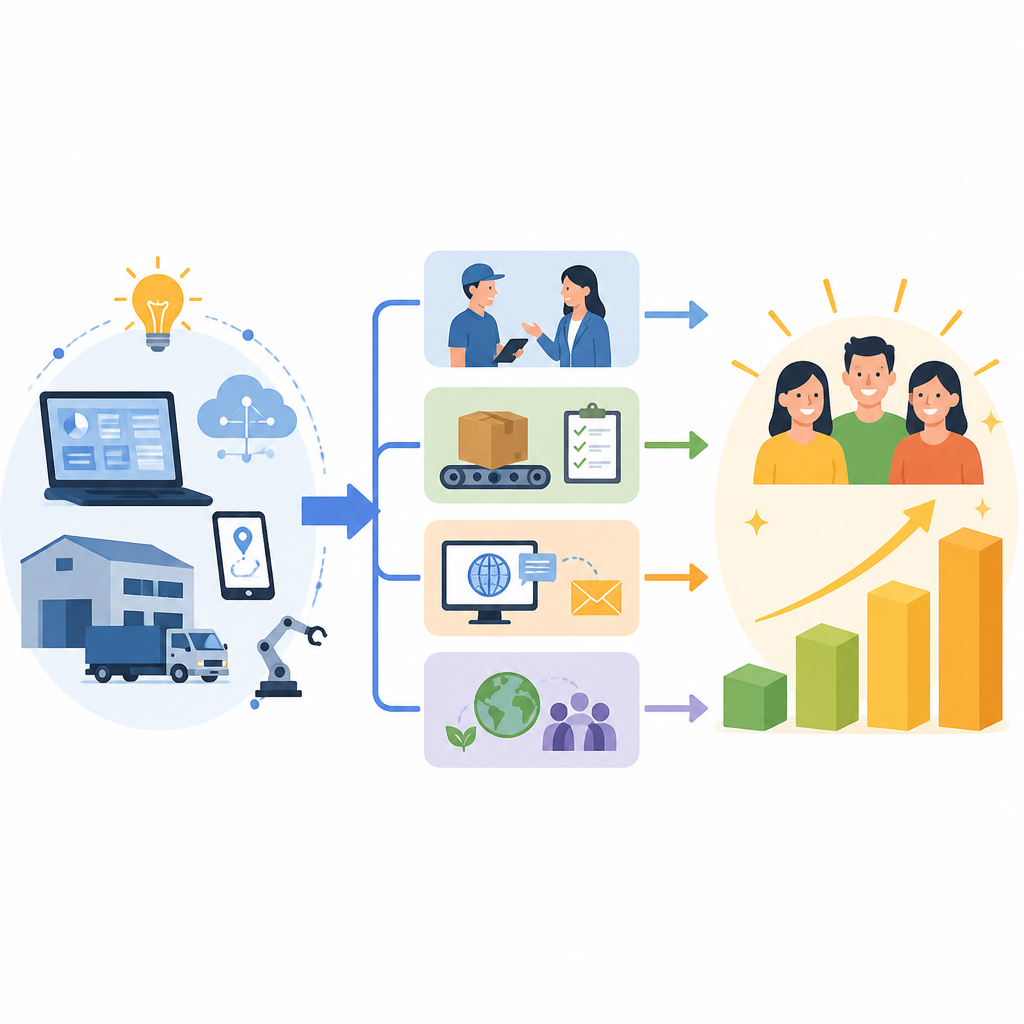
The study uses a framework that treats technology and innovation as key internal resources. Information technology covers things like tracking systems, digital communication, and data sharing across the supply chain. Innovation reflects how often a company tries new processes, service models, or problem-solving approaches. The authors propose that these resources first show their value by improving four practical aspects of logistics service quality: how well staff interact with customers, how accurately and promptly orders are fulfilled, how clear and reliable information is, and how responsible companies are toward society and the environment. When these four areas improve, customers are expected to feel more satisfied with their logistics provider.
How social media changes the relationship
Beyond what happens inside firms, the researchers highlight the rising role of social media. In this context, social networks are not just places for marketing messages but ongoing channels where firms and customers can share updates, solve problems, and build trust. The study suggests that when customers are more engaged with a logistics provider through social platforms, their satisfaction has a stronger effect on how well they think the company is performing overall. Social media, in other words, acts as a kind of amplifier: positive experiences spread more quickly, communication feels more responsive, and customers sense higher reliability and value.
What the survey of Vietnamese firms reveals
To test these ideas, the authors conducted interviews and then surveyed 474 business customers from major economic regions of Vietnam. Using statistical models, they found that both technology and innovation are clearly linked to better service quality across all four dimensions. Among these, accurate and smooth order fulfillment stands out as the strongest driver of customer satisfaction, followed by high-quality information, helpful personal contact, and visible social responsibility. In turn, satisfied customers report much higher perceived performance from their logistics providers, feeling that deliveries are timely, goods are intact, and the firm is attentive to their needs. The data also confirm that social media engagement significantly strengthens the link between satisfaction and perceived performance.
What this means for companies and customers
For a lay reader, the main takeaway is that customers’ impressions of how well a logistics firm performs are not just about trucks and warehouses. They depend on how technology and innovation improve everyday service touches, and on how actively firms connect with customers online. When logistics providers invest in digital tools, encourage new ways of working, train staff to communicate well, keep information transparent, and act responsibly toward society, their clients feel more satisfied and rate their performance more highly. Social media acts as a bridge that turns this satisfaction into a stronger sense of success. In a country like Vietnam, where logistics underpins much of the economy, these insights can help firms build more dependable, customer-centered services that benefit businesses and consumers alike.
Citation: Vo, T.N.L., Tran, V.D. & Nguyen, M.T. Relationship between logistics resources and perceived performances in Vietnam logistics service industry. Humanit Soc Sci Commun 13, 718 (2026). https://doi.org/10.1057/s41599-026-07006-4
Keywords: logistics service quality, information technology, innovation capability, social media engagement, customer satisfaction