Clear Sky Science · en
Trust and technology: how digital confidence shapes global economic performance and sustainable development
Why trust in the digital world matters
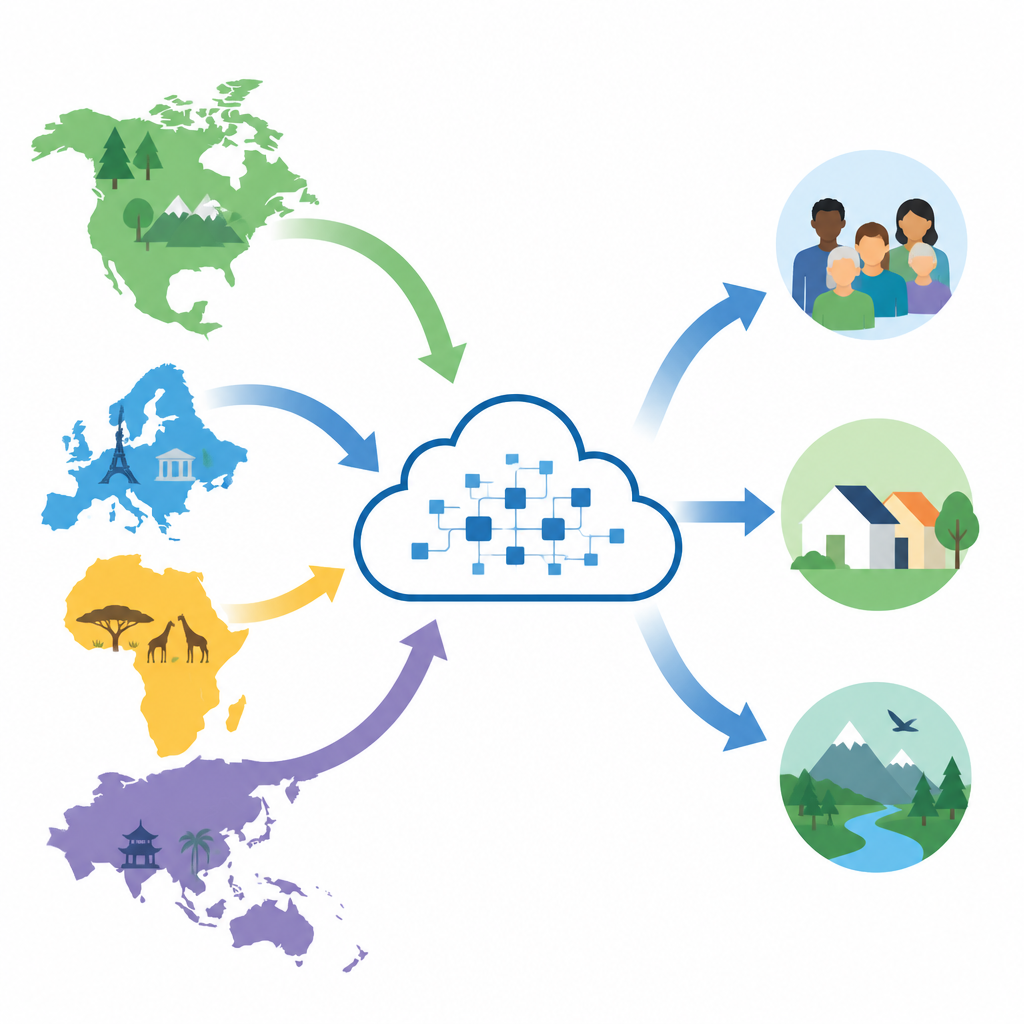
Every time we shop online, check a bank balance on a phone, or store photos in the cloud, we make a quiet judgment about whether the digital world is safe enough to use. This article explores how that everyday sense of confidence, or lack of it, shapes not only personal convenience but also how well countries grow their economies, improve people’s lives, and advance global goals for a fairer and greener planet.
The link between confidence and digital life
The authors start by explaining that modern technologies such as artificial intelligence, online finance, and smart energy systems can help societies become richer, healthier, and more sustainable. Yet this promise only materializes when people and organizations trust the digital systems they rely on. In practical terms, the study focuses on four visible signs of that trust: the use of secure servers that protect data, the strength of national cybersecurity, how many people can access their financial accounts online, and how common internet shopping is. Together, these signals capture whether citizens feel comfortable moving important parts of daily life into the digital realm.
Measuring trust across the globe
To see how these trust signals relate to national progress, the study uses data from the 2023 Network Readiness Index, which scores 134 countries on many aspects of digital development. Instead of looking at simple one-to-one links, the researchers employ a probabilistic mapping tool that lets them examine how several factors interact at once and how shifts in one area ripple through others. They focus on three broad outcomes that matter to ordinary people: overall economic performance, quality of life, and how strongly a country contributes to the United Nations Sustainable Development Goals, a shared roadmap for reducing poverty, protecting the environment, and strengthening institutions.
Online behavior as a window into the economy
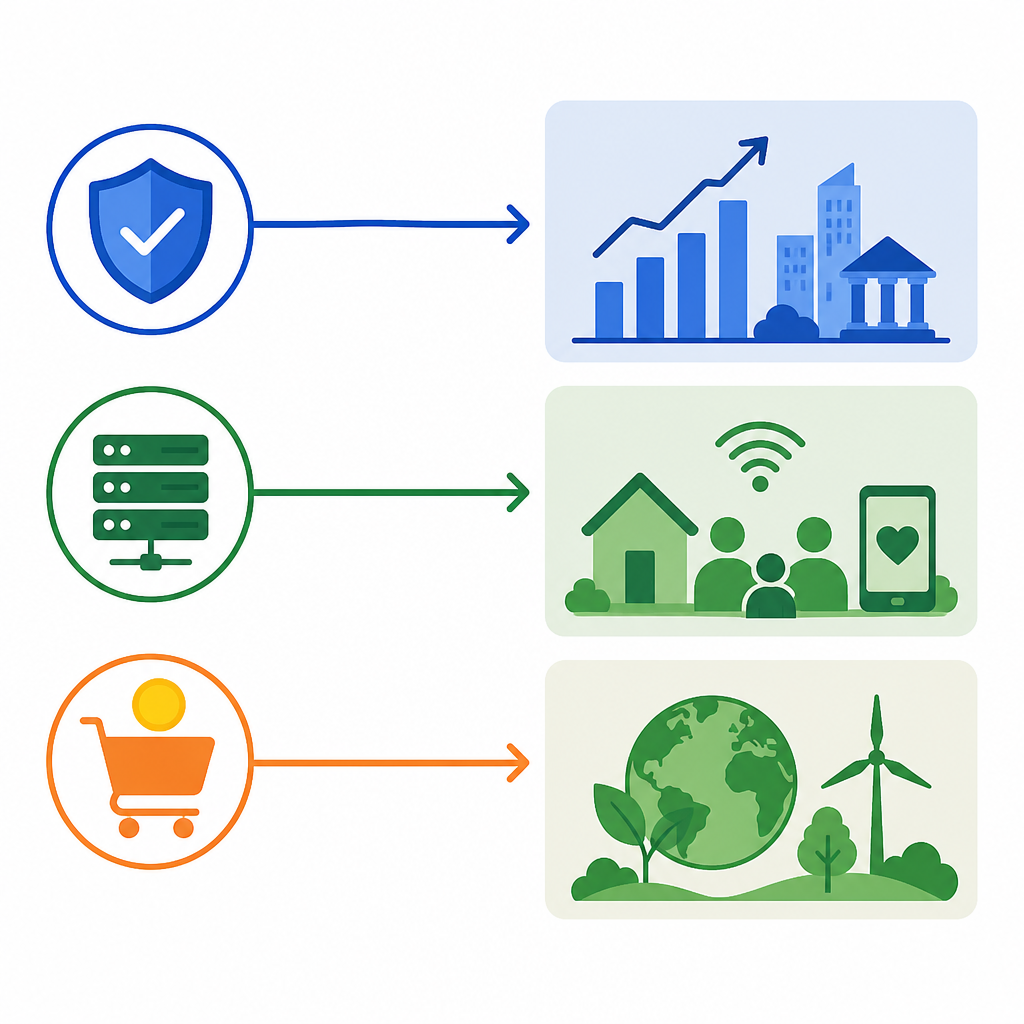
One of the clearest patterns appears in the economic results. Countries where internet shopping is common are far more likely to have stronger economies. This does not mean that clicking “buy” automatically raises national income, but it does show that widespread online commerce reflects deeper conditions: people feel safe sharing payment details, businesses have reliable digital infrastructure, and rules exist to protect users if something goes wrong. Access to online financial accounts also matters, signaling that households can save, borrow, and transfer money in flexible ways. Cybersecurity and secure servers are still important, but they mainly act as background enablers that make people willing to engage in digital trade in the first place.
Digital safety nets for daily life and shared goals
The picture looks different when the authors examine quality of life and progress toward global goals. Here, secure servers take center stage. Countries that invest in solid, trustworthy digital backbones are more likely to deliver better online public services, from health and education to government portals, which in turn support well-being. This same foundation also underpins advances on the Sustainable Development Goals, where secure handling of data is crucial for fair access to services, accurate tracking of progress, and protection of citizens’ privacy. Internet shopping and online finance still play a role, especially by supporting inclusion and new forms of work, but they build on the safety and reliability provided by the underlying infrastructure.
What these findings mean for people and policy
For readers, the study’s conclusion is straightforward: trust is not a vague feeling hovering over technology, but a concrete ingredient that helps determine whether digital tools actually make societies better. Everyday actions like secure online purchases or confident use of mobile banking are visible signs of deeper systems that protect data, manage risks, and treat users fairly. For governments and businesses, the message is that boosting high-tech capacity is not enough. Real progress depends on pairing new tools with clear rules, robust safeguards, and inclusive access, so that ordinary people feel safe going online. When that happens at scale, countries are more likely to enjoy stronger economies, better lives, and steady movement toward shared global goals.
Citation: Qazi, A., Aziz, F. Trust and technology: how digital confidence shapes global economic performance and sustainable development. Humanit Soc Sci Commun 13, 652 (2026). https://doi.org/10.1057/s41599-026-06970-1
Keywords: digital trust, online shopping, cybersecurity, economic development, sustainable development goals