Clear Sky Science · en
Fractures into flickers: an interpretive phenomenological analysis of experiences in structured expressive writing among depressed college students
Why Writing About Feelings Matters
Many college students quietly struggle with depression, yet never make it to a therapist’s office. This study looks at a simple tool that almost anyone can use on their own: structured expressive writing—regular, guided writing about painful experiences. By following three depressed students over several months, the researchers show how this kind of writing can sometimes turn raw hurt into clearer understanding and small sparks of hope, but also why it does not work the same way for everyone.
College Life Under Emotional Pressure
College years often bring heavy pressures: grades, money, changing friendships, and worries about the future. For some students, especially those with difficult family histories or past trauma, these pressures can tip into lasting sadness, hopeless thinking, and self-harm. At the same time, professional mental health services are unevenly available, and many young people avoid seeking help because of shame or fear of being judged. In this setting, a private, low-cost method that students can do by themselves—simply sitting down to write—offers an attractive alternative, if it truly helps them work through what they are feeling.
Turning Chaos Into Stories
Structured expressive writing builds on the familiar idea of “journaling,” but adds clear steps. In this study, three university students diagnosed with depression completed three rounds of writing tasks over eight weeks. Each round asked them first to describe a distressing event in rich detail, then to explore what it meant to them and how they might think about it differently, and finally to reflect on any benefits or changes that might emerge from the experience. Alongside these twelve writing sessions, they took part in eight in-depth interviews, allowing the researchers to follow their inner journeys in a fine-grained way using an approach called interpretative phenomenological analysis, which focuses on how people make sense of their own lives.

Emotions That Shift, Soften, and Mix
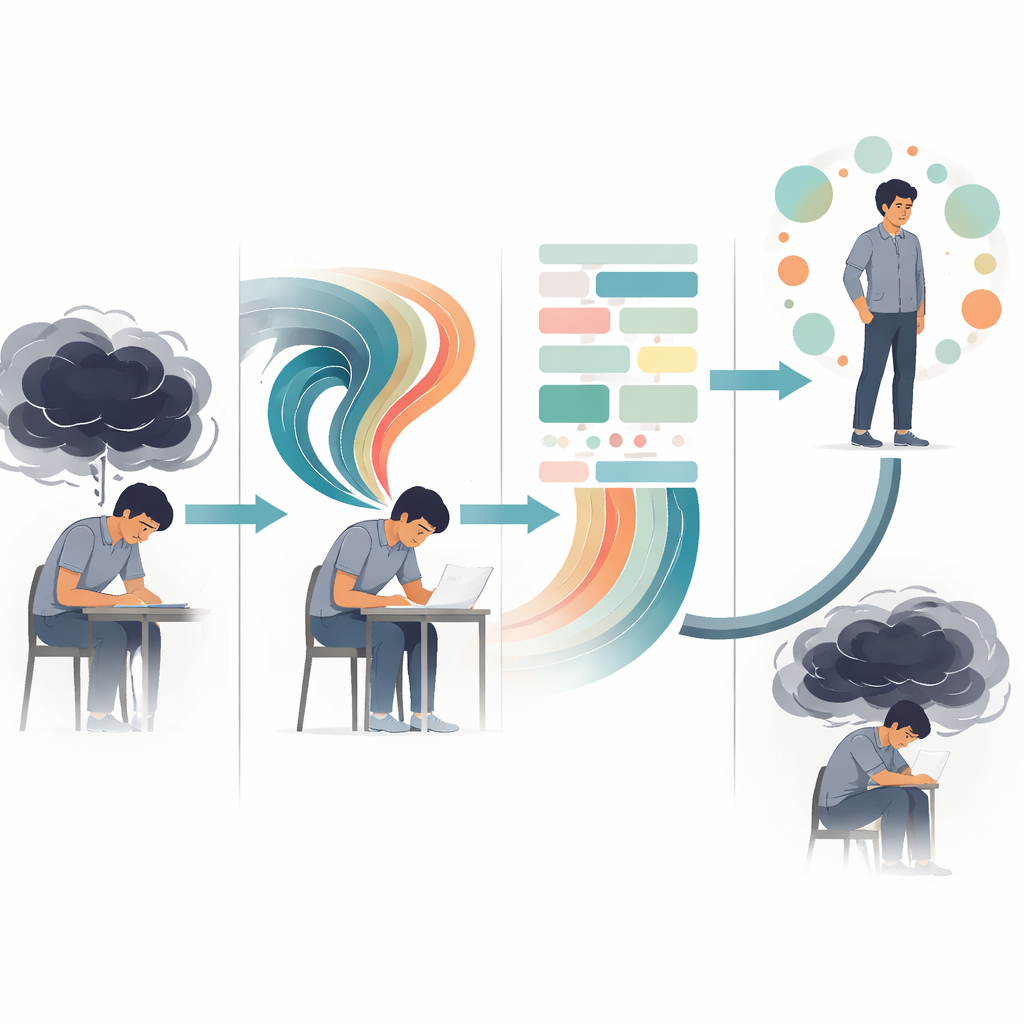
Across the three students, the researchers identified a pattern they called “emotional flow and transformation.” All of the participants used the writing sessions to release pent-up negative feelings—fear, shame, sadness—though they did so in different ways. One student chose to revisit her most painful memories repeatedly, comparing the process to “throwing up” something toxic; the initial turmoil was intense, but each retelling became a little more bearable. The other two students were wary of being swallowed by old pain, so they carefully mixed their writing about upsetting events with calmer or neutral topics to keep from being overwhelmed. Over time, all three began to include more positive notes—moments of gratitude, pride, or warmth—and learned that it was possible to feel sadness and hope at the same time, rather than being trapped in only one emotional state.
Facing, Questioning, and Responding to Pain
The second major pattern was “active engagement with negative emotions.” Two of the students gradually shifted from simply pouring out feelings to examining where those feelings came from and what they could do about them. Through writing, they started to see their emotions as signals rather than enemies—warning lights that could point to unresolved problems, unhealthy habits, or unfinished tasks. This led them to break problems into manageable steps, experiment with new coping strategies, and feel more in control of their moods. For them, writing became like solving a puzzle or digging for treasure in their own experiences: by piecing together the story, they found new ways forward and a stronger sense of resilience.
When Writing Hurts More Than It Helps
The third student’s path looked very different. She had a history of early family trauma and long-standing, severe depression. For her, writing about distressing events mostly produced a pile of raw, fragmented feelings: repeated phrases of helplessness, with little movement toward deeper understanding or practical solutions. Returning to painful memories sometimes intensified her distress rather than easing it. The researchers connect this to “mentalization”—the ability to think clearly about one’s own and others’ inner states. They suggest that when someone’s capacity for this kind of reflective thinking is already weakened, simply asking them to express strong emotions on paper may not trigger healing insight and can even make them feel worse.
What This Means for Students and Helpers
By following these three students closely, the study shows that structured expressive writing is not a magic cure, but a pathway whose effects depend greatly on the writer’s emotional stability and life history. For many college students, guided writing can help them name their feelings, see patterns in their struggles, and experiment with new ways of coping, leading to a gentler relationship with their own emotions. But for those with deeper trauma or very fragile coping skills, jumping straight into intense emotional writing may be too much, too fast. The authors argue that, before recommending such exercises, counselors and program designers should consider each student’s level of emotional tolerance and support. When matched thoughtfully to the person, expressive writing can be a flexible, empowering tool that turns fractures in a student’s life into small but real flickers of understanding and growth.
Citation: Zhu, S., Wang, J. Fractures into flickers: an interpretive phenomenological analysis of experiences in structured expressive writing among depressed college students. Humanit Soc Sci Commun 13, 562 (2026). https://doi.org/10.1057/s41599-026-06950-5
Keywords: college depression, expressive writing, mental health, trauma and resilience, self-help intervention