Clear Sky Science · en
Cruise service quality improvement: a quality function deployment approach with online reviews by large language models
Why Cruise Reviews Matter for Your Vacation
Planning a cruise, you might check online reviews to see if the food is good, the rooms are clean, and the staff are friendly. This article shows how those scattered comments can be turned into a powerful roadmap for improving cruise vacations. By combining passenger reviews with advanced language-based artificial intelligence and smart decision tools, the researchers build a system that helps cruise lines see what really matters to travelers and how to fix what is going wrong.
Turning Passenger Voices into Clear Priorities
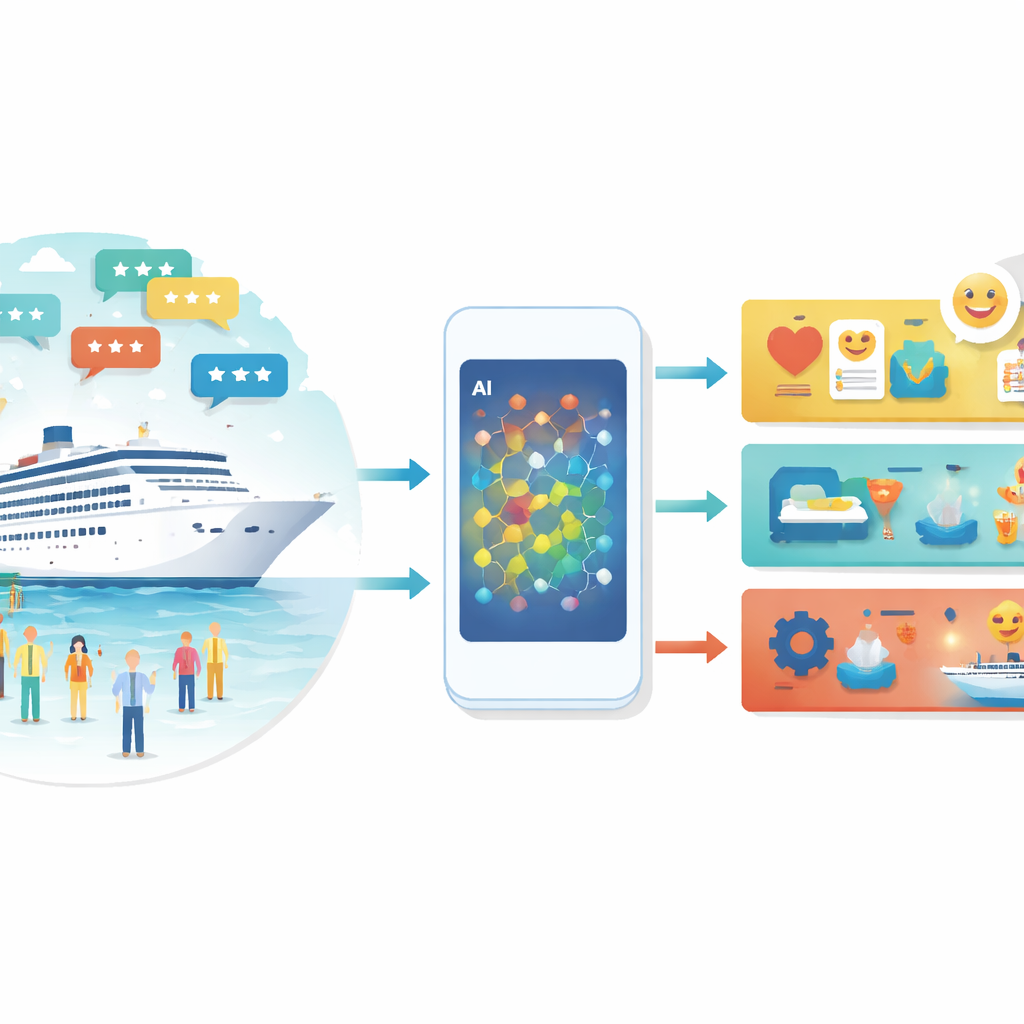
Modern cruise ships generate thousands of online reviews filled with praise, complaints, and subtle hints about what guests value. Traditional methods look at simple word counts or basic statistics, which often miss context and hidden concerns. In this study, the authors feed reviews of a large cruise ship, the Norwegian Breakaway, into a powerful language model similar to the AI behind advanced chatbots. Carefully designed instructions, known as prompt engineering, guide the AI to pull out the main themes passengers talk about—such as dining, cabin comfort, staff behavior, entertainment, boarding and leaving the ship, and overall cleanliness—and to judge whether comments on each theme are positive, negative, or neutral.
Sorting Needs into Must-Haves and Nice Surprises
Not all guest wishes are equal. Some basics, like decent food and courteous staff, must be in place or travelers become unhappy, while others are pleasant extras that delight guests when present but are not expected. To capture this, the researchers use a well-known customer satisfaction tool called the Kano model. They measure how often each need is mentioned (attention) and how happy people are with it (satisfaction). Needs that attract much attention and are tied closely to satisfaction are treated as essentials; those with high satisfaction but little attention are pleasant surprises; and those that draw notice but low satisfaction are areas where performance is slipping. A small number of items that people rarely mention and do not link strongly to their feelings are treated as low-impact and dropped from further analysis.
Balancing Data and Expert Judgment
The next step is deciding which parts of the ship’s service to improve first. Here the study blends data from reviews with structured input from ship departments such as food and beverage, cabins, entertainment, customer service, and operations. From the AI-extracted needs, experts define concrete service features—for example, how dining is organized, how cabins are cleaned, how staff respond to problems, and how boarding lines are handled. Each department rates how strongly each service feature supports each customer need. The Kano categories then shape how much weight is given to attention versus satisfaction when computing the final importance of each need, ensuring that must-haves, performance factors, and delightful extras are treated differently rather than lumped together.
Reaching Agreement Through Social Networks
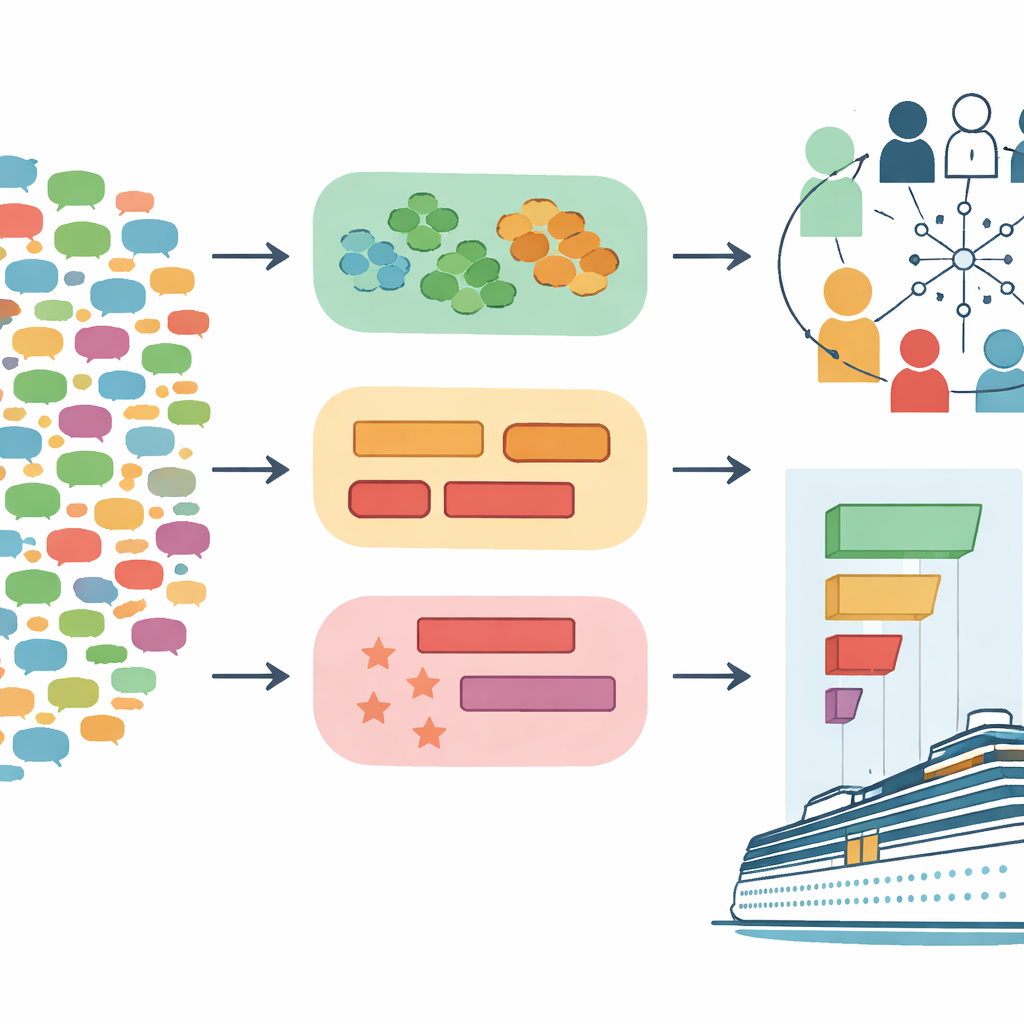
Because departments naturally see the ship through different lenses, their ratings can conflict. Simply averaging their opinions can hide serious disagreements. The study introduces a consensus process that treats departments as members of a social network, each with different levels of trust in one another. A mathematical measure tracks how closely two departments agree, and another reflects how much they trust each other. Pairs with low agreement but meaningful trust are encouraged, step by step, to adjust their ratings toward each other, with limits on how far they can move in a single round. This back-and-forth gradually raises the overall level of agreement until the group reaches a shared view of which service features matter most.
What Matters Most for a Better Cruise
Applied to hundreds of recent reviews of the Norwegian Breakaway, the method finds that three areas—dining, staff and customer service, and onboard entertainment—are basic expectations that must be reliably good. Cleanliness and maintenance emerge as a performance factor: guests notice it a lot, but current satisfaction lags, so improvements there could yield quick gains. Elements like smooth boarding and leaving, ship layout, and cabin comfort are identified as pleasant surprises that can strongly lift satisfaction when done especially well. When the expert ratings are reconciled through the consensus process, the highest priorities for action become customer care and staff interaction, followed by the smoothness of travel procedures, then cabin and cleanliness management. In plain terms, the study concludes that to make cruises meaningfully better, lines should first invest in how staff treat guests and how efficiently guests move through each stage of the trip, while maintaining solid basics in food, cleanliness, and entertainment.
Citation: Gai, T., Wu, J., Xing, Y. et al. Cruise service quality improvement: a quality function deployment approach with online reviews by large language models. Humanit Soc Sci Commun 13, 619 (2026). https://doi.org/10.1057/s41599-026-06941-6
Keywords: cruise service quality, online reviews, customer satisfaction, large language models, quality function deployment