Clear Sky Science · en
The impact of China’s institutional opening-up policy on green innovation systems
Why this study matters for everyday life
China is racing to clean up its economy while still growing fast, and the technologies it chooses will shape global climate and markets for decades. This study looks at whether a newer kind of openness—focused on rules and institutions rather than just trade volume—can push China away from quick, low‑quality green fixes toward deeper, higher‑quality innovation. The answer matters for anyone concerned with climate change, fair growth between regions, and how government policy can nudge economies toward cleaner futures.
From counting inventions to understanding whole systems
Most discussions of green innovation in China highlight impressive numbers of patents and new clean‑tech firms. Yet these raw counts hide a troubling pattern: rapid growth in quantity has not been matched by similar gains in quality. Many patents are short‑lived tweaks rather than breakthroughs that truly cut emissions or energy use. The authors argue that we must look at green innovation as a living system made of three tightly linked features: growth (how fast activity expands), sustainability (how steady that effort is over time), and accumulation (how much useful knowledge is built up). Instead of treating these as separate statistics, they build an index that measures how well these three features move in step. 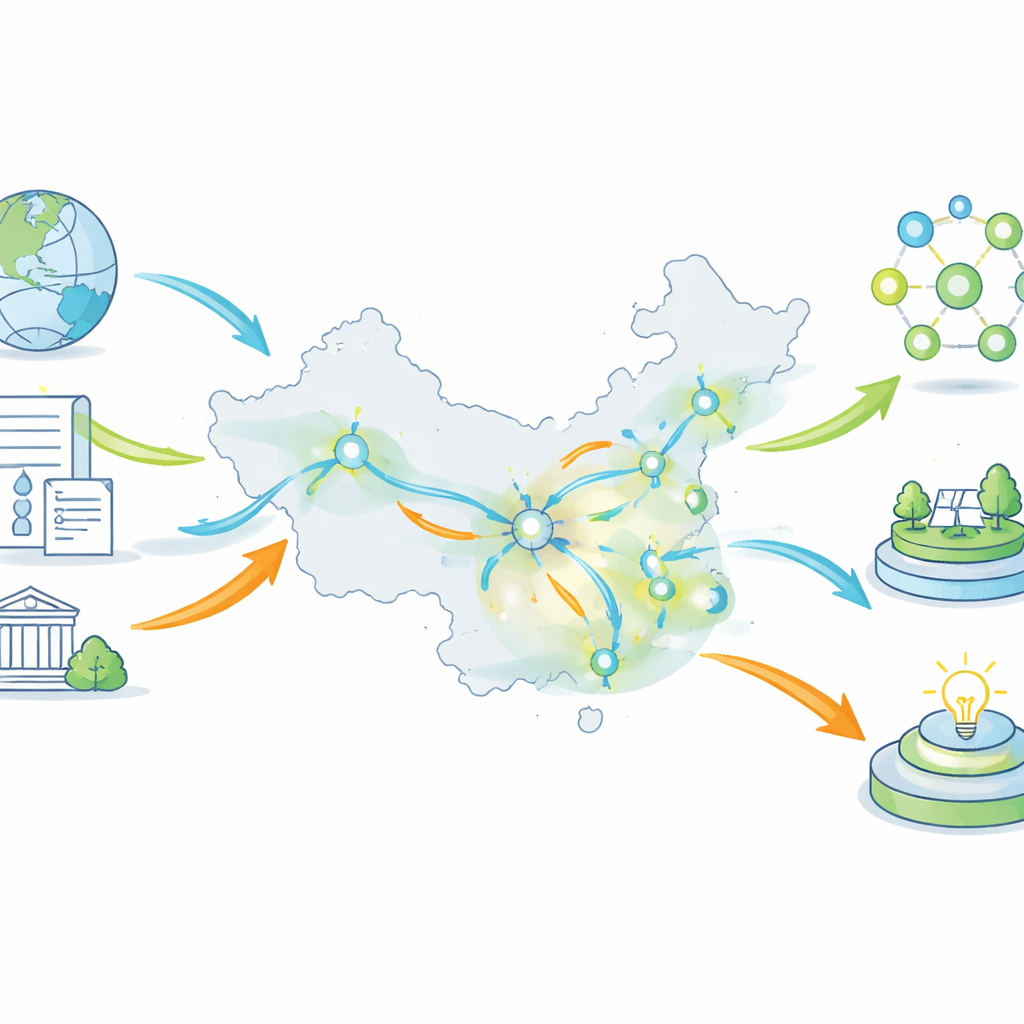
A natural experiment in opening the rules
At the same time, China has been shifting its opening‑up strategy. Earlier policies focused on moving goods and capital across borders. More recent steps, built around pilot free trade zones, aim to open the “rules of the game” themselves—things like regulations, standards, and how easily businesses can operate. These zones are designed as testing grounds where China can try out international‑style rules for trade, finance, and environmental protection before spreading them nationwide. Because these zones were rolled out in different cities at different times, they create a kind of natural experiment. The authors compare 286 cities from 2008 to 2023, asking: when a city gets such a zone, does its green innovation system improve compared with otherwise similar cities that did not?
How rule changes ripple through money and knowledge
The study combines economic theory with a detailed mathematical model of how firms and local governments react to new rules. In the authors’ view, opening institutions changes the basic incentives and frictions in the economy. Easier cross‑border flows of technology and talent make it less costly for firms to pursue advanced green research. At the same time, governments in the pilot zones face stronger pressure and better tools to invest public funds in green research and development. The model predicts two main channels: more local public spending on green innovation, and stronger spillovers of green know‑how across regions and industries. Both channels should, over time, reinforce the three pillars of the green innovation system—growth, sustainability, and accumulation—and support more ambitious forms of invention rather than only quick, incremental tweaks.
What the data say about China’s green shift
Using a large city‑level dataset and a multi‑period difference‑in‑differences approach (a standard way to tease out cause and effect from policy rollouts), the authors find that institutional opening‑up does indeed strengthen China’s green innovation systems. Cities with pilot free trade zones show better coordination among growth, sustainability, and knowledge accumulation than comparable cities without them, and this result survives extensive statistical checks and placebo tests. When they dig into the channels, they find that both higher government spending on green research and stronger cross‑regional knowledge flows matter, but the knowledge spillovers contribute more. Importantly, the policy boosts not only the volume of green patents but also their quality: invention patents, which signal deeper technological advances, respond more strongly than simpler utility patents. 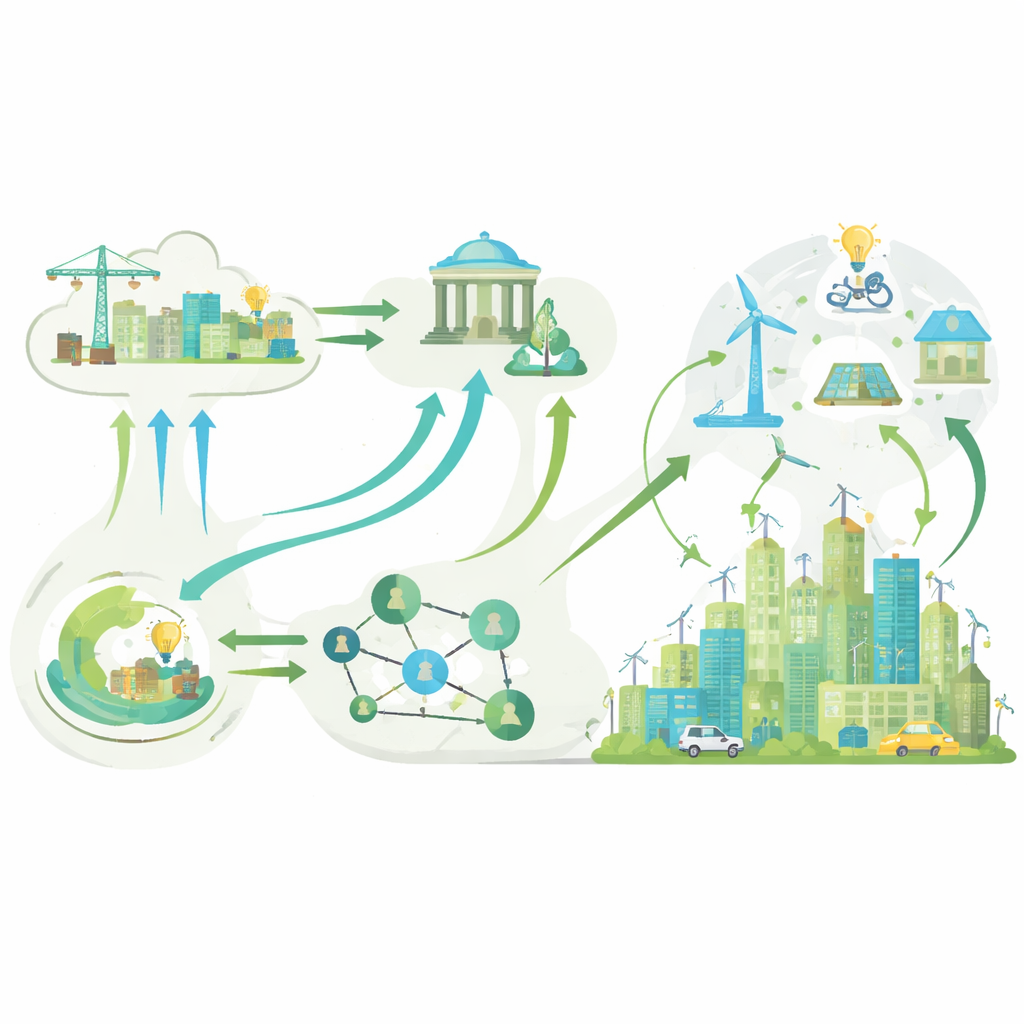
Uneven benefits across China’s regions and cities
The benefits of institutional opening‑up are not spread evenly. The effect is stronger in China’s eastern cities, which already have deeper talent pools, better infrastructure, and denser industrial networks, making them more able to absorb new ideas and investment. Ordinary prefecture‑level cities gain more than big provincial capitals and sub‑provincial cities, where earlier policy advantages may already have saturated the space for further gains. A stronger economic base amplifies the positive impact almost everywhere, but environmental regulation itself does not significantly change how effective the opening‑up policy is—perhaps because the policy already carries strong, nationwide regulatory expectations.
What this means for green progress
For non‑specialists, the core takeaway is that how a country opens to the world can matter as much as how much it opens. When China reforms its rules and institutions—not just its tariffs—it can create conditions that favor long‑term, knowledge‑rich green innovation over short‑term fixes. Well‑designed pilot zones appear to speed up the shift from a sheer numbers game in patents to a more balanced, higher‑quality green innovation system. At the same time, the gains are largest where local economies are ready to absorb them, highlighting the need for tailored support so that less‑developed regions are not left behind in the green transition.
Citation: Du, L., Quan, S. The impact of China’s institutional opening-up policy on green innovation systems. Humanit Soc Sci Commun 13, 590 (2026). https://doi.org/10.1057/s41599-026-06925-6
Keywords: green innovation, institutional opening-up, pilot free trade zones, China climate policy, innovation systems