Clear Sky Science · en
How educational inequality among rural residents relates to healthy lifestyle behaviors in later life: evidence from the Northern China lifestyle medicine cohort baseline
Why Schooling Still Matters in Old Age
What we learn in childhood may shape how we live half a century later. This study looks at older adults in rural northern China to see whether years spent in school are linked to everyday habits like eating, sleeping, moving, and socializing. The answers matter for families, doctors, and policymakers who want to support healthy aging in communities that often have limited money, services, and information.
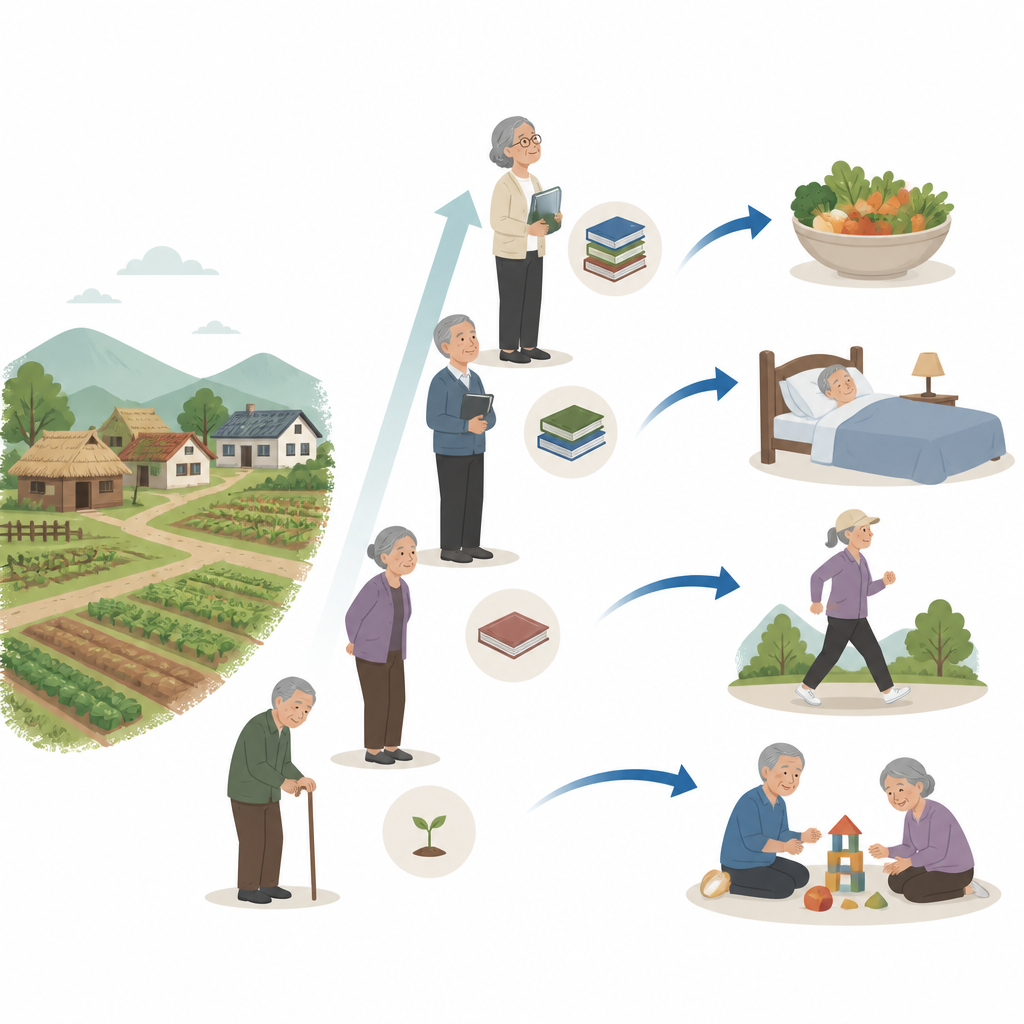
Life in the Countryside and Unequal Schooling
Across the world, people who live in rural areas tend to have poorer health and shorter lives than city dwellers. In China, many villagers who are now over 65 grew up when schools were scarce and families were poor, so large numbers never learned to read or had only a few years of basic schooling. At the same time, chronic illnesses such as high blood pressure and diabetes are very common in this age group. The study focuses on this generation to ask how early-life educational gaps relate to the way they now care for their health.
How the Researchers Measured Daily Habits
From 2023 to 2024, researchers surveyed more than ten thousand adults aged 65 and over with high blood pressure or diabetes in villages across four northern Chinese provinces. All were enrolled in a national basic public health program. Through face-to-face interviews and health checks, the team gathered information on schooling, income, other illnesses, body measurements, and thinking ability. They also built a Healthy Lifestyle Score, ranging from zero to seven, based on seven habits: diet quality, sleep length, smoking, drinking, physical activity, time spent sitting, and leisure activities such as housework, gardening, or social outings.
What the Study Found about Schooling and Habits
The results revealed both low schooling and only moderate health habits overall. One in three participants could not read or write, and fewer than one in ten had finished high school. On average, people scored about 4.7 out of 7 on the lifestyle scale. Yet even small steps up the education ladder were linked to healthier routines. For every rise in education group, the lifestyle score increased by about 0.17 points. Compared with illiterate peers, those who had completed primary school, middle school, or high school tended to eat more varied diets, sleep within a healthy range, move more, and take part more often in leisure and social activities.

Different Habits Show Different Links
Not every behavior followed the same pattern. Education made little difference to smoking in this group, likely because most people at all schooling levels already avoided cigarettes, helped by long-running public health campaigns. Drinking told a different story. Older adults with more education were actually less likely to abstain from alcohol, perhaps because social events that involve drinking are more common among those with broader social networks and higher status. After using advanced matching methods to compare similar people with and without basic reading ability, the research team still found that illiterate participants scored about a third of a point lower on the lifestyle scale, mainly because of poorer diet, sleep, physical activity, and leisure engagement.
What This Means for Healthy Aging
For lay readers, the message is straightforward: years spent in school are tied to how well older villagers eat, sleep, move, and connect with others, even decades later. Education appears to equip people with skills and confidence to understand health advice, use information sources, and build supportive social circles. The study suggests that improving access to schooling in rural areas and weaving clear, practical health lessons into education at all ages could help future generations grow old with better daily habits. At the same time, communities and health workers can use simple, visual, and spoken tools to support today’s older adults who missed out on schooling but still wish to live healthier lives.
Citation: Miao, Y., Cui, J., Yin, L. et al. How educational inequality among rural residents relates to healthy lifestyle behaviors in later life: evidence from the Northern China lifestyle medicine cohort baseline. Humanit Soc Sci Commun 13, 739 (2026). https://doi.org/10.1057/s41599-026-06907-8
Keywords: educational inequality, rural health, healthy aging, lifestyle behaviors, China cohort study