Clear Sky Science · en
AI-transforming EFL learning: investigating the interplay of academic buoyancy, motivation, performance and AI readiness among Chinese college students
Why This Study Matters for Everyday Learners
Artificial intelligence tools—from chatbots to smart tutoring apps—are rapidly entering classrooms, especially for learning English as a foreign language. But not all students are equally ready or willing to use them. This study looks at Chinese college students and asks a practical question: which personal qualities help them not only cope with everyday study pressures, but also take advantage of AI to learn English more effectively?
Bouncing Back from Setbacks
At the heart of the research is a simple idea called “academic buoyancy,” meaning students’ ability to bounce back from routine setbacks such as low quiz scores, tight deadlines, or classroom stress. The authors surveyed 447 students from nine universities in eastern China, asking about how they handle such bumps in the road, how motivated they feel about their studies, how well they are doing in English, and how ready they feel to use AI tools in their learning. Using a statistical approach that maps how these factors influence one another, the researchers found that students who cope well with everyday academic challenges tend to be more motivated, achieve better grades, and feel more prepared to engage with AI in their English courses.

Motivation, Marks, and Machines
The study also shows how motivation and academic performance fit into the picture. Students who report higher motivation—such as wanting to learn for personal growth or interest—tend to achieve better results in English. Those better results, in turn, are linked to feeling more ready to adopt AI tools. Curiously, motivation alone does not directly make students feel more prepared for AI; instead, it works indirectly by helping them achieve stronger performance, which then boosts their confidence in using new technologies. In other words, simply being keen to learn is not enough: doing well academically appears to give students the sense of competence they need to embrace AI in their language learning.
Who Feels Ready for AI?
The researchers also examined whether gender and educational level (such as being an associate, undergraduate, or postgraduate student) shape AI readiness. They found that gender does matter: male students, on average, reported higher readiness to use AI in their English learning. However, gender did not change how buoyancy, motivation, or performance relate to AI readiness. Educational level, surprisingly, did not make a significant difference at all. Students at different stages of higher education appeared similarly prepared—or unprepared—to integrate AI, suggesting that exposure to technology is now widespread enough that readiness depends more on personal qualities than on how far along students are in their degrees.
How the Pieces Work Together
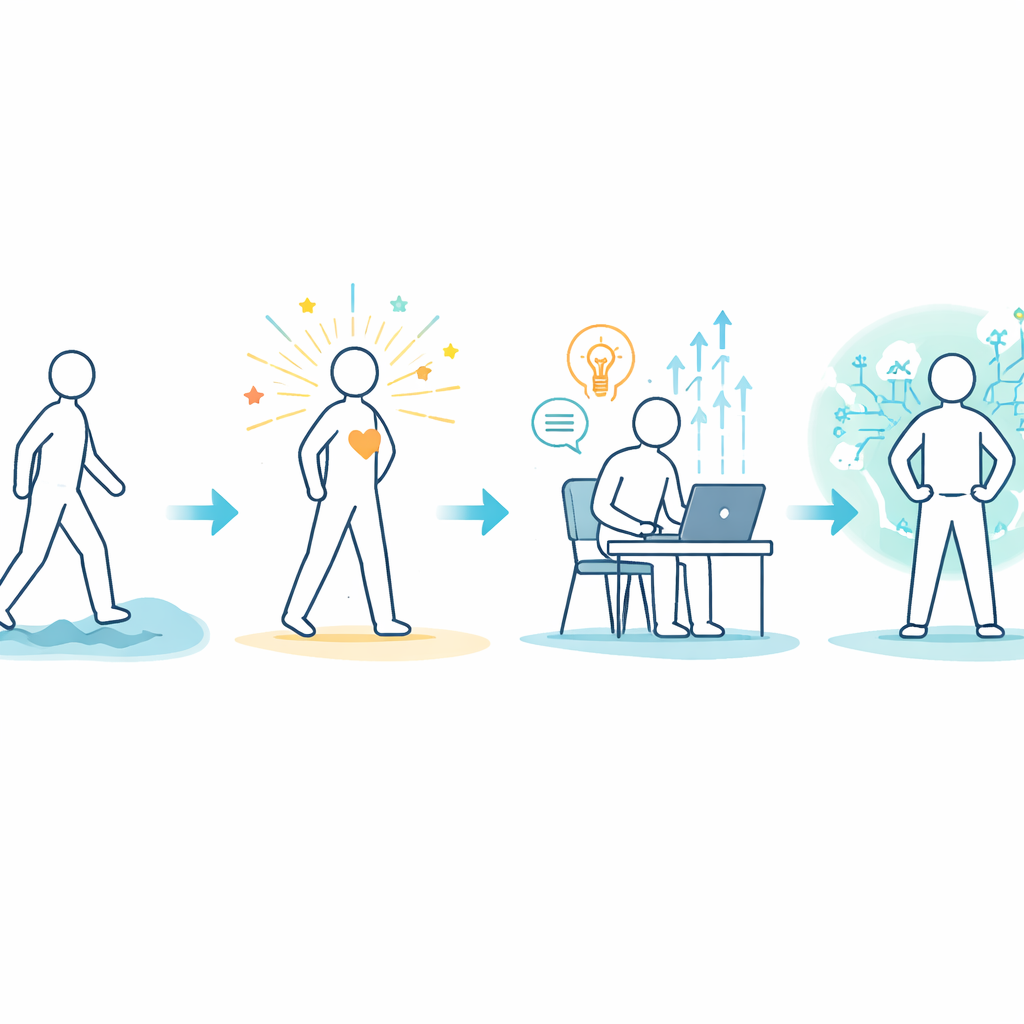
By combining ideas from technology acceptance research and psychological theories of self-belief, the authors propose a broader picture. Students who are good at recovering from everyday difficulties tend to stay engaged and motivated. That motivation feeds into better academic results, which in turn fosters a sense that AI tools are useful, manageable, and worth trying. The study also uncovered that academic performance partly “bridges” the link between motivation and AI readiness. Likewise, motivation partly explains how buoyancy leads to stronger performance. Overall, the web of relationships suggests that emotional resilience, drive, and achievement are tightly intertwined with how students approach new learning technologies.
What This Means for Classrooms
For teachers and education planners, the message is straightforward: building students’ ability to handle everyday academic stress and nurturing their motivation may be just as important as training them directly on new AI tools. Activities that help learners reflect on setbacks, manage anxiety, and develop steady study habits could indirectly improve their grades and make them more open to AI-enhanced learning. At the same time, the gender gap in AI readiness hints that targeted support may be needed to ensure that all students gain equal confidence with these technologies. In simple terms, students who feel capable, motivated, and successful are much more likely to see AI not as a threat or a shortcut, but as a helpful partner in mastering English.
Citation: Wen, X., Jin, D. AI-transforming EFL learning: investigating the interplay of academic buoyancy, motivation, performance and AI readiness among Chinese college students. Humanit Soc Sci Commun 13, 548 (2026). https://doi.org/10.1057/s41599-026-06899-5
Keywords: AI in language learning, academic resilience, student motivation, technology readiness, Chinese college students