Clear Sky Science · en
The impact of education on health transitions, life expectancy, and healthy life expectancy among older adults in China
Why school years matter for our later years
As people in China live longer, many are spending more of those extra years in poor health rather than in active, independent life. This study asks a simple but powerful question: does having even a small amount of schooling change how long older adults stay healthy, how quickly their health worsens, and how many of their remaining years are lived in good shape rather than with serious problems? Using long-term data from thousands of Chinese seniors, the researchers trace how education shapes the journey from healthy old age to illness, disability, and eventually death.
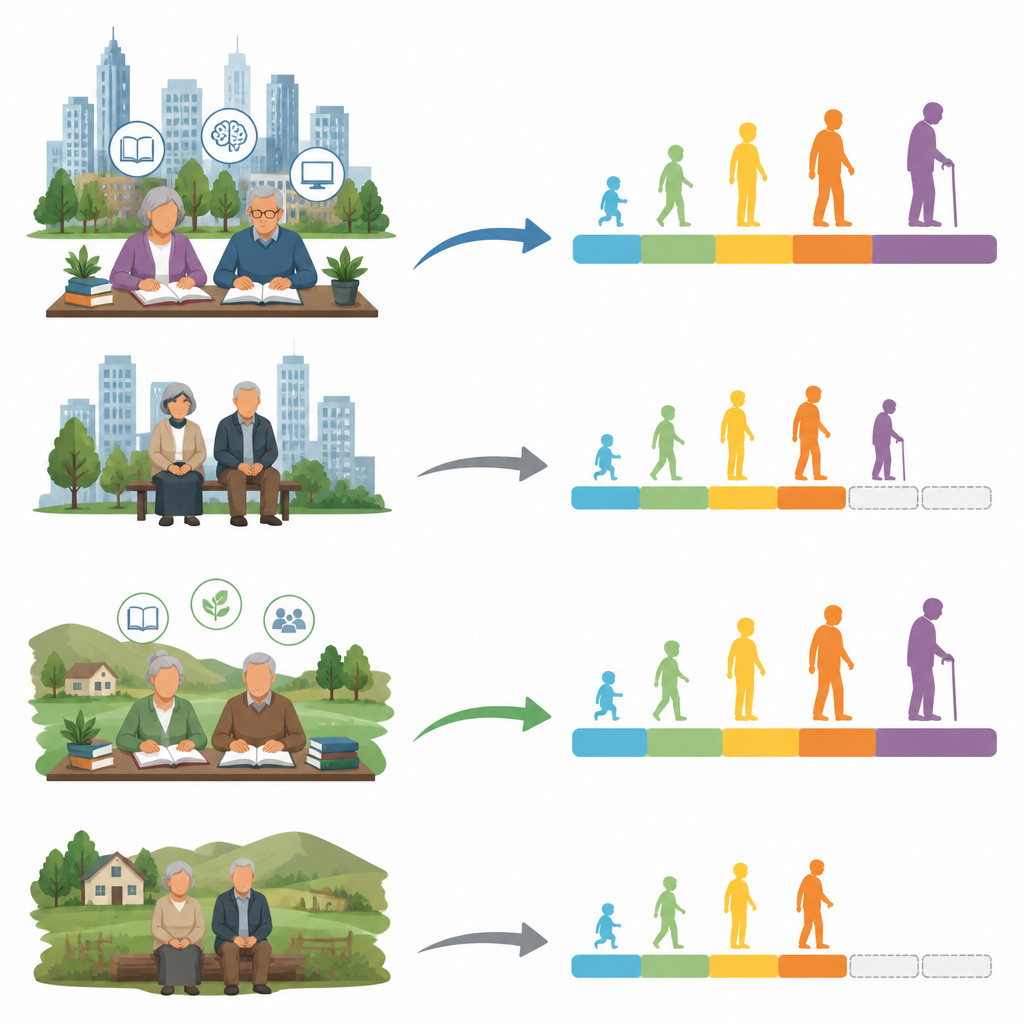
Looking beyond years of life to years of healthy life
The authors distinguish between life expectancy, which counts how many years people are likely to live, and healthy life expectancy, which focuses on how many of those years are spent in good physical, mental, and social condition. They define good health broadly: being free of major diseases like heart disease or stroke, being able to manage daily tasks such as bathing and dressing, keeping clear thinking and memory, and staying engaged in everyday activities and social life. By tracking these four areas separately and together, the study paints a richer picture of aging than disease counts alone can provide.
Following health changes step by step
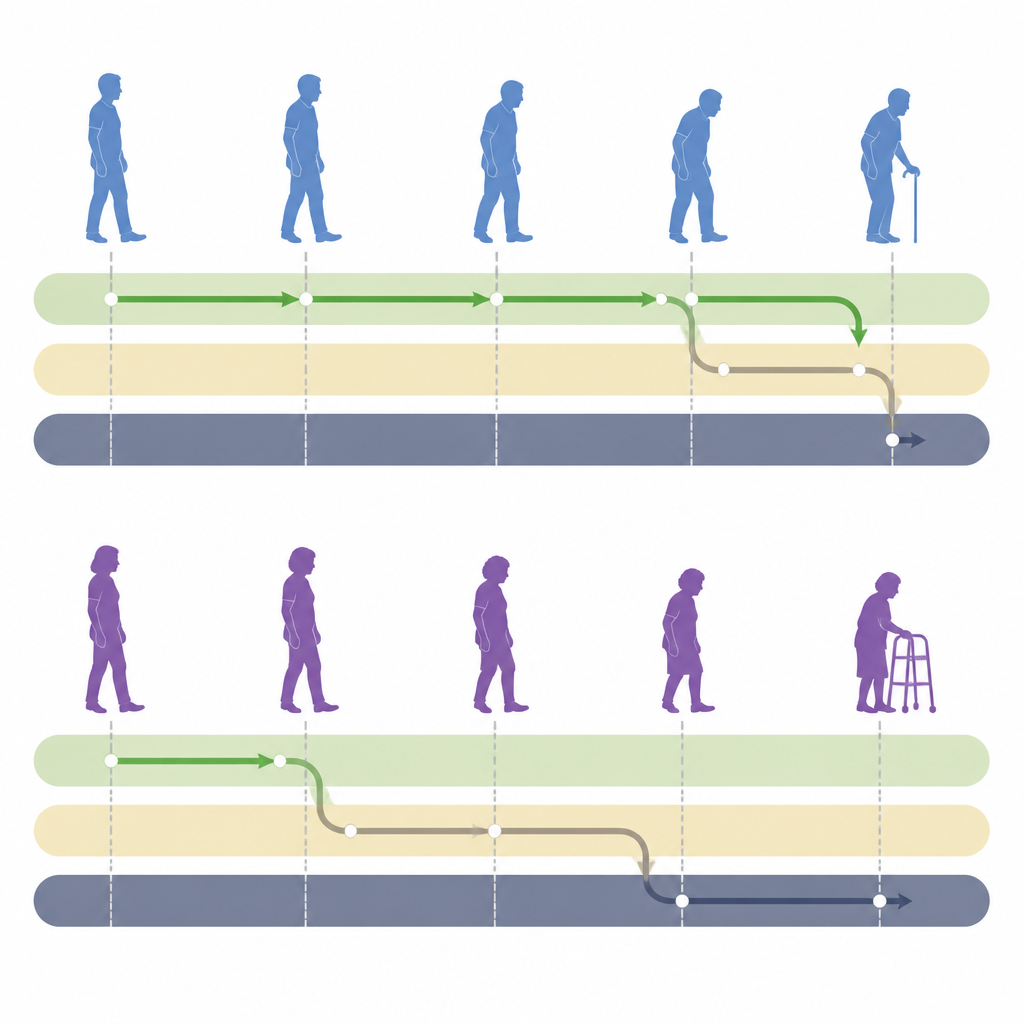
Instead of taking just a snapshot of people’s health, the researchers use a method that follows older adults as they move between three states over time: good health, worse health, and death. This allows them to see not only who becomes disabled or ill, but also who recovers, and how education affects each type of change. They analyze data from more than 19,000 people aged 65 to 108 who were interviewed repeatedly between 2002 and 2018. Because many in the oldest generations had little or no formal schooling, the team compares two broad groups: those with no schooling at all and those who had at least some years in school.
What schooling means for everyday health
The results show that education is closely tied to how people move along the health pathway in later life. Older adults who had been to school were less likely to develop disability, lose their thinking abilities, or drop out of social and daily activities as they aged. They were also less likely to die after becoming disabled or after developing a major disease, suggesting that schooling helps people cope better once serious health problems appear. On the other hand, among those who already had marked memory problems or had become very inactive, having more education sometimes signaled that the underlying damage was especially severe, which could explain why their risk of death from those states was higher.
How age and generation change the picture
The study also looks at how these patterns vary by age and by birth generation. As people grow older, both life expectancy and healthy life expectancy naturally shrink. Yet the share of remaining years that is spent in good health tends to be larger for the schooled group, and this gap in the share widens with age. In other words, education buys not just more years, but a higher fraction of those years in good health, especially at advanced ages. Comparing people born in different decades, the researchers find that schooling has become more common and its benefits for both total and healthy years of life have grown over time. At the same time, this means that differences between educated and uneducated older adults in how long and how well they live are larger in more recent generations.
What this means for families and policy
For a lay reader, the study’s bottom line is that spending time in school appears to shape the whole course of aging: it delays the onset of serious health problems, improves chances of recovery, and increases the portion of later life spent in good health. These advantages become more visible with each passing year in old age and are stronger among people born more recently. The authors suggest that efforts to expand education early in life and to offer meaningful learning opportunities for today’s and tomorrow’s older adults in China could help narrow health gaps and allow more people to enjoy longer, healthier, and more engaged later years.
Citation: Cao, N., Yu, L. & Pan, C. The impact of education on health transitions, life expectancy, and healthy life expectancy among older adults in China. Humanit Soc Sci Commun 13, 685 (2026). https://doi.org/10.1057/s41599-026-06888-8
Keywords: education and health, healthy life expectancy, older adults China, health inequalities, aging and disability