Clear Sky Science · en
The impact of non-agricultural employment on multiple-child fertility intention among rural reproductive-age women: Insights from family care and medical service
Why this story about work and families matters
Across the world, many countries are worrying about shrinking populations and aging societies. China, in particular, has seen birth rates fall sharply even after relaxing its one-child policy. This article looks at a crucial piece of that puzzle: how the shift of rural women from farm work into non-farm jobs affects their desire to have more than one child, and how support from families and local health services can soften or sharpen that impact. 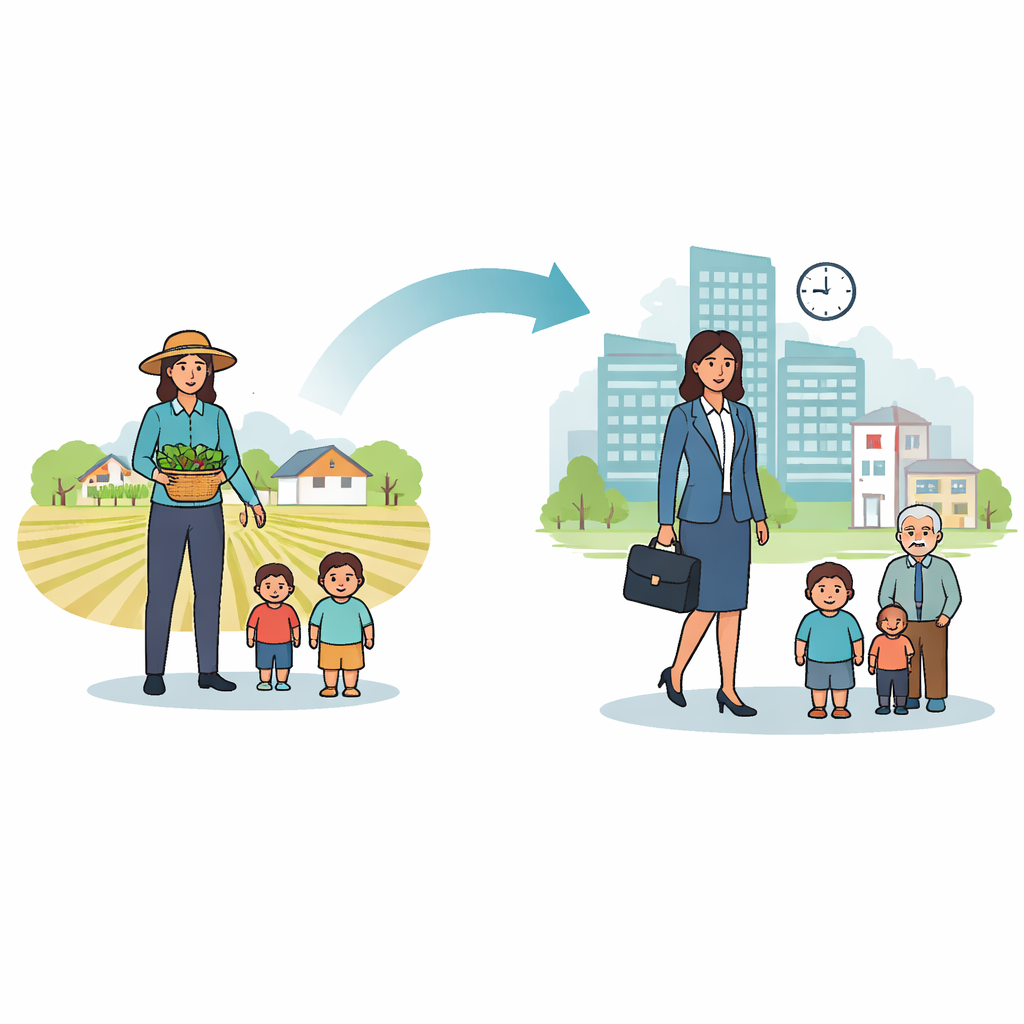
From fields to factories and offices
China’s countryside is undergoing rapid change. As industry and services expand, millions of rural residents—women as well as men—are leaving traditional farm work for jobs in factories, shops, and offices. Using a large, nationally representative social survey from 2021, the researchers focus on rural women aged 18 to 49 and ask how this move into non-agricultural work shapes their willingness to have a second or third child. Instead of simply asking “how many children do you want,” the survey places each woman in carefully designed “what if” situations that vary income, childcare help, public childcare services, and existing children, then measures how willing she says she would be to have another baby.
Work hours, time pressure, and changing priorities
The study finds a clear pattern: rural women who hold non-farm jobs report significantly lower intentions to have both a second and a third child than those who remain outside non-agricultural work. A simple economic idea helps explain why. Paid work outside the home demands fixed hours and commuting time, leaving fewer hours and less energy for pregnancy, childcare, and family life. As women’s earnings and financial independence grow, they also tend to reassess what they want from life—placing more value on personal development, stable careers, and investing more in each child rather than having many. The authors call this a “concept change effect”: non-farm work goes hand in hand with more modern views that favor fewer, better-resourced children over large families.
The double face of family care
Family members can either strain or support women who juggle work and motherhood. 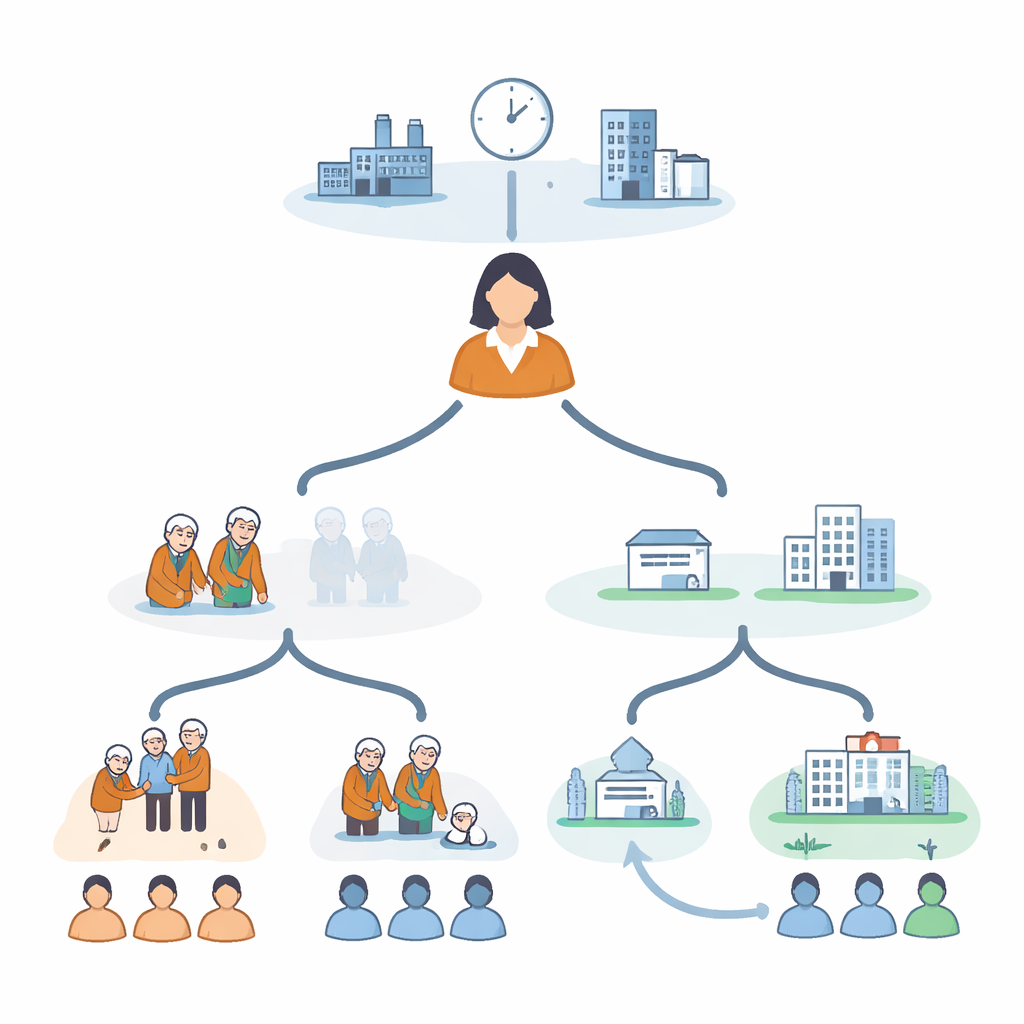
Health services as hidden enablers
Access to medical care is another quiet but powerful influence on family decisions. Children and the elderly are more likely to get sick, and trips to distant clinics can eat into work time and wages. The researchers measure both how long it takes to reach a major hospital and how dense local health resources are. They find that when clinics and hospitals are closer and easier to use, the dampening effect of non-agricultural jobs on fertility intentions becomes smaller. Better medical access reduces parents’ worries about illness and unexpected costs, making the idea of another child somewhat less daunting even for busy working women.
Different women, different impacts
The study also shows that not all rural women are affected in the same way. The pull of non-farm work is especially strong for women over 30, those with less schooling, those in full-time non-farm jobs, and those whose husbands also work outside agriculture. For these groups, time pressure and job demands interact to make large families seem particularly unrealistic. The effect is stronger still in families that lack health insurance or pension coverage, where having more children could mean facing higher risks with fewer safety nets. In short, the combination of intense work, limited support, and weak social protection most sharply lowers the desire for multiple children.
What this means for policy and everyday life
In plain terms, the article concludes that helping rural women into non-farm jobs—vital for reducing poverty and modernizing the countryside—also tends to push birth intentions down, unless family and public institutions adapt. Policies that expand childcare options, encourage and support grandparent involvement, improve rural medical services, and widen access to health and pension insurance could make it more realistic for rural working women to have the number of children they actually want. Balancing decent work with family life, the authors argue, is not just a private concern but a key ingredient in addressing population aging while supporting rural development.
Citation: Shi, J., Jin, X., Zhou, H. et al. The impact of non-agricultural employment on multiple-child fertility intention among rural reproductive-age women: Insights from family care and medical service. Humanit Soc Sci Commun 13, 549 (2026). https://doi.org/10.1057/s41599-026-06876-y
Keywords: rural fertility, women’s employment, China demographic change, family care, medical access