Clear Sky Science · en
Place names and inter-island trade in Eastern Indonesia: Abui coastal toponymic interface
Why the names on this coast matter
Along the northern shores of Alor Island in Eastern Indonesia, every hill, garden, and cove carries a name that remembers trade, travel, and encounter. This study follows those names in the Abui community of Takalelang to show how a seemingly remote coastline was once plugged into vast Asian trading routes, and how local people used language to mark resources, partners, dangers, and opportunities over many centuries.
A mountain people looking to the sea
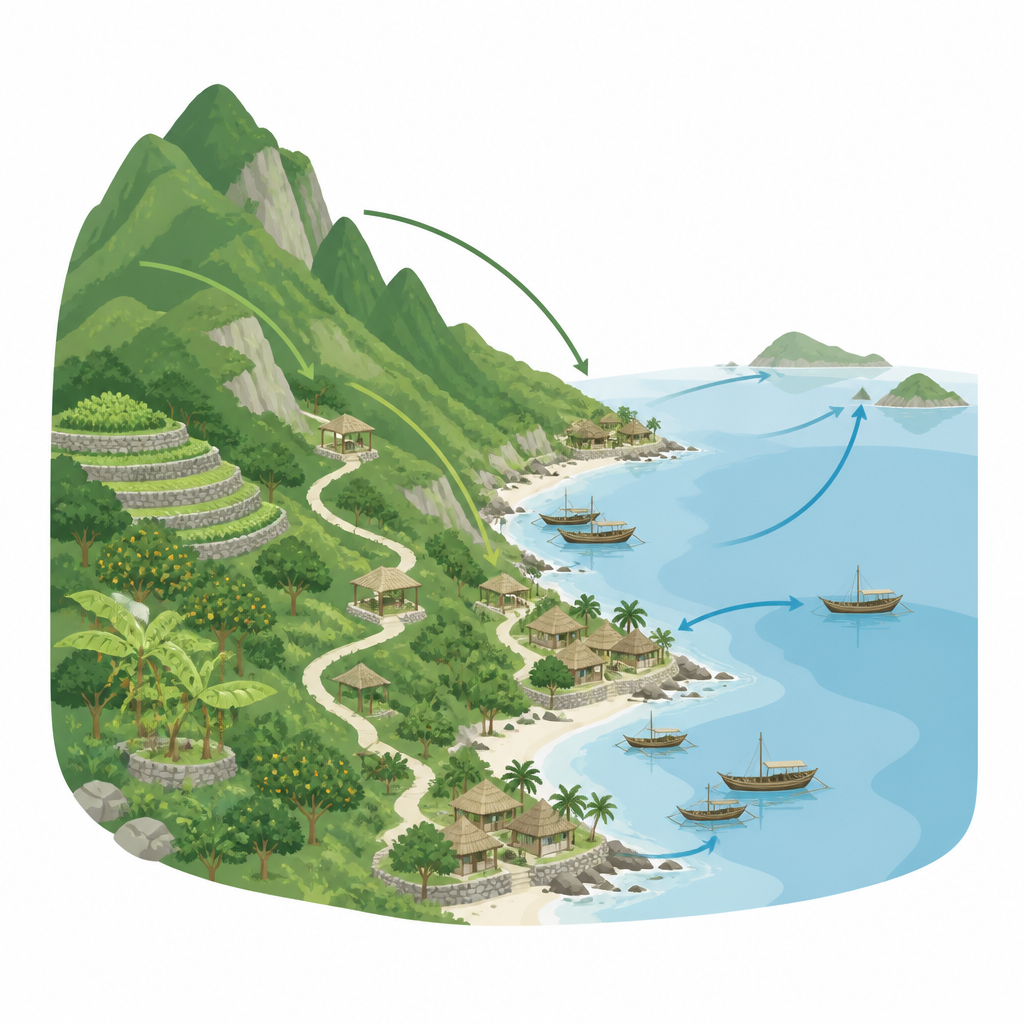
The Abui are traditionally a mountain community, living on steep ridges above a narrow strip of coast. For thousands of years, their region lay on sea routes that linked New Guinea, Timor, and the wider Malay world. Archaeology and genetics reveal long sequences of settlement, migrations, and maritime trade, from early seafaring hunter gatherers to later Austronesian sailors and spice traders. Yet written histories focus mostly on coastal powers, leaving upland groups like the Abui in the shadows. This research brings their perspective into view by reading the landscape through the names that Abui people give to places.
The land of slopes, springs, and gardens
Abui speakers use a rich vocabulary for their rugged environment. They name wide slopes, deep valleys, resting places on ridgelines, and fortified hilltop villages built above freshwater springs. Many names highlight what the land can provide: water, shelter, lookout points, or safe paths through dangerous terrain. A large share of their toponyms refers to useful trees and crops such as candlenut, canarium, coconut, mango, tamarind, kusum trees, maize, cassava, and yams. Often the names describe just one special tree, a small grove, or the quality of its fruits. Over time, as people cleared forest and planted more of these species, the slopes themselves changed into orchards, but the names still preserve earlier stages when such resources were rare and carefully watched.
Where paths meet the water
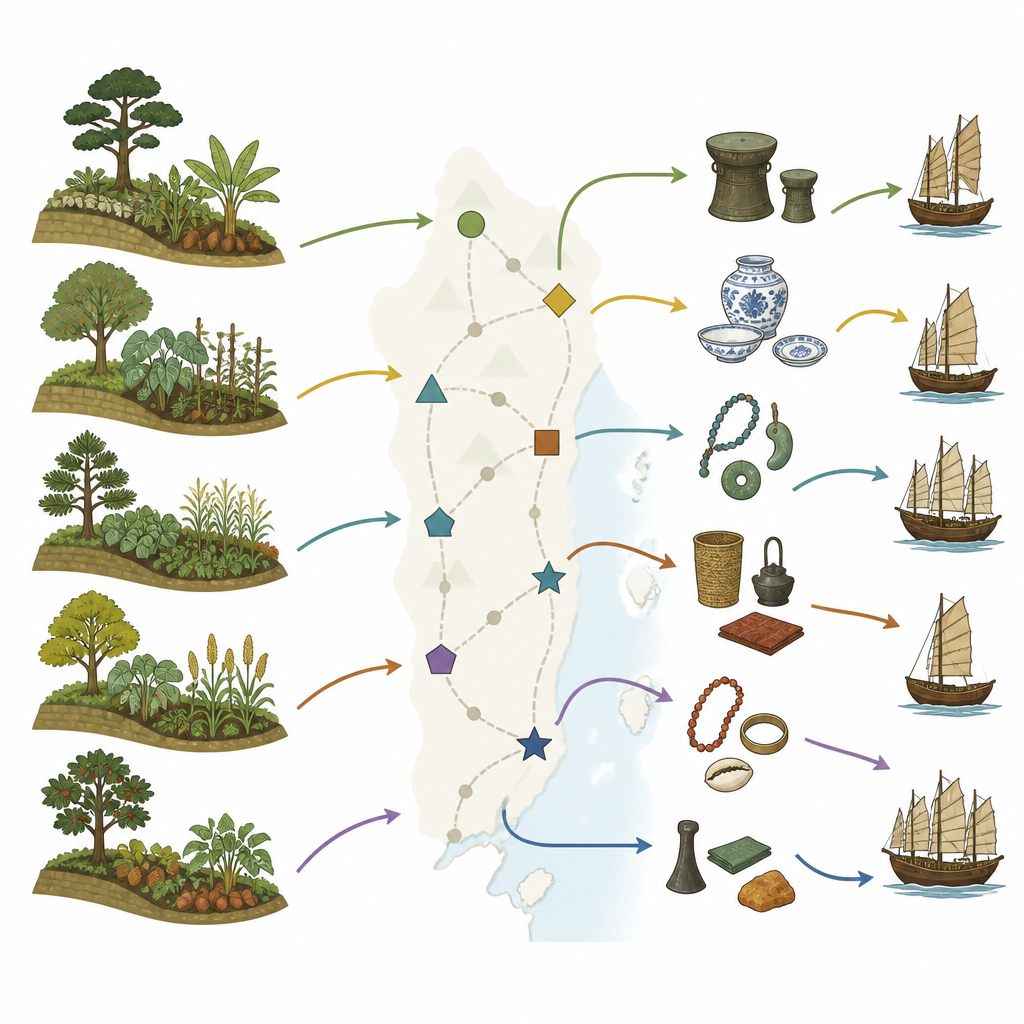
The coastline is thin, but it plays an outsized role. Paths thread down from the mountains to small anchorages and freshwater springs along the shore. Certain coastal spots, known as safe resting and trading places, hosted traveling merchants who moved along the island chain by boat. Here inland farmers brought corn, tubers, beeswax, and forest products to exchange for fish, salt, fabrics, and metal goods. Place names along this strip often combine words for crops or trees with terms for market or strangers, hinting at both the goods that passed through and the outsiders who arrived by sea. Some names recall successful trade, while others remember deceitful deals, showing the coast as a zone of both wealth and risk.
Stories, drums, and distant partners
Toponyms are only one layer in a wider memory system. Abui oral traditions trace journeys of ancestors across ridges and bays, tying specific rocks, caves, and springs to alliances, flights from war, and ties to islands such as Timor, Flores, and Pantar. Trade left material traces too: bronze kettle drums called moko, Chinese porcelain, and patterned cloth once prized as bridewealth. The very names of different drum types echo trading centers like Malay ports, Makassar, and China, turning ritual objects into a map of long-distance connections. Clans remember ties to sea peoples such as the Bajau, to coastal Austronesian speakers, and to Javanese-linked kingdoms that introduced metalworking and new crops.
What these names tell us about people and power
Taken together, the place names, stories, and artefacts show that the Abui were not isolated mountaineers but active participants in regional exchange, even while they kept political control at arm’s length. For them, the coast is less a hard boundary than an interface where insiders and outsiders meet, negotiate, and sometimes clash. The study argues that such naming systems can serve as historical records in their own right, revealing how communities understand their land, remember trade and migration, and define who belongs. By listening carefully to these names, we gain a more complete picture of how island societies fit into the wider web of Asian maritime history.
Citation: Kratochvíl, F., Delpada, B., Perono Cacciafoco, F. et al. Place names and inter-island trade in Eastern Indonesia: Abui coastal toponymic interface. Humanit Soc Sci Commun 13, 697 (2026). https://doi.org/10.1057/s41599-026-06864-2
Keywords: Abui, place names, inter-island trade, Eastern Indonesia, coastal cultures