Clear Sky Science · en
Exploring discursive strategies in rehabilitation from Foucault’s discourse theory: language, interaction, and outcomes
Why the Way We Talk in Rehab Matters
When someone is relearning how to walk, use their hands, or live after a stroke, the exercises are only part of the story. The conversations that happen between physiotherapists and patients can make the difference between giving up and pushing through. This article looks closely at how physiotherapists talk with their patients and families, and how their words, tone, and body language quietly shape trust, motivation, and recovery over weeks and months of rehabilitation.
Care that Lasts, Not Just Quick Fixes
Rehabilitation medicine is different from a quick visit to a clinic. People often attend many sessions, live with uncertainty, and depend heavily on their therapists’ guidance. The authors of this study followed 52 real therapy sessions in top Chinese hospitals, filming and transcribing every word and gesture. Instead of measuring muscles or joints, they examined the “language side” of care: how power, knowledge, and roles between therapist and patient are built through everyday talk. Drawing on the ideas of French thinker Michel Foucault, they treated each conversation as a place where authority is both exercised and gently shared, and where patients learn to see themselves as capable, responsible partners in their own recovery.
Four Ways Words Support Healing
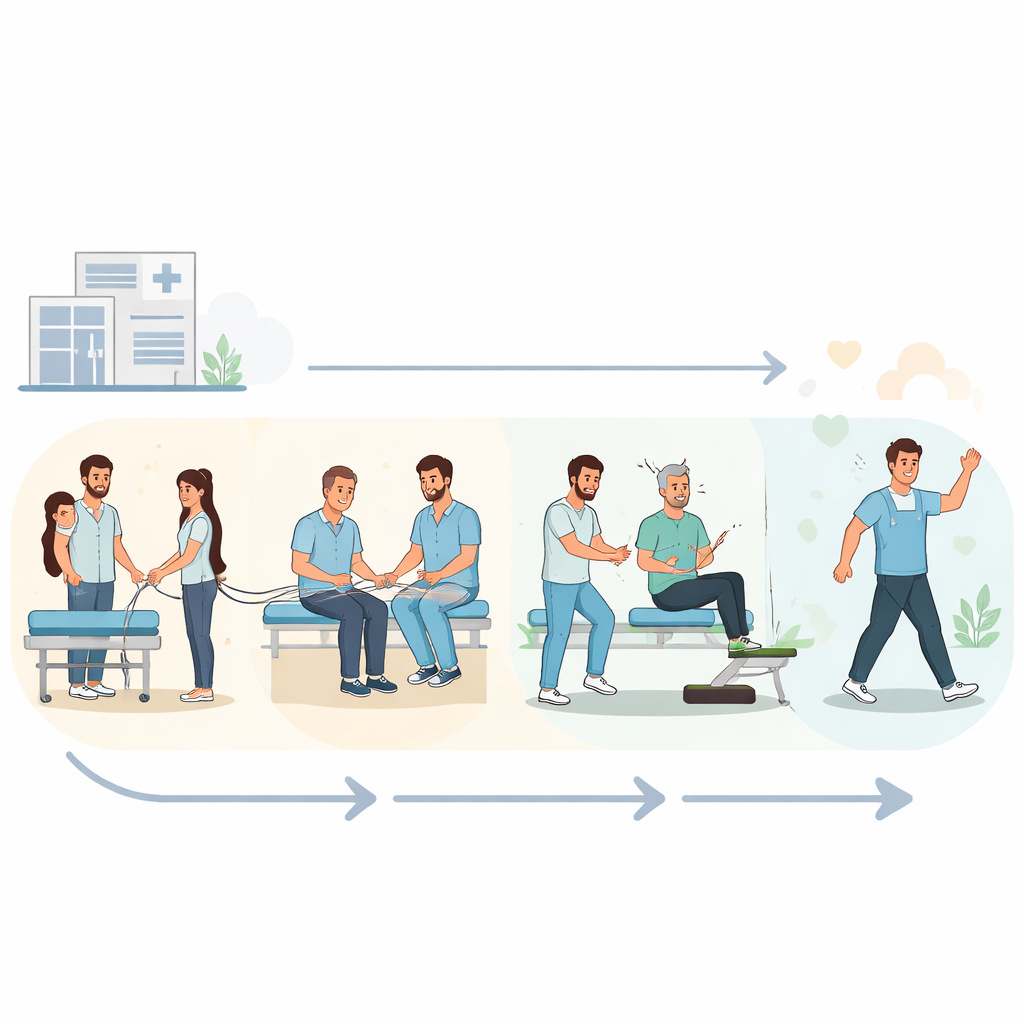
From this rich set of recordings, the researchers identified four common communication strategies that kept appearing at different stages of treatment. First, at the beginning and end of sessions, therapists used warm, endearing language and brought family members into the conversation. Calling a child “my superstar” or praising a parent’s support helped reduce fear, build trust, and turn the clinic into a friendlier space. Second, during the transition into active therapy, therapists encouraged patients to tell stories about their progress and struggles. Asking questions like “When did you first feel you were improving?” prompted people to relive small victories, recognize their own effort, and see themselves as active agents rather than passive sufferers.
Encouragement That Feels Both Kind and Firm
In the middle, more demanding phase of rehabilitation, when exercises grow repetitive and fatigue sets in, two other strategies stood out. Therapists frequently used empathy-driven encouragement, openly acknowledging that the work was hard while reminding patients how far they had come. Simple moves—such as saying “We’re in this together” or inviting patients to go at their own pace—made people feel less alone and more in control. At the same time, therapists relied on what the authors call “motivational exaggeration.” They deliberately magnified progress (“You’re almost at your goal”), played down difficulties (“It’s not as complicated as it seems”), or painted vivid pictures of the future (“Soon you’ll be running like before”) to keep hope alive, especially when day-to-day improvements were hard to notice.
Hidden Power in Everyday Conversations
Although these exchanges often sounded friendly and supportive, they also quietly organized the whole rehabilitation journey. By choosing which moments to highlight as “success,” which worries to soften, and which goals to emphasize, physiotherapists shaped how patients understood their bodies and responsibilities. Over time, patients began to repeat encouraging phrases to themselves and adjust their behavior accordingly. The study shows that power in the therapy room is not only about instructions or test results; it also lives in the subtle push and pull of stories, questions, smiles, and reassurances that nudge patients to keep following the plan.
What This Means for Patients and Therapists
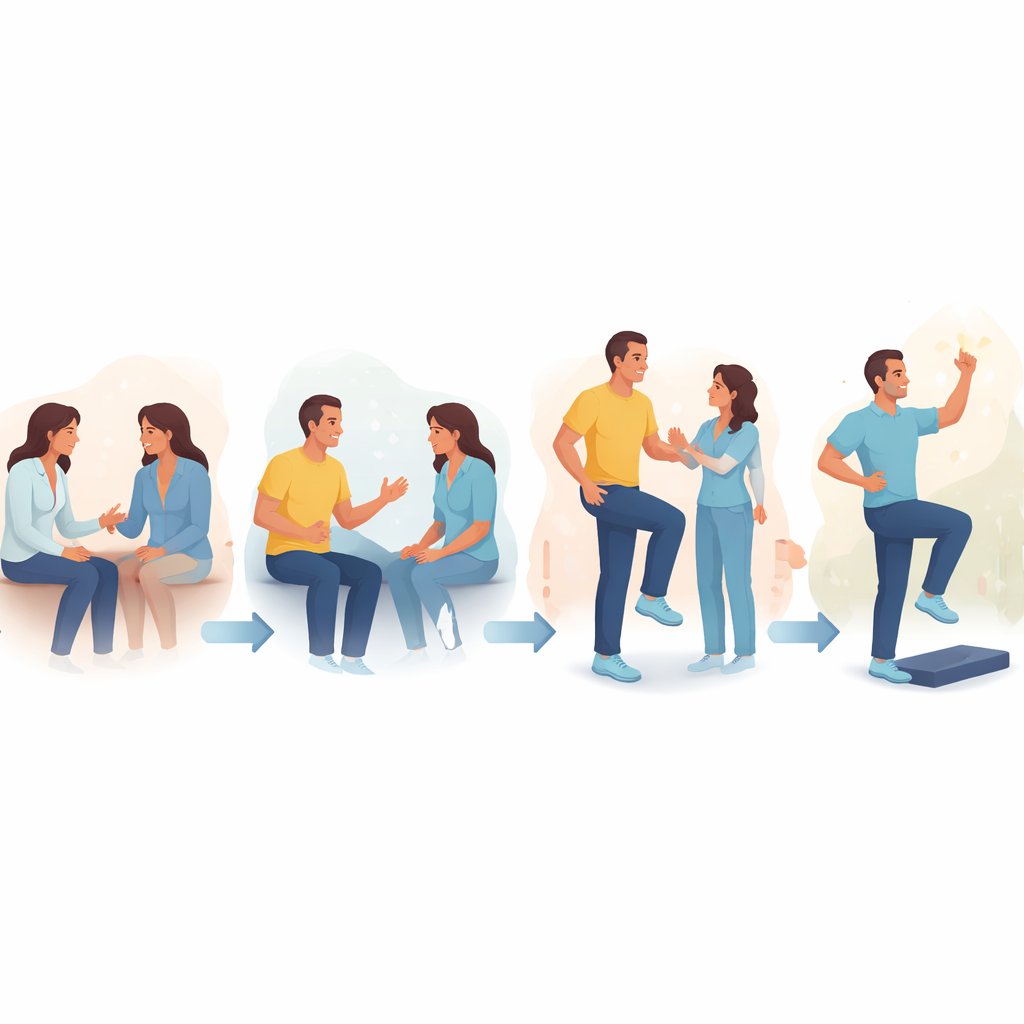
In plain terms, the article concludes that rehabilitation works best when physiotherapists deliberately guide the process—not by barking orders, but by combining authority with warmth. The authors describe this as a “physiotherapist-led” model: therapists set the structure and direction of treatment, while using rapport, shared stories, empathy, and carefully chosen optimism to bring patients along. Recognizing these patterns can help training programs teach better communication skills and help patients understand why some sessions feel so encouraging. In the end, the study reminds us that in long, difficult recoveries, healing depends as much on how people talk and listen as on what happens on the treatment table.
Citation: Shan, Z., Su, Y. Exploring discursive strategies in rehabilitation from Foucault’s discourse theory: language, interaction, and outcomes. Humanit Soc Sci Commun 13, 558 (2026). https://doi.org/10.1057/s41599-026-06863-3
Keywords: rehabilitation communication, physiotherapy, patient engagement, medical discourse, power dynamics