Clear Sky Science · en
Principles for ethical research in the Himalayas: Decolonising research ethics across the disciplines
Why This Mountain Story Matters
The Himalayas often appear in travel photos and adventure tales as a remote land of ice peaks and monasteries. But for millions of people, they are home—and for many researchers, they are a giant outdoor laboratory. This paper asks a simple but powerful question: when scientists, aid agencies, and conservation groups come to study these mountains, who really benefits? It shows how research can either deepen old injustices or help protect local cultures and fragile ecosystems, and it lays out clear principles to make sure knowledge is created with, not just about, Himalayan communities.
From Curiosity to Extraction
For over a century, outsiders have trekked into Himalayan valleys to measure glaciers, interview villagers, and document healing plants. Too often, the author argues, these visits have followed a familiar pattern: experts arrive with their own agendas, gather data, publish papers far away, and leave little behind. Local people rarely see the results, share in the credit, or influence how findings are used. Whether the topic is climate change, hydropower, or folk medicine, this “extractive” style of research treats knowledge as something to be mined and owned, echoing older colonial habits of control. Even universities and agencies based within South Asia can fall into the same trap, acting more like distant authorities than true partners.
Who Speaks for the Mountains?
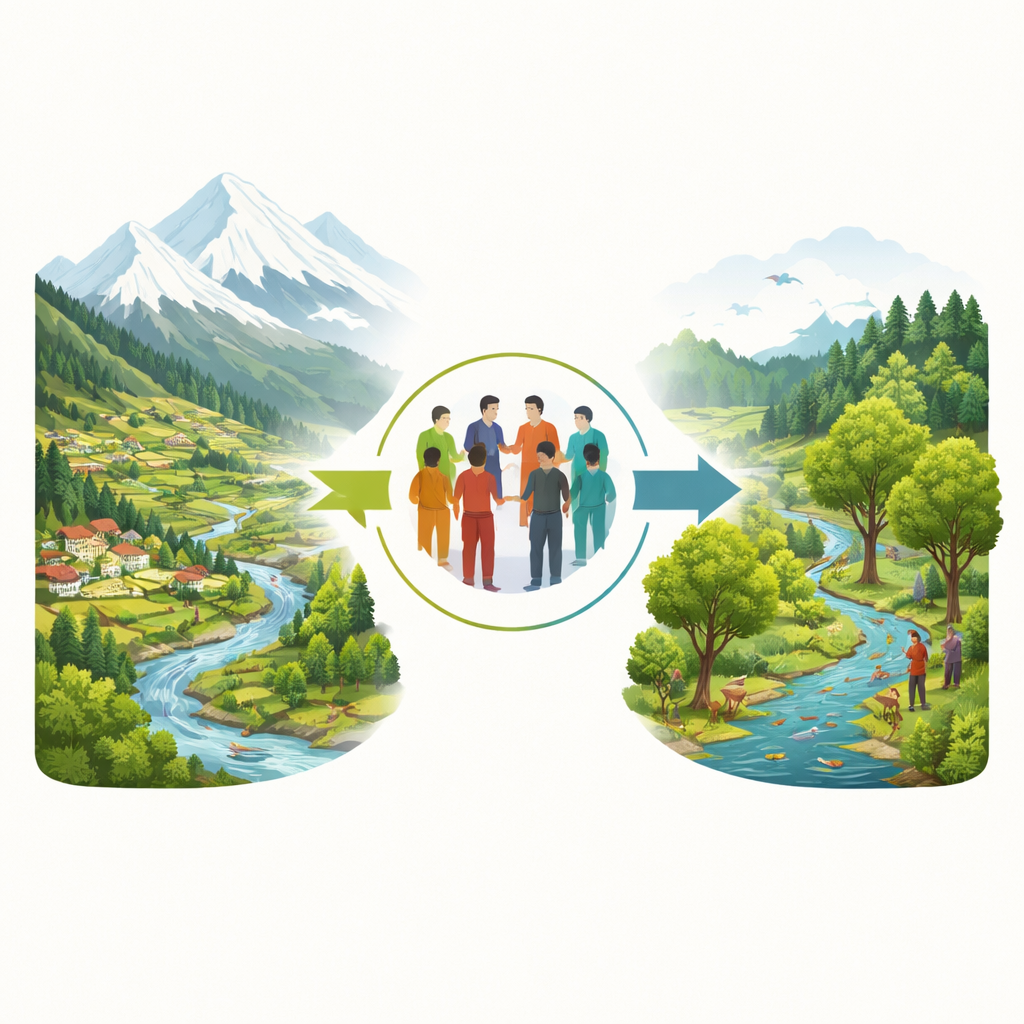
The Himalayas are not just snow and rock; they are woven from hundreds of languages, faiths, and ways of caring for land and water. In many communities, rivers are relatives, forests are sacred, and knowledge is passed on through stories, rituals, and shared work rather than written reports. When research assumes that only satellite images or lab measurements count, it quietly pushes aside these lived understandings. The author calls this “epistemic privilege”: the built-in advantage given to certain ways of knowing. It means that a computer model can outrank a herder’s lifetime of experience, and that decisions about dangerous lakes or dams may ignore people’s own histories and fears. To change this, research must recognise that local and Indigenous knowledge is not folklore at the margins, but a full and equal way of understanding the world.
Six Promises for Fairer Research
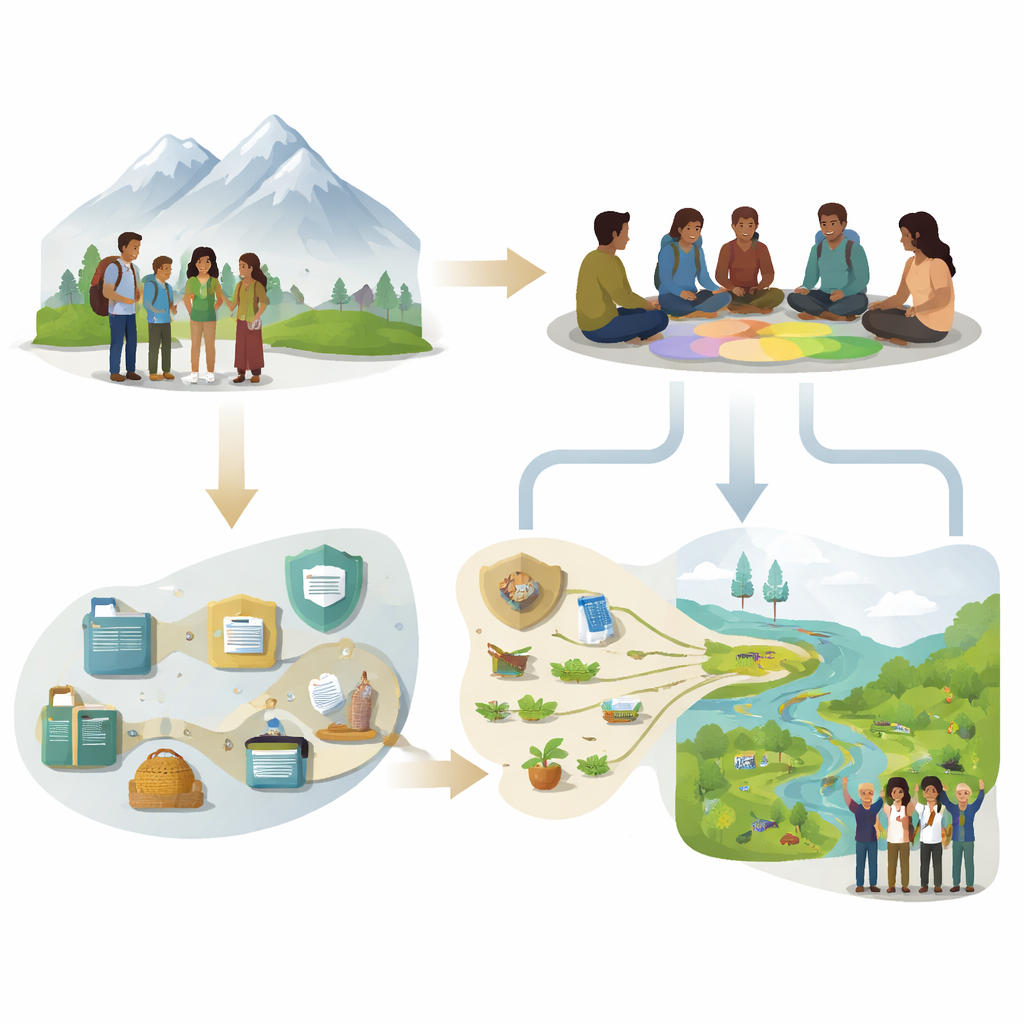
Drawing on decolonial and community-based approaches, the paper proposes six practical principles to guide anyone working in the Himalayas, from social scientists to glaciologists. First, research should begin with community collaboration, where local people help shape the questions and methods from the start. Second, Free, Prior, and Informed Consent must be a real, ongoing conversation, not a one-time signature. Third, knowledge should be co-produced: communities and researchers think, interpret, and, where appropriate, co-author together. Fourth, sensitive cultural and ecological knowledge—such as sacred sites or traditional remedies—must be protected, with communities deciding what can be recorded, shared, or kept private.
Giving Back, Not Just Taking
The fifth principle, benefit sharing and reciprocity, insists that research must actively help communities rather than simply avoid harm. This can mean fair pay for people’s time, training local youth as co-researchers, or producing maps and materials that strengthen local claims to land and water. The sixth principle is long-term commitment and accountability. Ethical responsibility does not end when fieldwork is over or an article is published. Researchers should stay in touch, report back in local languages, and be open to criticism and correction. In practice, this could involve community ethics boards that review projects, or ongoing collaborations that continue long after a grant has finished.
Beyond Checklists to Real Change
Putting these promises into practice is not easy. Funding cycles are short, official ethics boards rarely recognise village councils, and political tensions can make close cooperation risky. Within communities, power differences of caste, gender, class, and age also shape who gets heard. The paper does not gloss over these challenges, but argues that they make careful, relational research even more urgent. It calls on universities and funders to value slow, trust-based work, and on researchers to move from the role of detached expert to that of humble collaborator. In the end, the author suggests, ethical research in the Himalayas is less about collecting more data and more about building lasting relationships that honour local authority. When this happens, studies of glaciers, forests, or livelihoods can support community sovereignty and ecological care, allowing the people of the mountains to guide how their own stories are told.
Citation: Malik, I.H. Principles for ethical research in the Himalayas: Decolonising research ethics across the disciplines. Humanit Soc Sci Commun 13, 468 (2026). https://doi.org/10.1057/s41599-026-06826-8
Keywords: Himalayan communities, decolonising research, ethical fieldwork, Indigenous knowledge, community collaboration