Clear Sky Science · en
Low-carbon transition effects of the digital economy in Chinese cities—the perspectives of green technology innovation and energy efficiency
Why your phone and the planet are more connected than you think
The devices, networks, and apps that power daily life also use a lot of electricity. But they can help cut pollution too. This study looks at hundreds of Chinese cities to ask a simple question with a complicated answer: as the digital economy grows, do carbon emissions go up or down? By tracing how digital tools change innovation and energy use, the authors show that going "more digital" can first worsen, and then later ease, climate pressures—if cities cross a crucial development threshold.
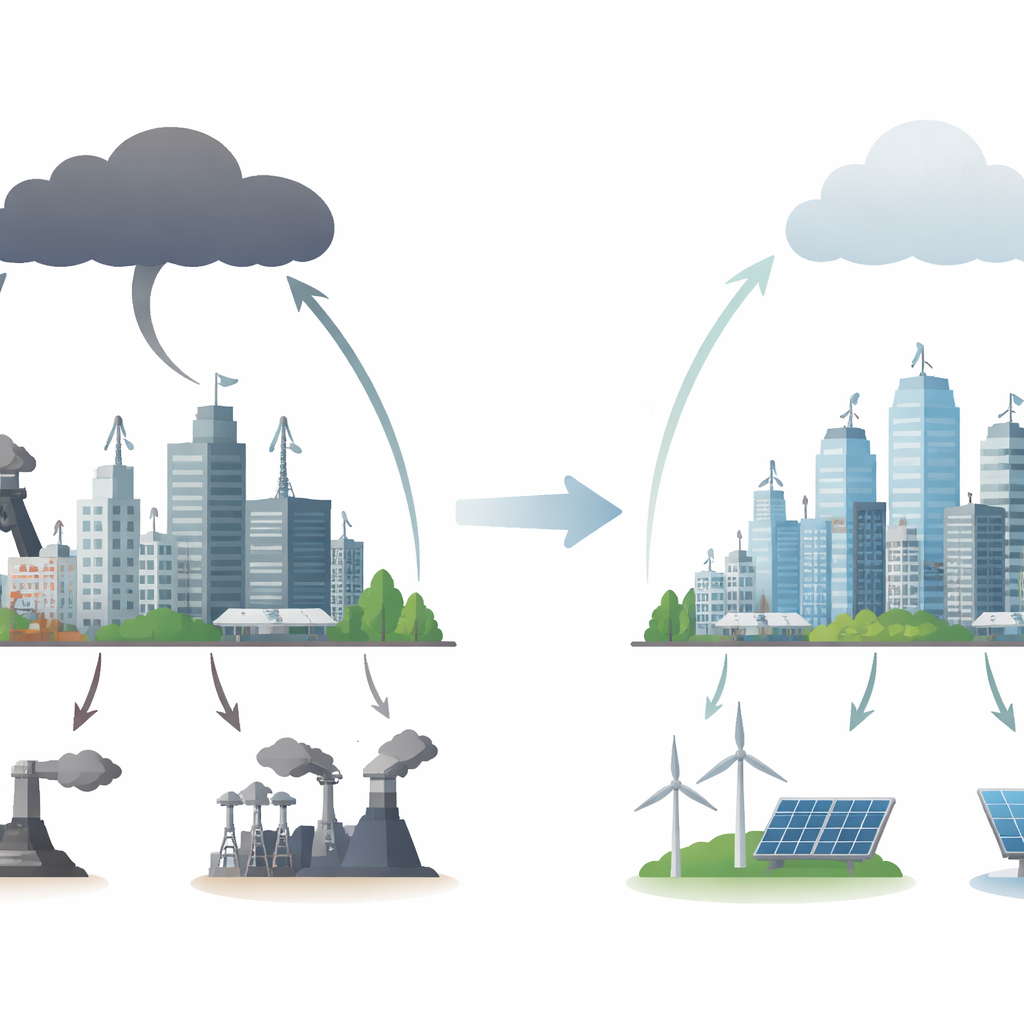
When going digital first makes pollution worse
The researchers find that the relationship between digital growth and carbon emissions is not straightforward. At low levels of digital development—when cities are racing to build data centers, cell towers, and network cables—energy use surges. These new facilities are power-hungry, and they sit on top of existing coal-heavy energy systems. Economic activity expands as online services spread, further boosting demand for electricity and transport. In this early phase, the “scale” and “rebound” effects dominate: more connections, more devices, and more data add up to higher emissions, even though the technology itself is more efficient than older systems.
The turning point where digital helps clean the air
As digital infrastructure matures, the balance gradually shifts. The authors’ statistical analysis of 267 Chinese cities from 2010 to 2023 shows an inverted U-shaped curve: beyond a certain level of digital development, further growth is linked to lower carbon emissions. By 2023, about 70% of the cities in the sample had passed this turning point. At this stage, digital tools enable smarter logistics, more precise energy management, and better environmental oversight. Online platforms support carbon trading, real-time monitoring, and more efficient matching of resources, so each unit of economic output comes with less pollution attached.
How green ideas and smarter energy do the heavy lifting
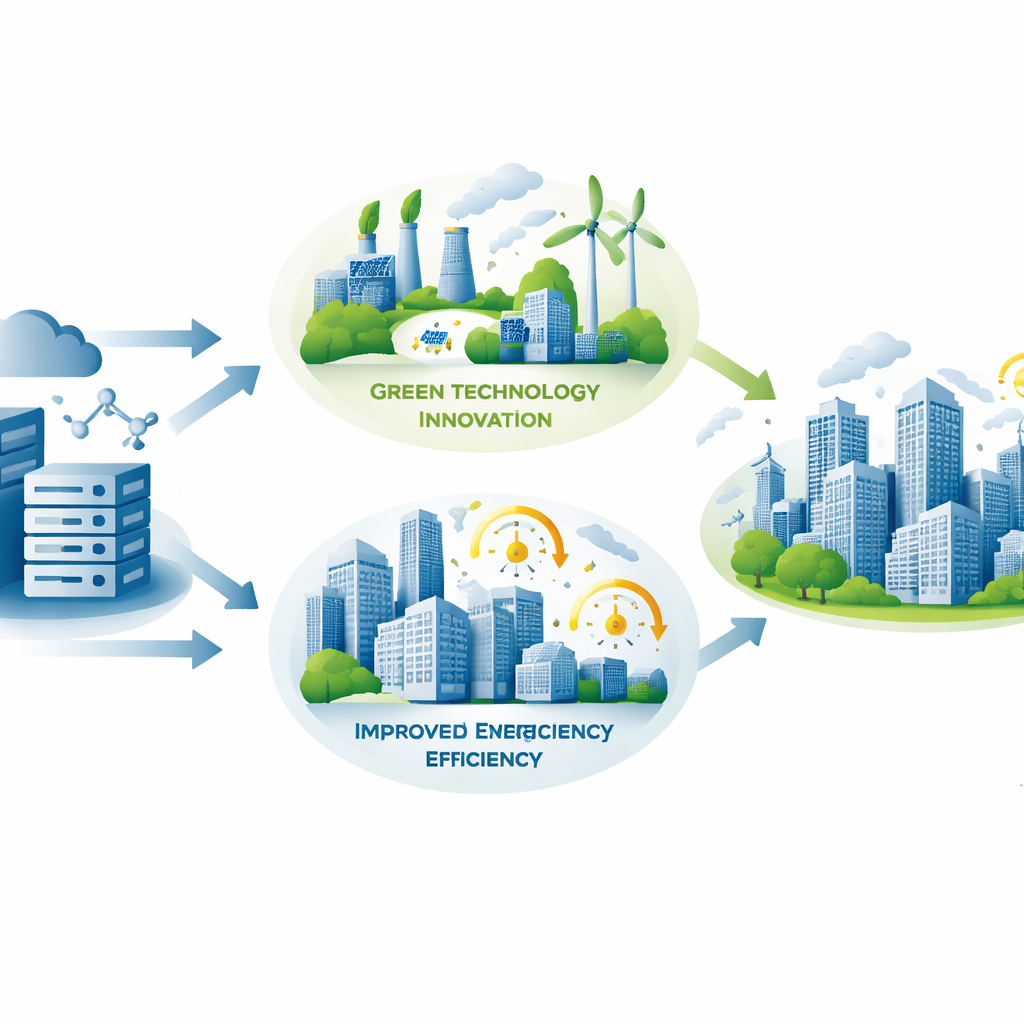
To understand why this turning point appears, the study zooms in on two key pathways: green technology innovation and energy efficiency. As digital networks spread, they link researchers, firms, and markets, lowering the cost of sharing knowledge and coordinating complex projects. Over time this encourages more "green" inventions, from cleaner industrial processes to low-carbon products. In parallel, digital sensors and control systems allow power plants, factories, and buildings to fine-tune when and how they use energy. At first, the gains are too small to outweigh the surge in infrastructure and demand. Later, once a critical mass of innovation and smart management is in place, these channels become strong enough to push overall emissions down.
Why place, rules, and access shape who benefits
The digital transition does not play out the same way everywhere. The study shows that eastern Chinese cities, which tend to be richer and more technologically advanced, reach the helpful side of the curve sooner than central and western cities. Where environmental rules are stricter, digital tools are more likely to be steered toward cutting waste rather than just boosting output. Cities with smaller digital divides—where households and firms broadly share access to modern networks—also unlock emission cuts earlier. In places with weak oversight and large gaps in access, digital growth can entrench older, high-carbon patterns for longer.
What this means for a low‑carbon digital future
For everyday life, the message is both hopeful and cautionary. A growing digital economy is not automatically “green”: in its early stages, it can raise emissions as fast as it raises living standards. But if backed by strong environmental policies, support for clean innovation, and efforts to narrow digital gaps, the same technologies can become powerful tools for cutting carbon. The authors conclude that to make digitalization a true ally in climate action, governments should shift support toward lagging regions, tighten environmental rules, and use data-driven systems to guide investment into cleaner technology and smarter energy use.
Citation: Sun, X., Li, Z. & Guo, C. Low-carbon transition effects of the digital economy in Chinese cities—the perspectives of green technology innovation and energy efficiency. Humanit Soc Sci Commun 13, 578 (2026). https://doi.org/10.1057/s41599-026-06778-z
Keywords: digital economy, carbon emissions, green technology innovation, energy efficiency, China cities