Clear Sky Science · en
Carbon trading policies and low-carbon development in the sports manufacturing sector: a game-theoretic analysis
Why cleaner sports gear matters
From running shoes to basketballs, our favorite sports products have a hidden footprint: the energy and materials used to make them release large amounts of carbon into the atmosphere. As countries roll out carbon-cutting rules and carbon trading markets, big sports brands and their retail partners suddenly face new costs, new opportunities, and tough choices. This paper asks a simple but important question: under what conditions do these policies actually push the industry toward genuinely cleaner products while still keeping companies healthy and consumers satisfied?
How carbon rules change the game
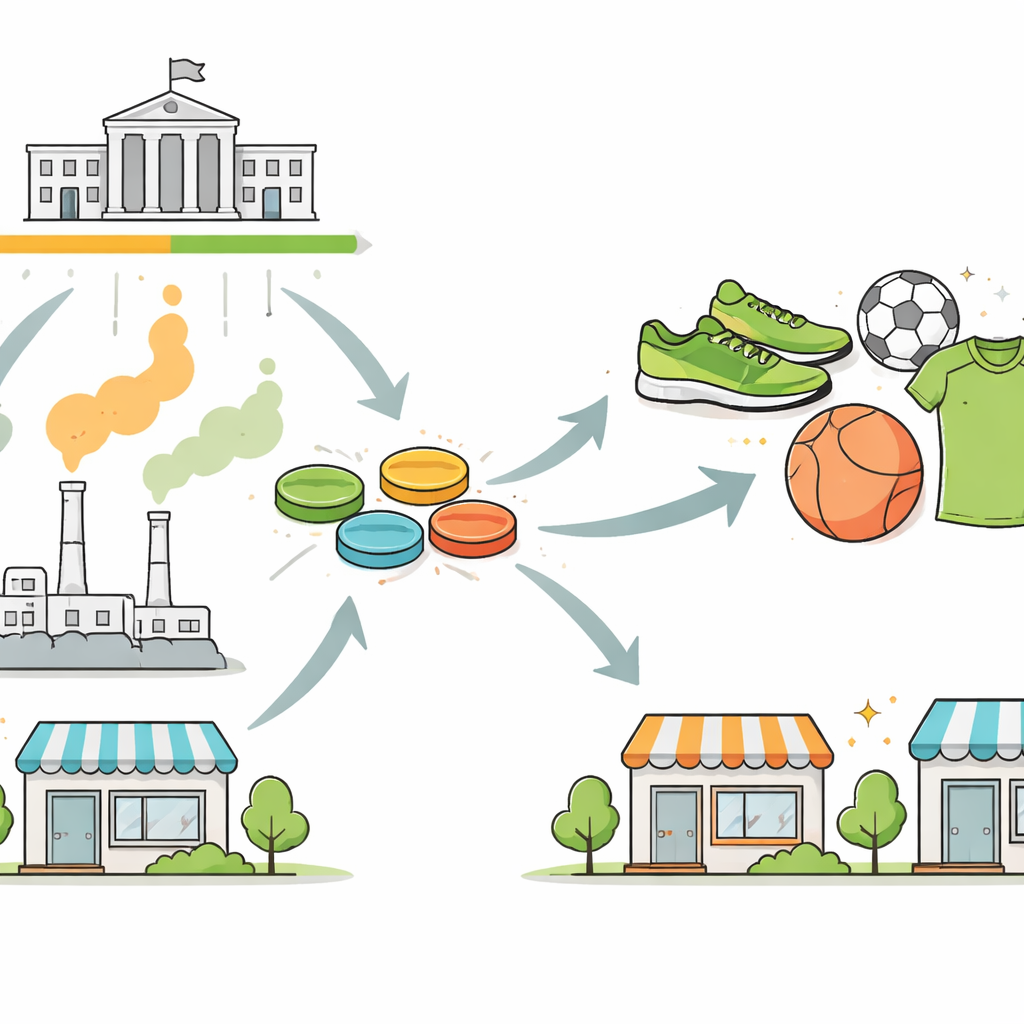
The study looks at the supply chain linking ordinary sports manufacturers, who design and produce items like shoes and gear, and sports retailers, who sell them to consumers. Instead of relying on past data, the authors build a strategic "game" model in which manufacturers move first, setting prices and deciding how much to invest in cutting their carbon emissions, while retailers respond with their own pricing decisions. They compare two worlds: one with no carbon trading policy and one where a government sets an overall carbon cap and lets firms trade emission allowances. This setup captures how policy rules, costs, and consumer tastes all interact before we ever see a product on the shelf.
When cutting emissions helps business
The models show that, in general, investing in cleaner production pays off for the whole chain. When manufacturers improve their carbon performance, their products become more attractive to environmentally minded buyers, sales volumes rise, and both manufacturers and retailers tend to earn higher profits than if they had done nothing. However, this does not mean "the more investment the better." As the cost of cutting emissions climbs, the extra profit from each additional improvement shrinks. In other words, there is an optimal zone for low-carbon investment: below it, firms miss out on both profit and environmental gains; above it, they overspend for little extra benefit.
Why carbon trading works for some but not all
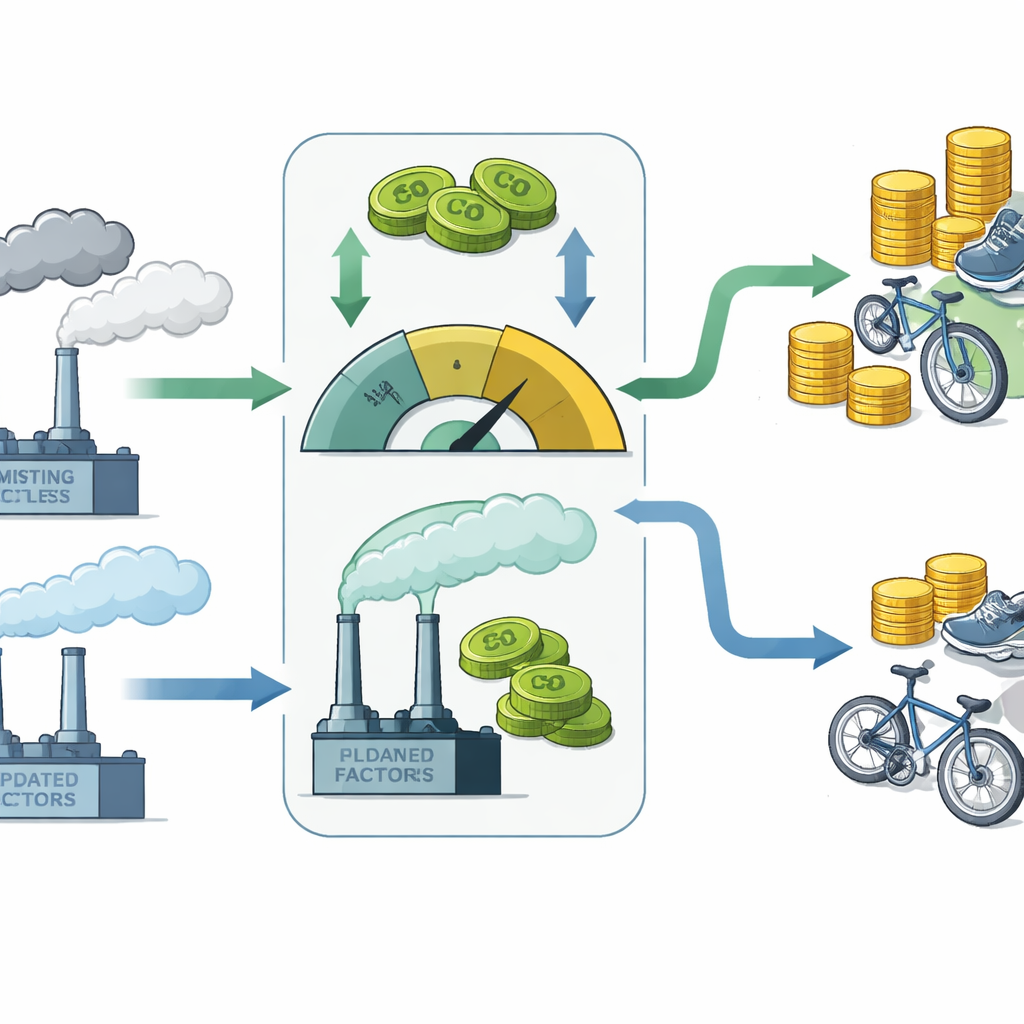
Carbon trading is often promoted as a win–win tool, but the paper finds its impact is highly context dependent. If a product starts out with very high emissions per unit, the manufacturer must buy many extra allowances, driving up costs. In such cases, the policy can actually discourage deeper emission cuts, push wholesale and retail prices higher, reduce sales, and squeeze retailer profits. By contrast, when initial emissions are relatively low and the total carbon cap is generous enough, manufacturers can profit by selling unused allowances. That extra income encourages further investment in low-carbon technology and supports higher output. The study also shows that the overall cap level acts like a tuning knob: set too tight, it erodes profits; set above a certain threshold, it boosts manufacturers’ gains.
The power of green-minded shoppers
Another crucial factor is how much consumers care about low-carbon products. The authors factor this "green preference" directly into demand. When concern for the environment is weak, companies struggle to charge more for cleaner items, and passing on extra costs through higher prices quickly drives customers away. But once green awareness crosses a certain threshold, the story flips. Manufacturers are more willing to invest in cleaner technologies, can set somewhat higher prices, and still sell more units, because buyers actively seek out greener gear. In this strong-preference zone, market size, manufacturer profit, and retailer profit all move into a growth phase together.
Extending the view to product recycling
The paper also explores what happens when recycling is added to the picture, so that products are collected and processed after use. Recycling raises extra costs for manufacturers, and these are often passed on through higher wholesale and retail prices. As recovery rates increase, prices rise, but sales, profits, and even the level of emission reduction efforts tend to fall, especially if recycling systems are inefficient. Nonetheless, the broader pattern remains: when paired with sensible carbon caps and meaningful consumer demand for greener products, investment in cleaner technologies and smart recycling can still outperform a do-nothing approach in both environmental and financial terms.
What this means for everyday sports gear
For non-specialists, the takeaway is that climate policy in sports manufacturing is not just about punishing polluters; it is about designing rules that match where companies are starting from and how much consumers value cleaner options. The study suggests that carbon trading works best when emission caps are neither too loose nor too tight, when firms already have some capacity to produce lower-carbon goods, and when shoppers care enough to reward those efforts. Under those conditions, cleaner factories, smarter pricing, and growing demand for greener sports gear can reinforce one another, making low-carbon development a practical path rather than a costly burden.
Citation: Guo, J., Zhang, X. Carbon trading policies and low-carbon development in the sports manufacturing sector: a game-theoretic analysis. Humanit Soc Sci Commun 13, 448 (2026). https://doi.org/10.1057/s41599-026-06728-9
Keywords: carbon trading, sports manufacturing, low-carbon products, supply chain, consumer green preferences