Clear Sky Science · en
Modeling the Halal value chain: a simulation-based approach
Why this matters to everyday shoppers
The halal logo on food or services promises Muslim consumers that what they buy follows religious rules. But keeping that promise is complex, especially when millions of tiny family businesses are involved. This article looks at how Indonesia, home to one of the world’s largest Muslim populations, can weave its many micro and small food businesses into a reliable, efficient "halal value chain"—from farm and kitchen all the way to the dinner table—using technology, smart rules, research, and faith‑based finance.
From simple label to full journey
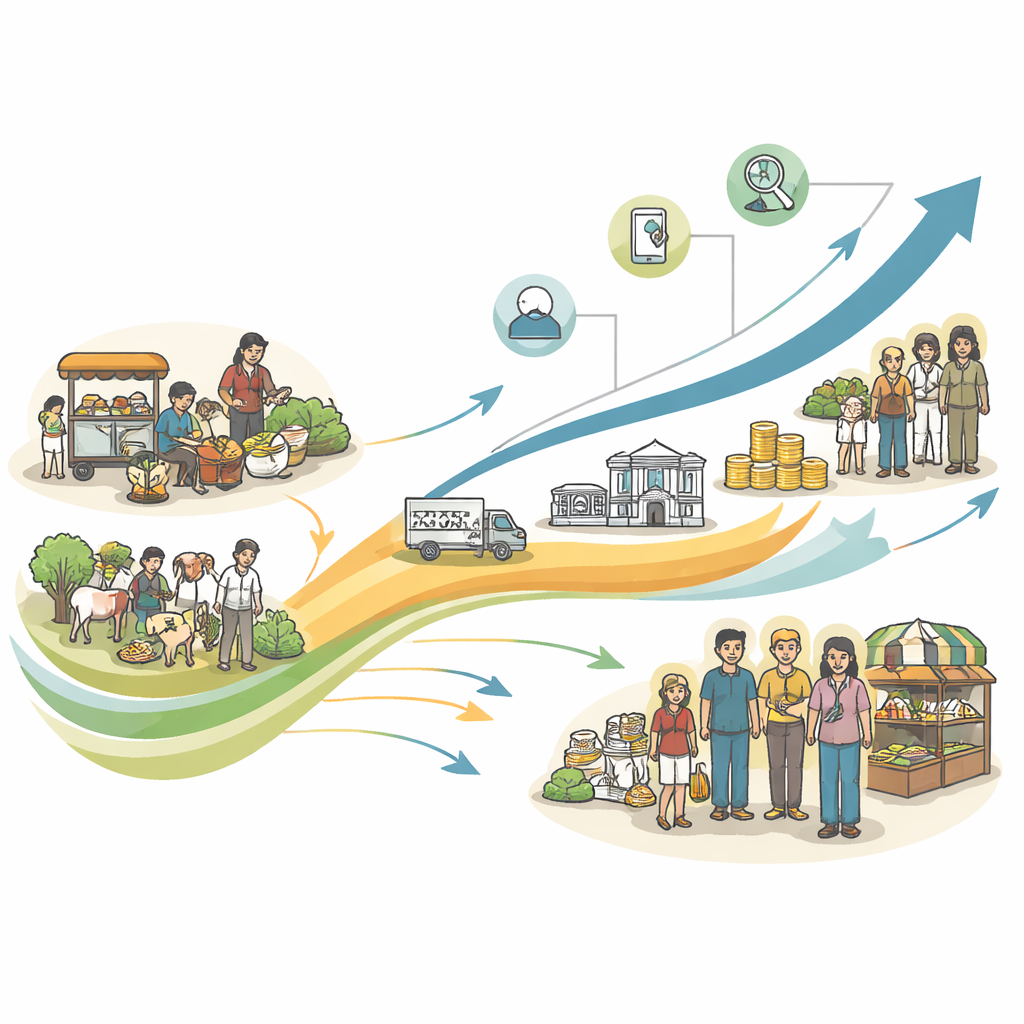
Most people see halal as a label on a package, yet behind that symbol lies an entire journey of ingredients, processing, storage, transport, and payment. The authors explain that a "halal value chain" goes beyond moving goods; it also covers how businesses grow, innovate, and reach export markets while following Islamic ethics such as honesty and fairness. In Indonesia, tiny food and drink businesses dominate both jobs and output, but only a small fraction are formally certified halal, often because they lack knowledge, money, or time to navigate the system. The government has tried to ease this by allowing simpler self‑declaration for micro firms and by promoting halal industrial zones and support programs.
Four levers shaping a halal ecosystem
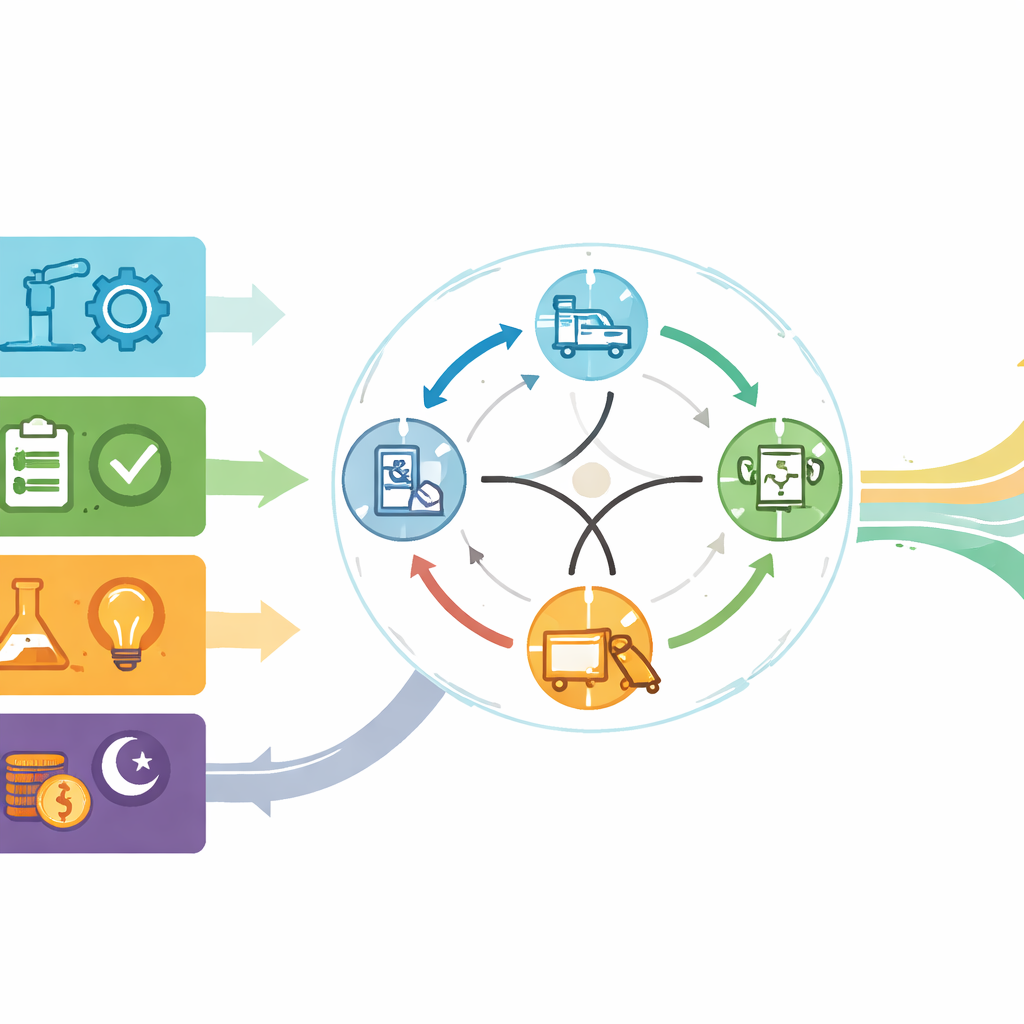
The study focuses on four major levers that can lift or hold back the halal value chain: digital technology, Islamic finance, regulation, and research and development (R&D). Technologies such as QR codes, sensors, and blockchain can trace food from source to plate, helping prevent mixing with non‑halal products and building consumer trust. Islamic finance offers capital without interest, in line with religious rules, through tools like profit‑sharing contracts or sukuk (Islamic bonds). Regulation defines what counts as halal and how it must be handled in warehouses, trucks, and shops. R&D covers activities like staff training, process improvement, and product innovation. Each of these factors has been studied separately before; here, the authors combine them into a single, interacting system.
Turning a complex chain into a living model
To understand how all these pieces interact over time, the researchers used a method called system dynamics, which treats the halal value chain like a living organism with feedback loops rather than a static checklist. They surveyed 277 certified micro and small food businesses across major Indonesian cities, asking about 26 specific practices—such as how they use digital tools, follow rules, fund operations, and invest in training or product changes. These answers were used to build a causal diagram showing how the four levers push or pull on overall performance, and then a computer simulation translated that diagram into a "stock and flow" model that could be run month by month over a year.
What happens over a year
The 12‑month simulation revealed some striking patterns. Digital technology emerged as the single strongest driver of improvement, boosting transparency, efficiency, and customer confidence. Regulations and Islamic finance also helped, but more moderately, by nudging firms toward better practices and providing funds that do not compromise halal principles. R&D behaved differently: at first it appeared to drag performance down, likely because tiny firms face extra costs and disruption when they start new projects or training. Over time, however, those investments paid off, and R&D turned into a positive contributor as businesses learned, adjusted their processes, and made better use of technology and funding. Overall halal value chain performance noticeably improved around the eighth month, suggesting that policy makers and firms must be patient and persistent rather than expecting instant results.
What this means for real people
To a layperson, the message is that a trustworthy halal system is not built by labels alone. It takes steady use of digital tools to track products, clear and enforced rules, financing that respects religious principles, and ongoing learning and innovation—even when that learning feels costly at first. When these elements are combined and allowed time to work, small neighborhood food businesses can deliver products that are not only religiously acceptable but also safer, more sustainable, and more competitive at home and abroad. The authors argue that this integrated approach can help Indonesia, and countries facing similar challenges, build a more reliable halal value chain that benefits consumers, entrepreneurs, and the wider economy.
Citation: Harsanto, B., Farras, J.I., Firmansyah, E.A. et al. Modeling the Halal value chain: a simulation-based approach. Humanit Soc Sci Commun 13, 577 (2026). https://doi.org/10.1057/s41599-026-06724-z
Keywords: halal value chain, digital traceability, Islamic finance, micro and small enterprises, Indonesia halal industry