Clear Sky Science · en
Divergent Drivers of Crime in Asia: A Comparative Panel Analysis of Institutional and Socioeconomic Factors
Why Crime Patterns Across Asia Matter to Everyday Life
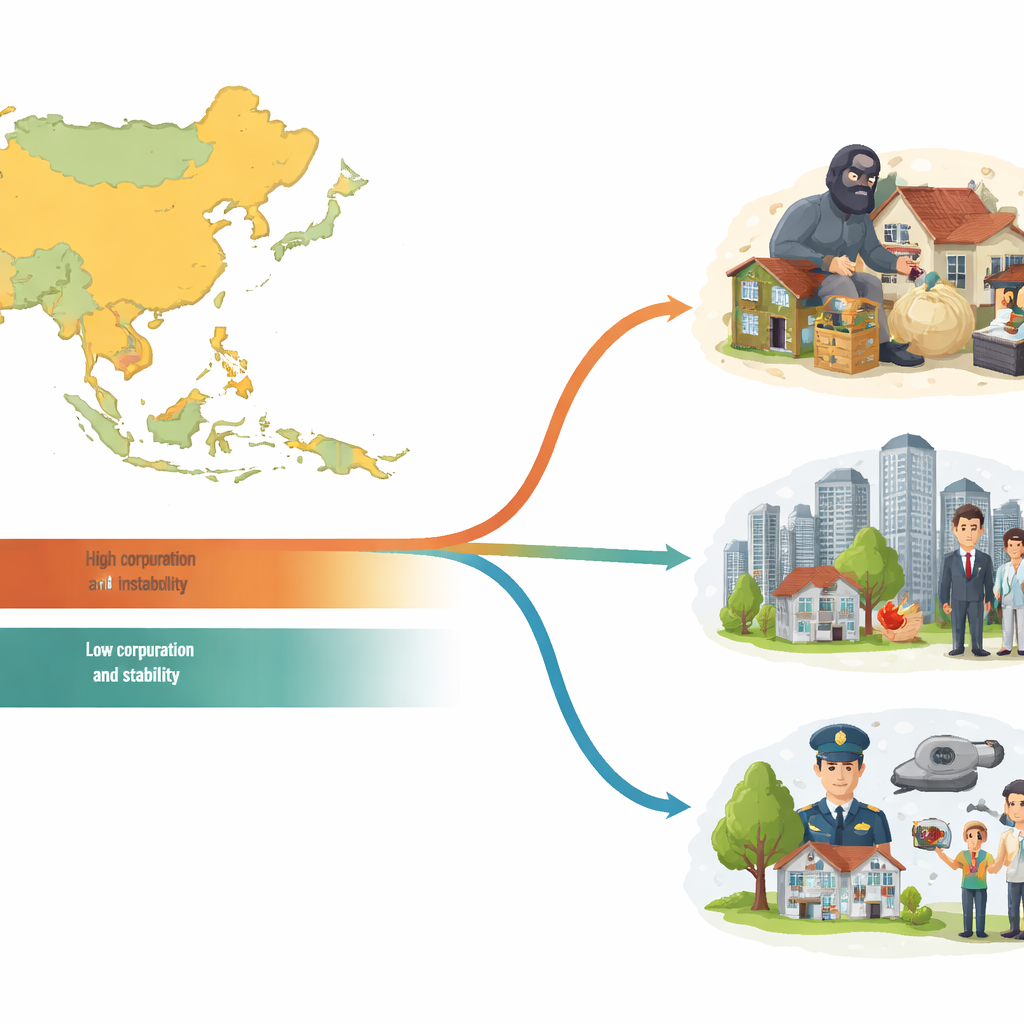
Across Asia, crime does not rise and fall in a simple way with economic growth. Some booming cities feel safer over time, while others struggle with persistent street crime and corruption. This article explores why crime looks so different from one Asian country to another, and why the same policies that work in Singapore or Japan may fail in Indonesia or Pakistan. By separating slow-moving institutional weaknesses from faster-changing social pressures like inequality and unemployment, the study offers a practical map for crafting crime-reduction strategies that are better matched to local realities.
Looking Beyond Economic Growth Alone
Asia has experienced decades of rapid economic expansion, but this growth has unfolded alongside deep concerns about public safety and trust in government. The paper argues that focusing only on income and jobs misses crucial pieces of the puzzle. It draws on leading theories from criminology and economics that stress how weak public institutions, widespread bribery, and fragile political systems can erode respect for the rules of everyday life. At the same time, fast-paced urbanization, widening income gaps, and patchy access to education and formal work can fuel frustration and strain within communities. These overlapping forces mean that two countries with similar income levels can have very different crime profiles.
What the Researchers Measured Across Asia
To untangle these drivers, the study assembles a large dataset covering 38 Asian countries between 2012 and 2023. Rather than relying on a single statistical model, the author uses four complementary approaches to examine both long-term differences between countries and year-to-year changes within each country. The main outcome is a perceptions-based crime index, capturing how residents rate overall crime levels. Key explanatory factors include corruption levels, political stability, income inequality, the share of people living in cities, and standard economic indicators such as growth, inflation, and unemployment. This layered design allows the study to distinguish deep structural features—like chronically corrupt institutions—from more dynamic shifts in inequality or joblessness that can change relatively quickly.
Corruption Versus Inequality: Two Different Crime Engines
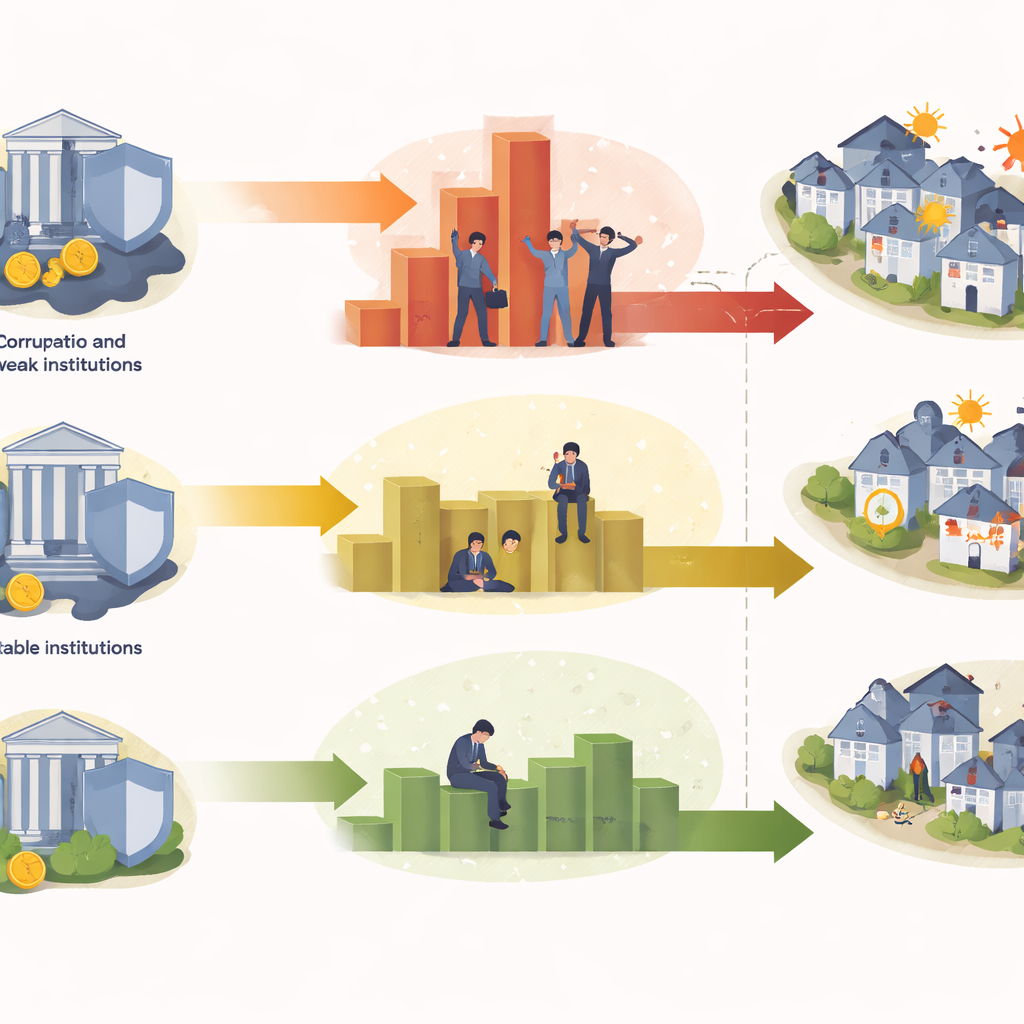
The results point to a sharp divide between what explains differences in crime across countries and what explains changes within a country over time. When the models focus on contrasts between nations, corruption stands out as the dominant factor: countries with cleaner public sectors and stronger institutional quality tend to have lower baseline crime levels, especially among low- and middle-income economies. Urbanization, when tied to competent policing and infrastructure, also tends to coincide with less perceived crime, challenging the old assumption that bigger cities are automatically more dangerous. However, when the focus shifts to changes inside a country from year to year, the spotlight moves. In higher-income Asian societies, rising income inequality, unemployment, and shocks to political stability emerge as key predictors of whether crime goes up or down over time, even when their institutions are relatively sound.
Why Economic Development Stage Changes the Story
The study goes further by splitting countries into high-income and middle- or low-income groups. Among richer economies such as Japan, Singapore, and South Korea, corruption no longer plays the starring role. Instead, crime is more closely tied to social tensions created by unequal gains from growth and insecurity in the labor market. Well-run cities can even dampen crime by concentrating services, surveillance, and opportunities in ways that support everyday safety. In contrast, in developing Asian countries, corruption remains the central structural driver. There, variations in crime are strongly linked to how far bribe-taking, weak enforcement, and political instability undermine the rule of law. Inequality and unemployment appear less powerful on their own where institutional failure and generalized poverty are already pervasive.
What This Means for Policy and Ordinary Citizens
The article concludes that crime cannot be tackled with a single recipe for all of Asia. For poorer and middle-income countries, the most effective crime-control strategy is to build honest, capable public institutions—curbing corruption, stabilizing politics, and investing in trustworthy courts and police. Without this foundation, reforms targeting inequality or jobs will have limited impact on safety. For wealthier Asian societies, where institutions already function reasonably well, the priority shifts toward easing social and economic strains, from narrowing income gaps to addressing job insecurity and supporting vulnerable groups. In clear terms, the research shows that safer streets depend on matching the cure to the underlying illness: institutional repair in less-developed settings, and fairer sharing of prosperity in richer ones.
Citation: Songsrirote, N. Divergent Drivers of Crime in Asia: A Comparative Panel Analysis of Institutional and Socioeconomic Factors. Humanit Soc Sci Commun 13, 456 (2026). https://doi.org/10.1057/s41599-026-06718-x
Keywords: crime in Asia, corruption, income inequality, urbanization, public safety policy