Clear Sky Science · en
Discovering emerging trends and interdisciplinary mechanisms in urban studies and planning research using topic modelling 1991–2021
Why this matters for our cities
Cities are where most of us live, work, and face the big challenges of our time—from housing costs to climate change. Yet the research that shapes urban policy is scattered across many specialties, making it hard to see the bigger picture. This paper pulls together three decades of studies on cities and planning to reveal how ideas have moved, merged, and evolved, offering an X-ray of how urban knowledge is built and where it is heading.
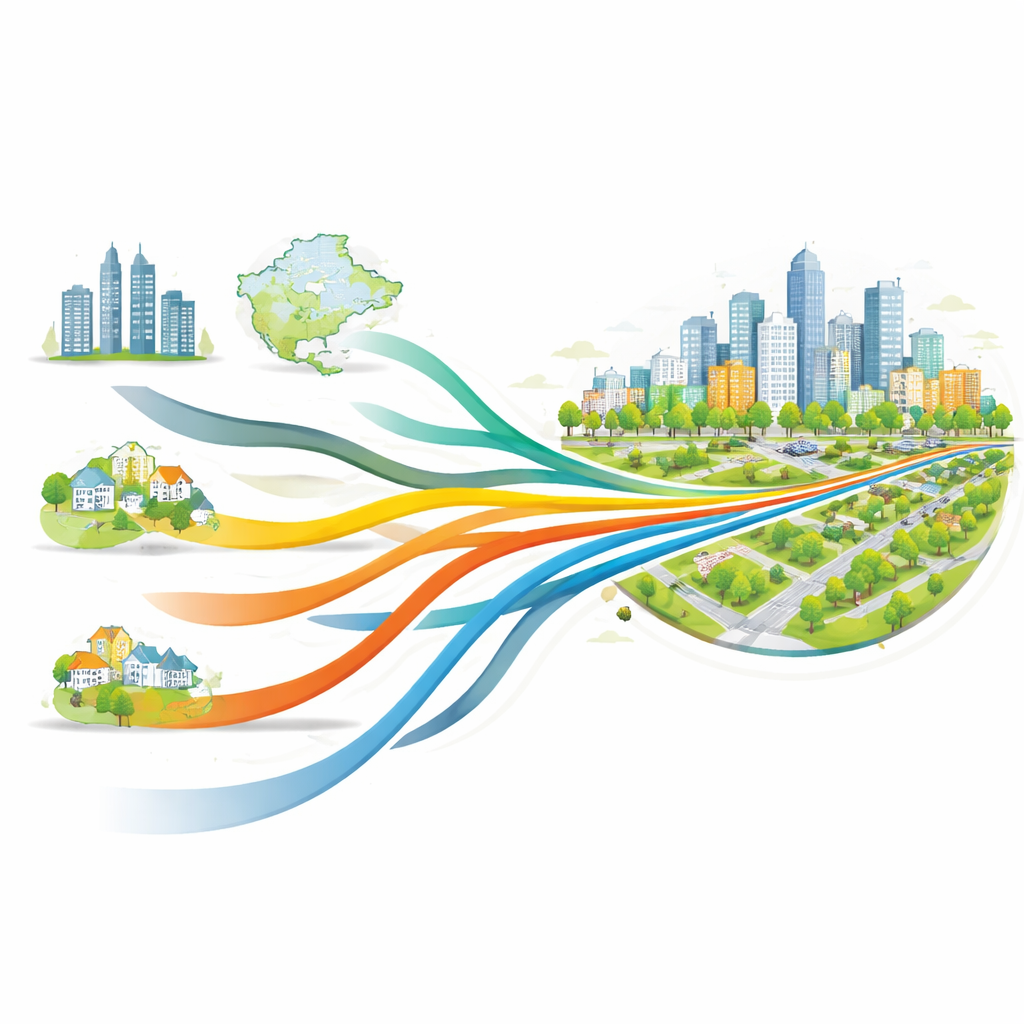
Looking across 30 years of city research
The authors analysed 44,147 articles published between 1991 and 2021 in 30 of the most influential urban studies and planning journals worldwide. Instead of reading each paper, they used a machine-learning method called topic modelling to detect recurring themes in titles, abstracts, and keywords. This allowed them to identify 12 main topics, ranging from housing markets and transport to environmental management, neighbourhood life, and public space design. They then traced how often each topic appeared over time and how strongly authors working in one area also published in others.
What scholars have been most interested in
Over these three decades, work on politics and society in cities formed the single largest topic, focusing on issues such as power, inequality, and governance. Research on housing and property markets, planning rules and local government, and regional economic development also occupied central positions. At the same time, the overall volume of urban research surged: yearly publications rose roughly eightfold, and the average number of authors per paper doubled. This signals a field that has become not only bigger but also more collaborative, as complex city problems increasingly require teams rather than solo scholars.
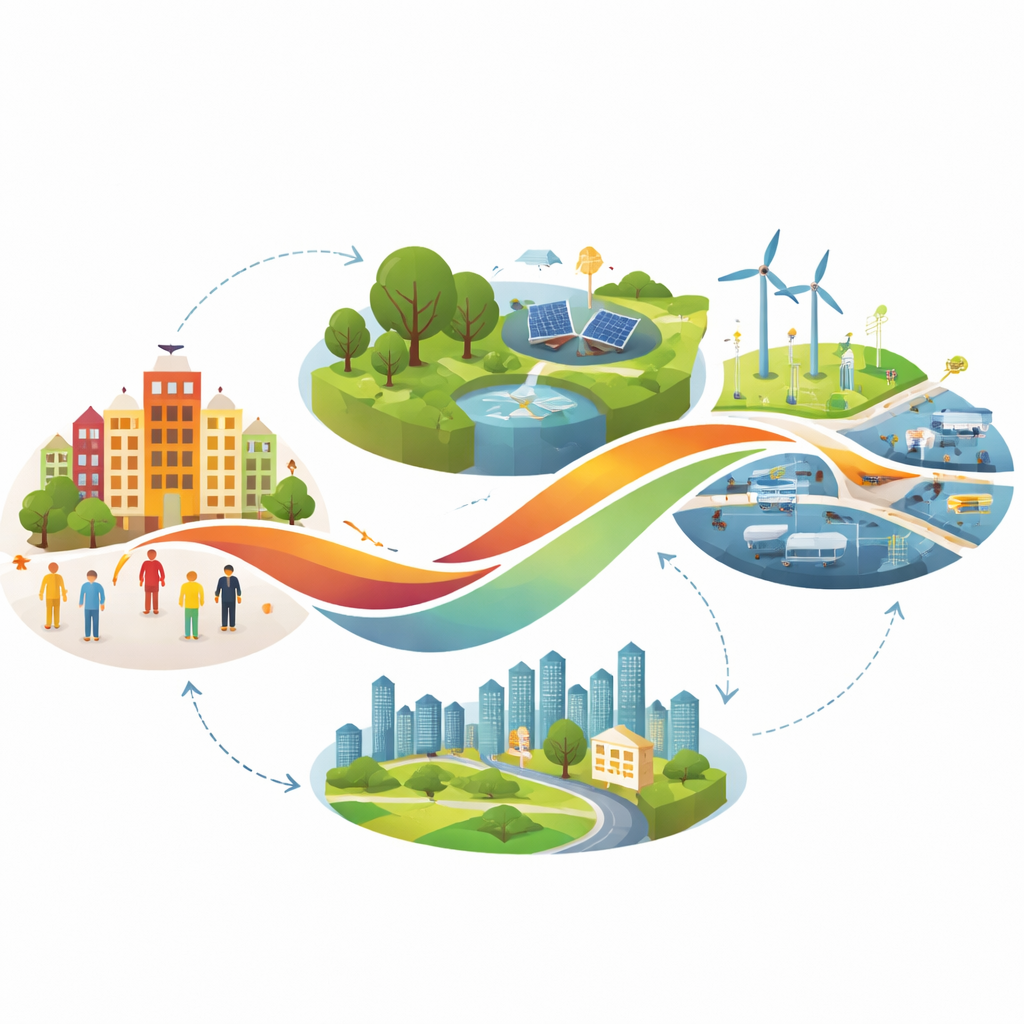
The rise of green cities and local life
One of the clearest shifts the study uncovers is the growing importance of environmental themes. Work on urban green spaces, forests, and landscape design, as well as broader environmental management and climate planning, moved from the margins of the field in the 1990s to near the top by the late 2010s. Terms related to green space, ecosystem services, and climate change now appear across many different topics, showing that environmental thinking has seeped into mainstream planning, not just specialist niches. Research on neighbourhoods and community-level planning has also become more prominent, echoing popular ideas like the “15-minute city,” where daily needs are met close to home.
How ideas travel between fields
Beyond counting topics, the study asks how knowledge actually flows between them. It finds three key patterns. First, ideas tend to move unevenly: for example, scholars who focus on socio-political questions influence planning policy research more than the other way around, suggesting that critical urban theory often sets the agenda that policy work follows. Second, some topics act as bridges. Urban–rural development—studies of how city regions blend into their surrounding countryside—turns out to be a major connector, with more than half of its authors also publishing in other areas. This bridge helps link economic, social, and environmental concerns across city and countryside. Third, technical tools such as spatial analysis and mapping increasingly serve as a common language, allowing researchers from transportation, environment, and other domains to collaborate using shared methods.
What this means for the future of urban planning
By showing which ideas have grown, faded, and intertwined, the paper argues that urban studies has become a deeply interdisciplinary enterprise held together by shared problems and methods. Environmental sustainability and neighbourhood-scale planning now sit near the heart of this knowledge system, lending quantitative support to current planning trends like compact, walkable districts and nature-based solutions. At the same time, the study highlights ongoing barriers, such as academic structures that still reward work within traditional disciplines more than across them. For readers and practitioners alike, the message is clear: making cities fairer, greener, and more resilient will depend on research that continues to cross boundaries—between disciplines, between city and countryside, and between theory and practice.
Citation: Ho, S.K.S., Deng, W. & Yang, T. Discovering emerging trends and interdisciplinary mechanisms in urban studies and planning research using topic modelling 1991–2021. Humanit Soc Sci Commun 13, 585 (2026). https://doi.org/10.1057/s41599-026-06712-3
Keywords: urban studies, interdisciplinary research, environmental sustainability, urban planning trends, topic modelling