Clear Sky Science · en
Longitudinal relations between academic performance and life satisfaction among elementary and secondary school students
Why school success and happiness matter together
Parents, teachers, and students often wonder which comes first: doing well in school or feeling happy with life. This study followed thousands of South Korean children from late elementary through early secondary school to see how grades and life satisfaction influence each other over several years. The findings suggest that happiness in childhood is not just a pleasant extra—it can help build stronger school performance, and in the teen years, school success and life satisfaction begin to reinforce each other.
Following students as they grow up
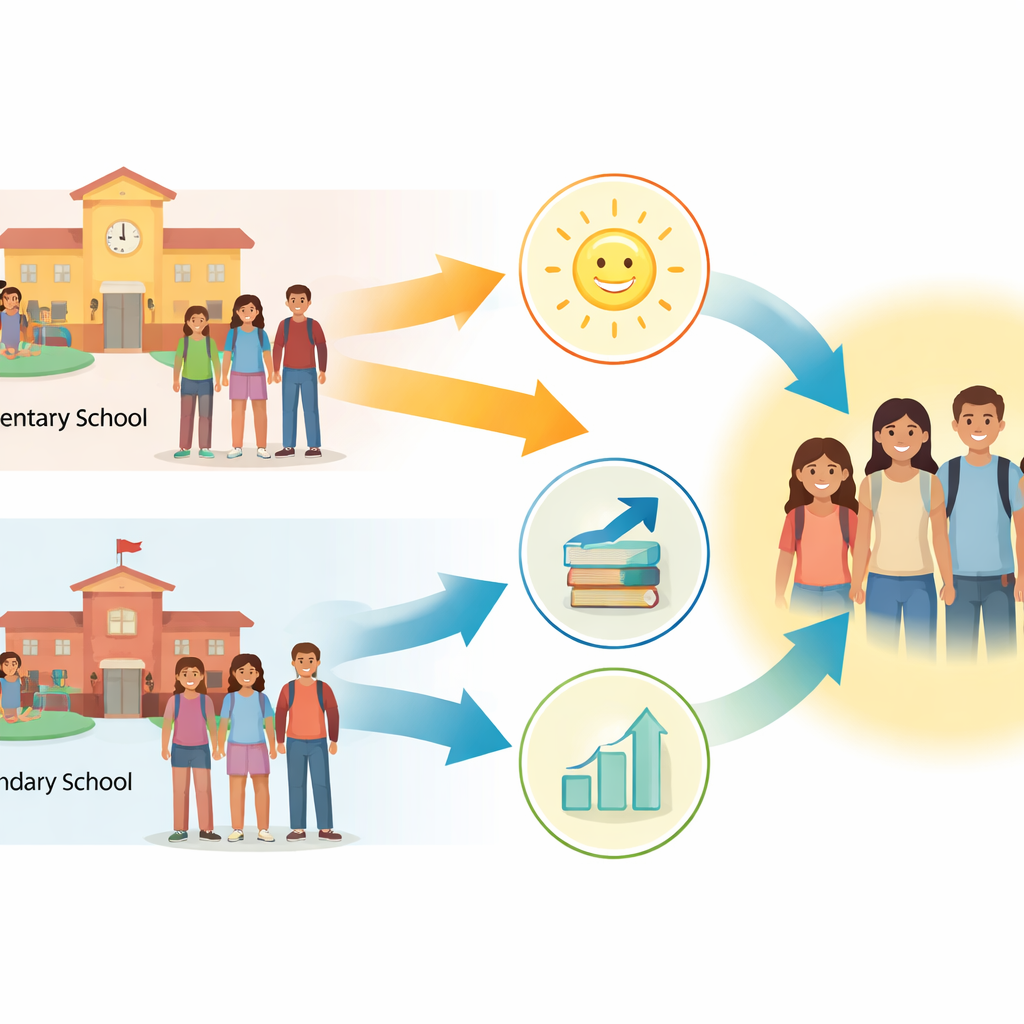
The researchers drew on a large national survey that tracks South Korean children over time. They focused on two groups: more than 2,600 students from grades 4 to 6 and a similar number from grades 7 to 9. Each year, students rated how satisfied they were with their lives and how well they were doing in school. Using statistical models designed to follow change over time, the team examined whether earlier grades predicted later life satisfaction, and whether earlier life satisfaction predicted later grades, separately for elementary and secondary school students.
How feeling good helps learning
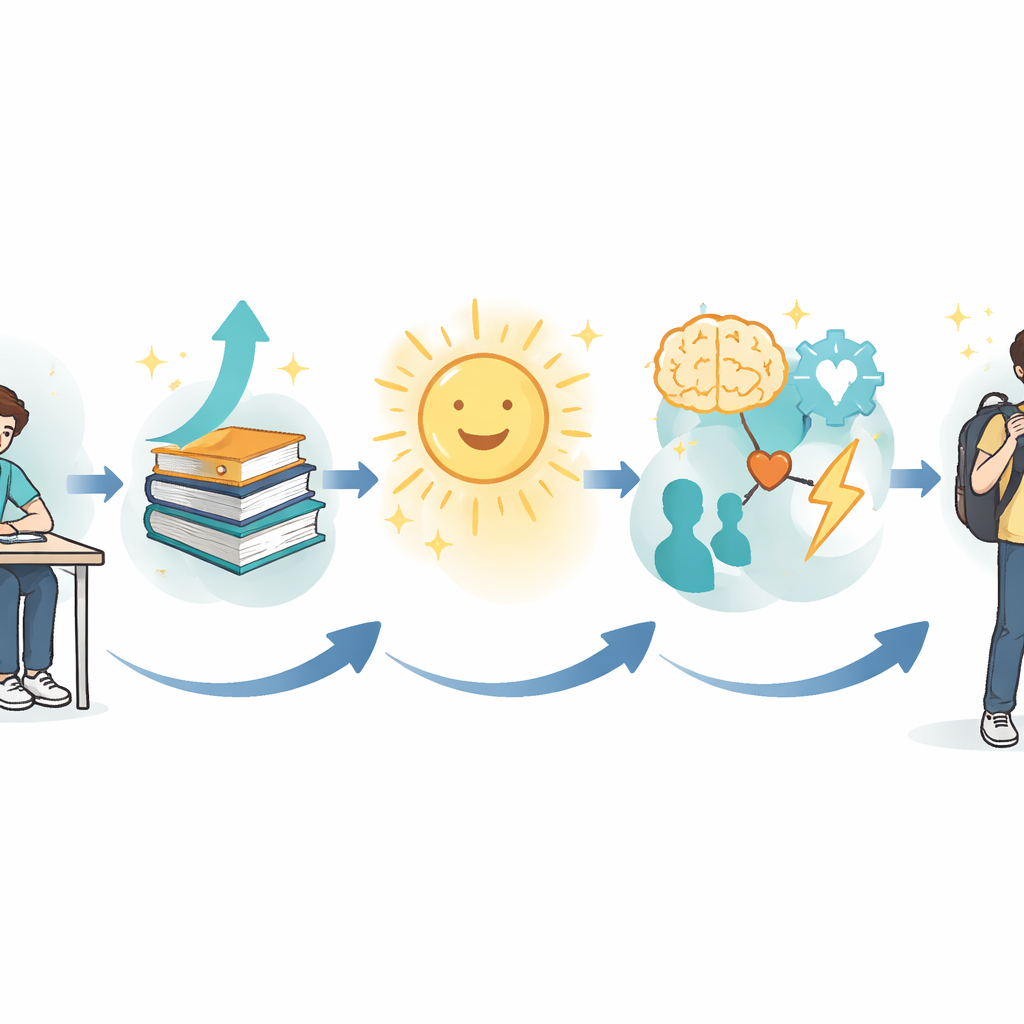
The work builds on ideas from positive psychology, which suggest that positive emotions broaden our thinking and help us build social, motivational, and coping resources. In a school setting, a child who feels generally satisfied with life is more likely to experience curiosity, optimism, and energy. Those feelings, in turn, can support better concentration, persistence when work is hard, and the willingness to seek help—all of which can improve academic performance. The study tested this pathway by asking whether higher life satisfaction in one year led to better self-reported grades the next year, beyond what could be explained by earlier grades alone.
Different patterns in childhood and early adolescence
The results show that the link between school performance and life satisfaction changes as students grow older. For elementary school children, higher life satisfaction reliably predicted better later academic performance, but doing well in school did not significantly change how satisfied they felt with life. In early secondary school, however, the relationship became a true two-way street: better grades predicted higher life satisfaction one year later, and higher life satisfaction also predicted better grades. In other words, by the teen years, success in school and feeling good about life tended to fuel each other over time.
Why grades matter more in the teen years
Why would academic performance start to shape life satisfaction only in secondary school? The authors suggest that as students grow older, school results carry greater weight for their sense of identity, future prospects, and how others see them. Teens who perform well may feel more competent and hopeful, and may receive more positive feedback from teachers and parents, all of which can lift life satisfaction. In elementary school, by contrast, academic differences are smaller and school performance may be less central to how children view their lives, so even high achievers do not gain as much extra happiness from their grades.
What this means for families and schools
For families and educators, the study sends a clear message: nurturing children’s life satisfaction is not at odds with academic goals; it supports them. Creating warm, supportive classrooms, respecting students’ need for autonomy, and helping them feel competent and connected can lay the groundwork for stronger learning in both childhood and adolescence. In the teen years, it also becomes important to guide students toward experiences of academic success and constructive feedback, because good performance and life satisfaction can then form an upward spiral, each one helping to strengthen the other.
Citation: Ling, T., Luo, X. & Zhao, R. Longitudinal relations between academic performance and life satisfaction among elementary and secondary school students. Humanit Soc Sci Commun 13, 364 (2026). https://doi.org/10.1057/s41599-026-06704-3
Keywords: life satisfaction, academic performance, school well-being, adolescent development, education research