Clear Sky Science · en
Ambiguity in China’s integrated water resources management: the case of the Yuan River Basin comprehensive planning
Why This River Story Matters to You
Rivers do far more than carry water. They power cities, grow food, support wildlife, and shape local economies. In China, the Yuan River Basin feeds into the mighty Yangtze and supplies millions of people with water, electricity, and transport. This study looks at why it is so hard to manage such a river fairly and sustainably, even when the government officially supports modern, integrated water planning. By following the planning process for the Yuan River Basin, the authors show how vague rules and overlapping responsibilities can quietly shape who gets water, which projects are built, and how nature is treated.
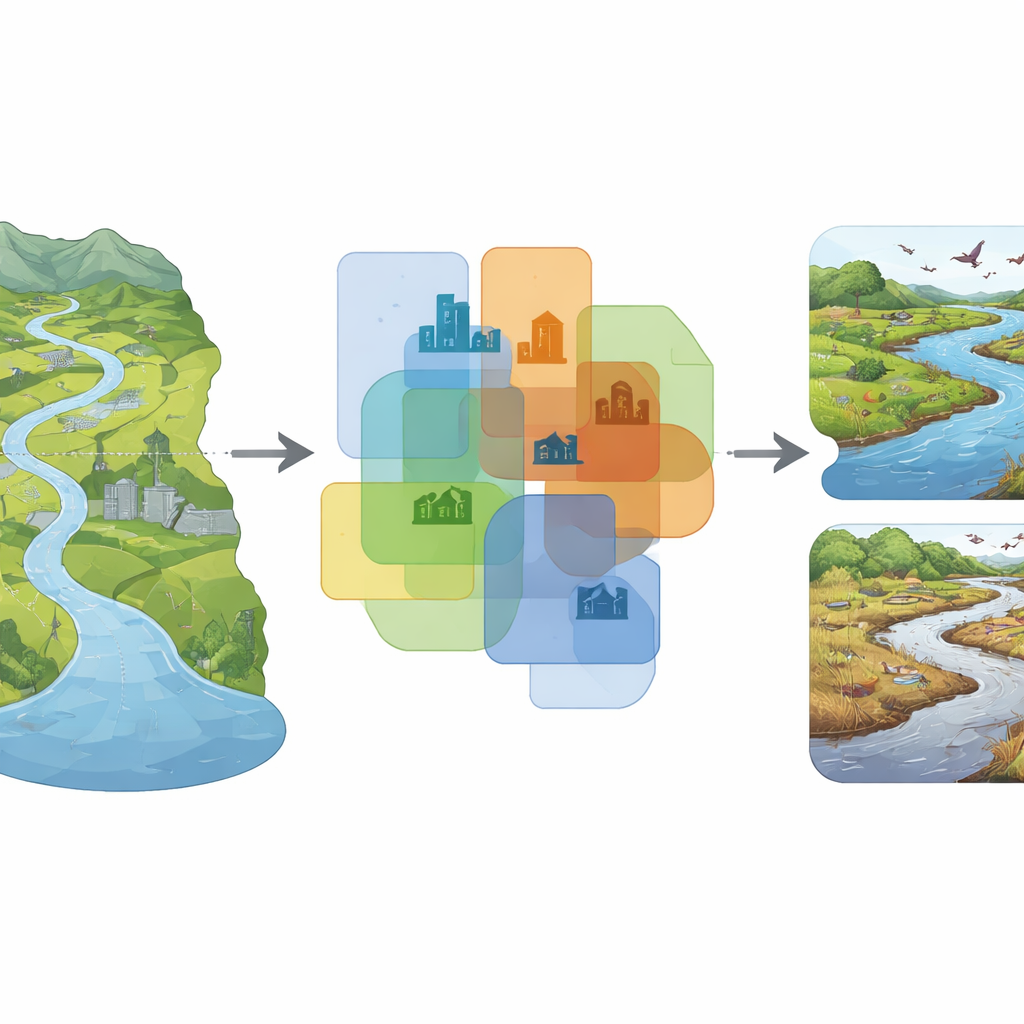
How River Planning Is Supposed to Work
China has embraced an idea popular around the world: manage water in a coordinated way across a whole river basin, instead of piecemeal by city or sector. For the Yuan River, national authorities launched a new “comprehensive plan” to guide flood control, hydropower dams, shipping, water supply, and ecological protection up to 2030. In theory, this plan should sit above more specialized plans for transport, energy, and local development, setting the overall rules for how the river’s water is shared and how its ecosystems are protected. To understand what actually happened, the researchers joined official meetings, analyzed government documents, and interviewed officials at national, basin, provincial, and county levels.
Unclear Roles Turn Data into a Bargaining Game
One key finding is “who does what” was never clearly spelled out. National guidelines said basin agencies and local governments should work “in conjunction” with each other, but did not fix who was responsible for collecting, checking, and approving basic numbers such as population forecasts, industrial growth, and water demand. Without detailed procedures, data gathering turned into a two-way negotiation. Local governments supplied most of the figures and had strong incentives to report higher future water needs so they could secure bigger water quotas and more room for dams, industry, and new towns. Basin planners could correct some numbers using long-term measurements, but for many social and economic indicators they had to compromise. This role ambiguity gave local voices a way in, but it also risked inflating water demand and squeezing the flow left for fish, wetlands, and river health.
Big Rivers Prioritized, Small Streams Overlooked
A second problem arose from fuzzy goals. National laws and planning documents talked about balance, coordination, and protection, but offered few concrete rules on how deep the plan should go into small tributaries or which goals should come first when they clash. Faced with limited guidance and strong habits favoring big engineering projects, planners adopted a shortcut: focus on the main river and seven largest tributaries and largely leave smaller streams to local decisions. This “plan for the big, let the small go” approach meant that many small hydropower schemes on second- and third-order tributaries were approved and built with only local studies. Their combined impact on flows and habitats across the wider basin was barely assessed, and later reviews found stretches of dewatered channels and stressed ecosystems.
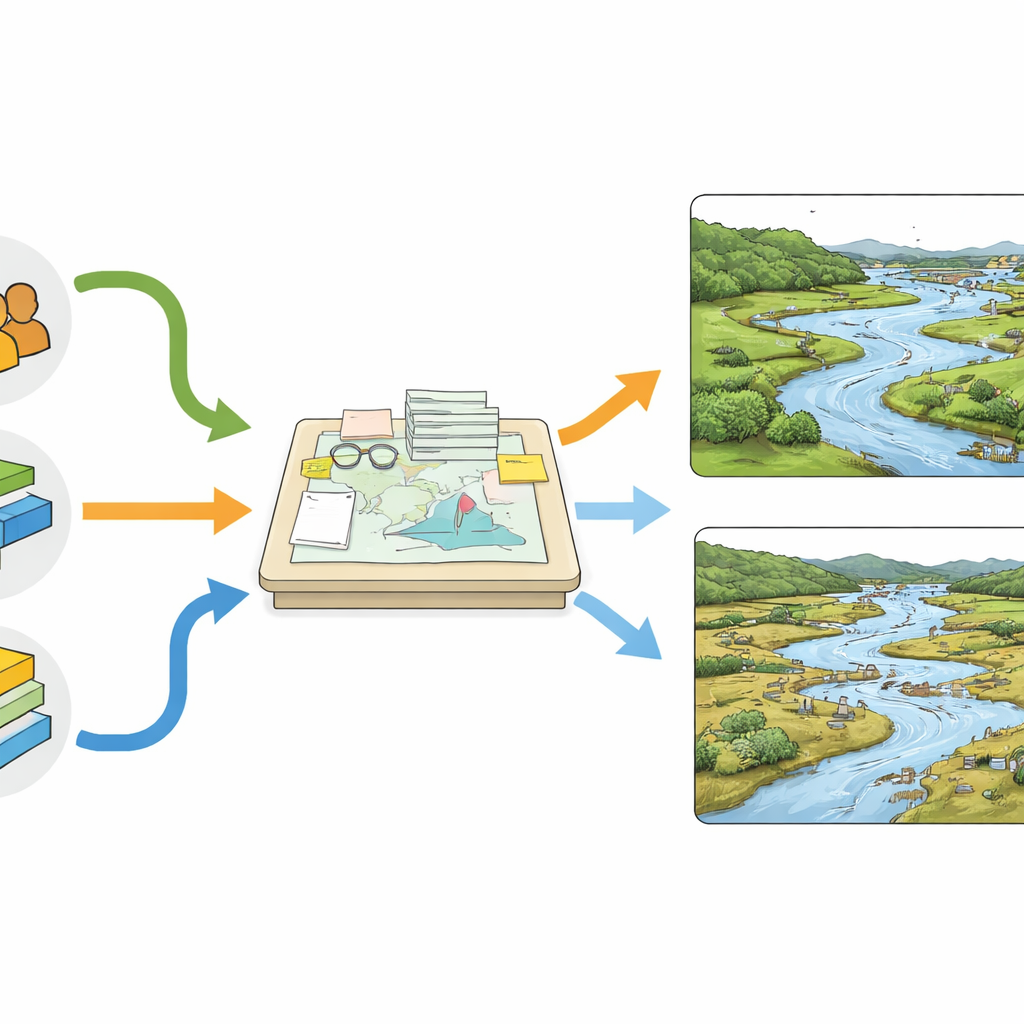
Rules on Paper, a Different Story on the Ground
The third form of ambiguity lay in the gap between official hierarchies of plans and what actually guided decisions. On paper, comprehensive basin plans should outrank regional and sectoral plans. In practice, different ministries and provinces issued their own project lists and timelines, often earlier and with clearer financial benefits such as subsidies for hydropower or funds for poverty reduction. Local governments naturally favored these specialized plans, which promised quick investments, and treated the basin plan as flexible or negotiable. Basin planners, in turn, quietly adjusted the comprehensive plan to fit projects that were already under way, preserving formal harmony but weakening the plan’s authority and its ability to curb environmentally risky developments.
What This Means for Rivers and People
Taken together, these three kinds of ambiguity—uncertain roles, fuzzy goals, and a gap between rules and reality—act like hidden currents steering river management. They give room to adapt to different local needs and avoid open clashes between agencies, but they also open the door to strategic behavior, overuse of water, and unnoticed ecological damage, especially on smaller streams. The authors argue that China does not need to remove all ambiguity, which can help with learning and flexibility, but it must better manage its downsides. That means giving basin commissions clearer authority, tightening technical guidance, aligning different types of plans, and improving how data are collected and checked. In short, to secure healthy rivers and reliable water for people and nature, governments must learn to manage not only dams and canals, but also the grey areas in their own rules.
Citation: Yang, K., Peng, M. & Huang, J. Ambiguity in China’s integrated water resources management: the case of the Yuan River Basin comprehensive planning. Humanit Soc Sci Commun 13, 421 (2026). https://doi.org/10.1057/s41599-026-06703-4
Keywords: river basin governance, China water policy, integrated water management, hydropower and ecology, environmental planning ambiguity