Clear Sky Science · en
Project-based learning in schools: a multi-complementary study of its effectiveness
Why School Projects Matter More Than We Think
Parents often hear about “projects” in school but may wonder whether they truly help children learn or simply add extra work. This study looks closely at project-based learning—where students tackle real-world problems over time instead of just listening to lectures—and asks a simple question: Does it actually work? By combining dozens of previous studies with a new classroom experiment in mathematics, the researchers show when and how project-based learning can boost grades, build important life skills, and where it still falls short.
Looking Across Hundreds of Classroom Studies
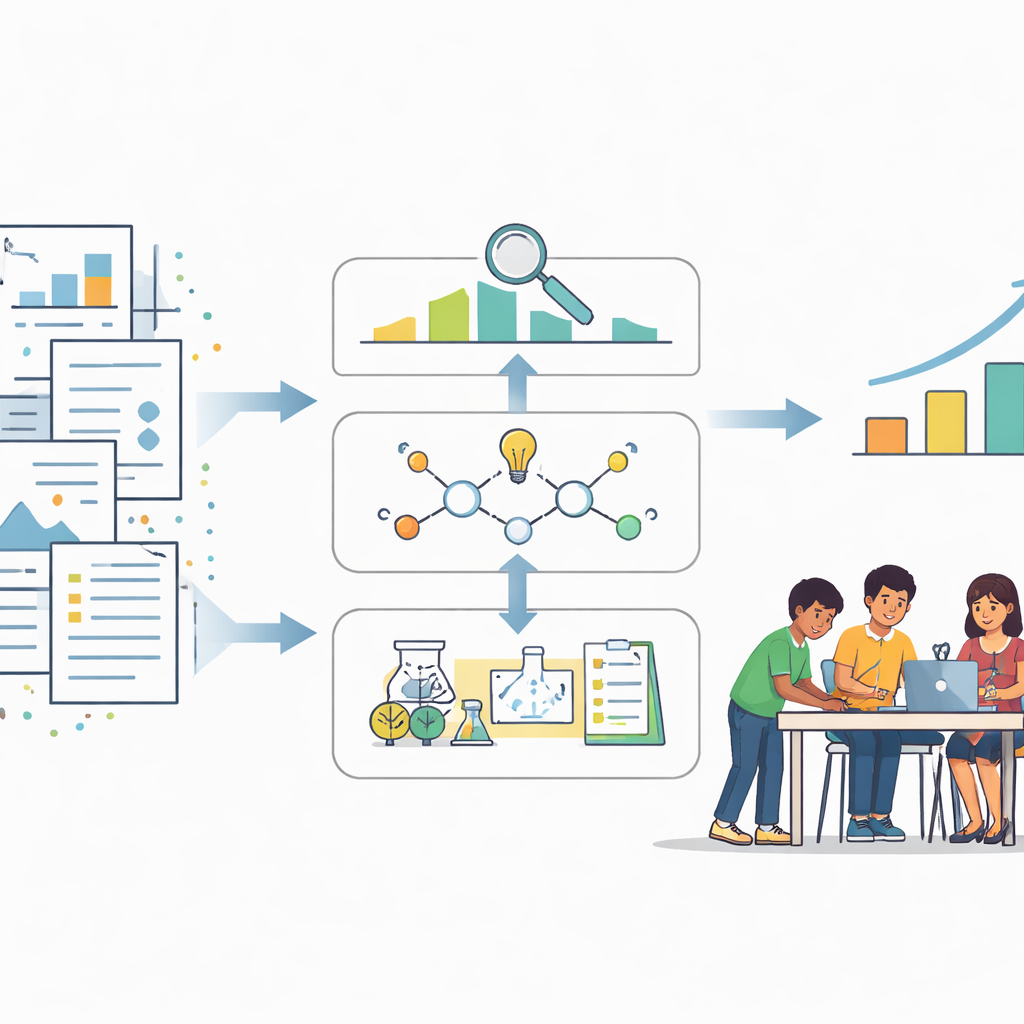
To move beyond scattered success stories, the team first gathered results from 54 quantitative studies and 20 qualitative studies carried out between 2005 and 2023. These covered a wide range of ages, from primary school to university, and subjects from science to mathematics. Using statistical tools, they pooled test-score data to see how much better students in project-based classrooms performed than those taught in traditional ways. On average, project-based learning produced a large improvement in academic achievement, suggesting that—overall—it helps students learn school content more deeply than conventional instruction.
What Projects Change in the Way Students Learn
Numbers alone cannot show what happens inside a classroom, so the authors also read and re-analyzed interview and observation studies. They found that well-designed projects do more than raise test scores. Students reported learning how to ask questions, design simple investigations, interpret data, and discuss evidence—skills that resemble how scientists and informed citizens think. Projects helped them connect textbook ideas to everyday issues, such as saving water or reducing waste, which made lessons feel more meaningful. Many students also described lasting understanding, greater curiosity, and increased confidence, along with practical abilities like time management, teamwork, and using digital tools.
Putting Projects to the Test in a Math Class
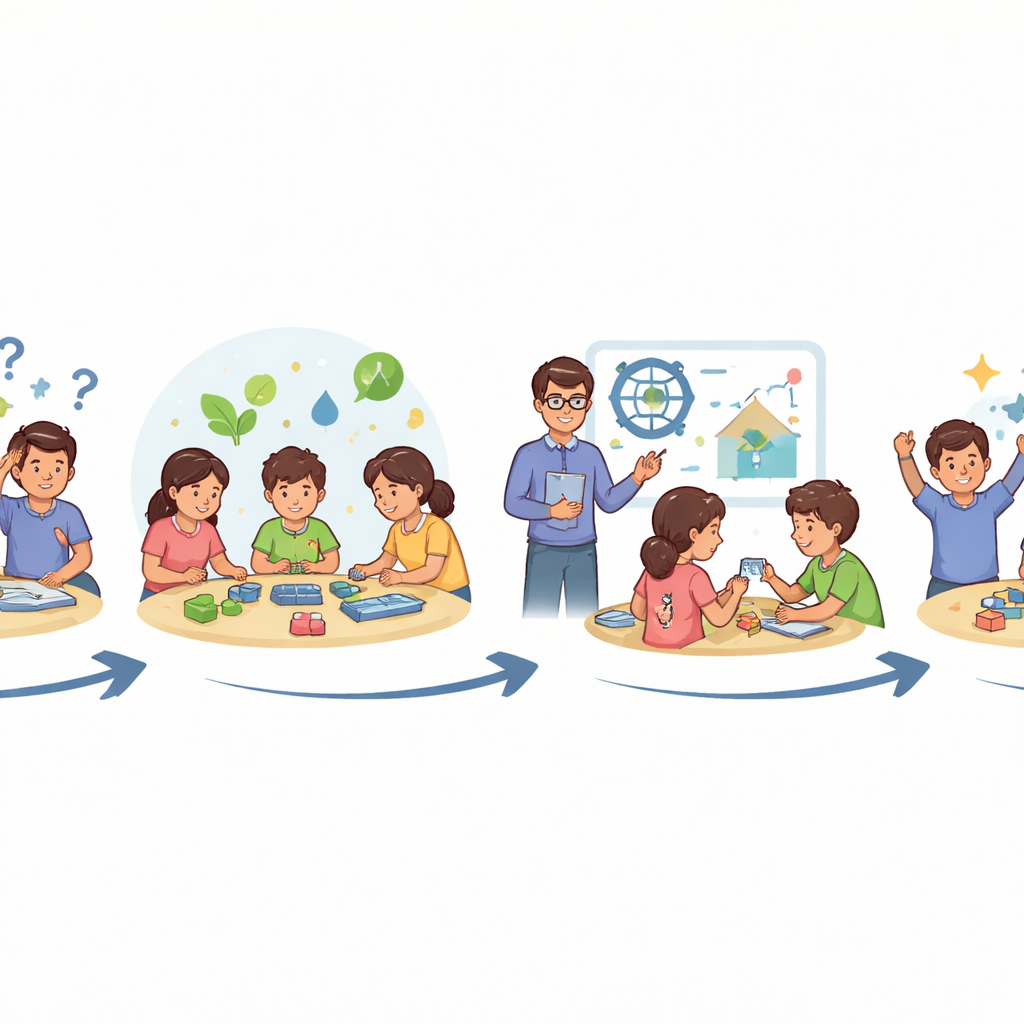
Most project-based learning research comes from science or humanities courses, so the team ran their own experiment in an eighth-grade mathematics class. One group learned about exponential expressions through traditional teaching, while another group worked on a four-week project about waste in their community. Guided by their teacher, students in the project group used exponential calculations to estimate the growing costs of wasted bread, water, and paper at local, national, and global scales. They created models and posters to share what they found and discussed how small changes could add up to big benefits. When both groups took the same test at the end, the project group scored markedly higher, showing a moderate but meaningful academic advantage.
Strengths, Strains, and the Teacher’s Role
The study also highlights why projects sometimes disappoint. Students can struggle with sharing tasks fairly, finding time to meet, or managing long assignments. Some worry that projects may distract from preparation for high-stakes exams. Teachers, meanwhile, may feel unsure about how to guide open-ended work, assess group efforts fairly, or cover the required syllabus in limited time. Access to materials and technology can be uneven, especially in low-income schools, which risks leaving some children out. The authors show that project-based learning works best when teachers receive training, projects are carefully planned, expectations are clear, and families and schools provide structural support.
What This Means for Classrooms and Families
For a lay reader, the overall message is straightforward: when thoughtfully designed and supported, project-based learning clearly helps students learn more and develop broader skills they will need as adults. Across many studies and in the new math experiment, students in project classrooms typically outperformed their peers, became more engaged, and gained practice in collaboration and problem-solving. At the same time, projects are not a magic fix; they demand careful preparation, realistic timelines, and strong teacher guidance to avoid overburdening students or neglecting core content. The authors conclude that schools should embrace projects not as add-ons, but as structured, well-supported ways to blend solid academic learning with the kind of creativity, communication, and critical thinking that modern life requires.
Citation: Doğan, Y., Yener, D., Daşdemir, I. et al. Project-based learning in schools: a multi-complementary study of its effectiveness. Humanit Soc Sci Commun 13, 505 (2026). https://doi.org/10.1057/s41599-026-06684-4
Keywords: project-based learning, math education, student achievement, 21st century skills, teaching methods