Clear Sky Science · en
From intermittent to persistent chill insufficiency in California’s specialty crops
Why Winter Cold Matters for Your Food
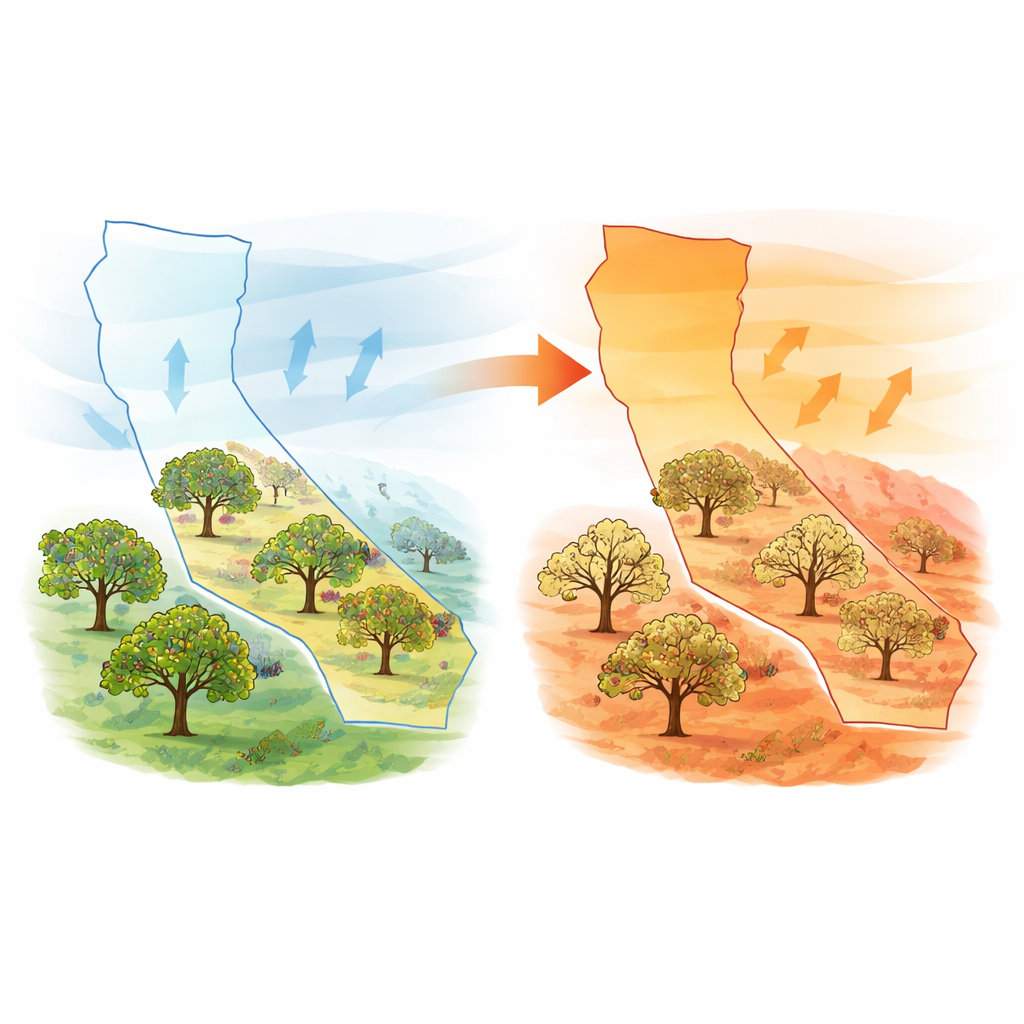
Many of the fruits and nuts that stock grocery store shelves—pistachios, walnuts, plums, and cherries—depend on a good dose of winter cold to perform well. These trees need a certain amount of chill each winter to wake up properly in spring, bloom together, and set a full, high‑quality crop. This study shows that in California’s Central Valley, one of the world’s most important specialty‑crop regions, that winter chill is not just slowly shrinking; it is also becoming more erratic, bringing risks to farmers and food supplies sooner than previously thought.
How Trees Use Winter Rest
Fruit and nut trees in temperate climates enter a deep rest in winter. During this time, they quietly track their exposure to cool temperatures, adding up what scientists call “winter chill.” Each crop variety has a target range it needs to leave dormancy and begin growth in an orderly way. If that requirement is met, buds open together, flowers bloom over a short window, and fruit matures evenly. If winter is too warm, or if cold comes in fits and starts, trees may break dormancy late or unevenly, leading to scattered blooms, irregular fruit size, longer harvests, and lost yield. In California, many commercial varieties were bred for a climate where winter chill comfortably exceeded these needs, leaving a safety margin that is now disappearing.
What the New Records Reveal
The researchers analyzed 44 years of detailed daily temperature data across California’s main growing regions for pistachios, walnuts, plums, and cherries. They found that since the 1980s, overall winter chill has declined by about 4 to 6 standardized units in southern growing areas—small differences that matter because many orchards sit close to their minimum needs. At the same time, year‑to‑year swings in chill have risen sharply: the typical variability has increased by more than half since the late 1990s. This combination of lower averages and bigger swings means that winters which fail to deliver enough chill are already occurring more often, especially in pistachio and plum orchards in Southern California.
Why Climate Models Miss Part of the Risk
Many earlier studies used climate models that emphasize long‑term average warming, concluding that serious chill shortages would not become common until mid‑century or later. This study tested those models against the observed record and found that they capture the general downward trend but miss much of the year‑to‑year variability. As a result, they severely undercount the number of years when chill slips below crop needs. The models’ coarse resolution and tendency to smooth out short cold spells mean that near‑term risk looks lower on paper than what farmers are already experiencing on the ground. That gap matters for planning, because orchards take decades to establish and varieties can take 15–20 years to breed and release.
Using Short‑Term Forecasts to Help Growers Act in Time
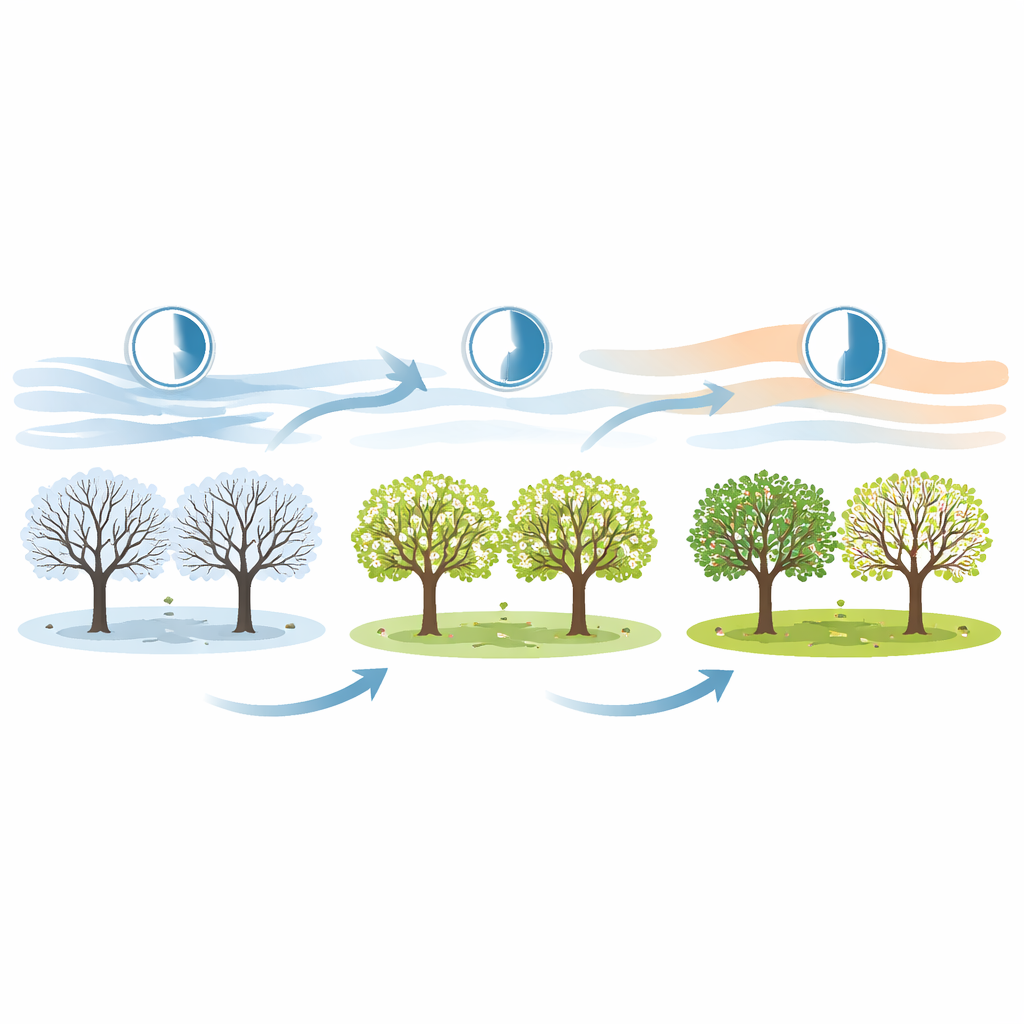
Because long‑range climate projections alone do not give farmers the detail they need, the authors explored whether modern subseasonal weather forecasts can support in‑season decisions. They focused on forecasts from the European Centre for Medium‑Range Weather Forecasts, adjusting the coarse model output to match the fine‑scale patterns seen in observations. By combining actual chill accumulated from November through January with a one‑month forecast for February, they could predict total winter chill within 10 percent of reality in nearly 90–94 percent of cases. This level of accuracy is high enough to guide choices about dormancy‑breaking sprays, pruning schedules, and other practices that can partially compensate for low‑chill winters.
Preparing Orchards for a Different Winter
The study concludes that California is already experiencing intermittent winters that do not provide enough chill for several important fruit and nut crops, well before the timeline suggested by smooth long‑term averages. These shortfalls are expected to become more frequent as the climate continues to warm and temperature swings grow larger. For growers and breeders, this means planning for a future in which today’s “unusually warm” winters become more common. Practical responses include breeding and adopting varieties that need less chill, refining the timing of rest‑breaking treatments with reliable short‑term forecasts, and, in some cases, reconsidering where certain crops can be grown. For consumers, the message is that the quiet winter rest of trees is a hidden but vulnerable link in the chain that brings pistachios, cherries, walnuts, and plums to the table.
Citation: Jha, P.K., A, G., Pathak, T.B. et al. From intermittent to persistent chill insufficiency in California’s specialty crops. Commun. Sustain. 1, 76 (2026). https://doi.org/10.1038/s44458-026-00084-0
Keywords: winter chill, California orchards, fruit and nut trees, climate variability, subseasonal forecasts