Clear Sky Science · en
Strategies to accelerate climate risk management in the building sector using data-driven methods and tools
Why Smarter Data Matters for Safer Buildings
Homes, offices and schools around the world are already feeling the effects of climate change, from dangerous heat waves to flooding and storms. This article explores how new data tools—ranging from simple statistics to artificial intelligence and digital replicas of cities—can help us understand which buildings are most at risk and what we can do about it. By looking across hundreds of studies, the authors show where these tools are working well, where they are falling short and what needs to change so that people in both rich and poor countries can live in safer, more comfortable buildings as the climate warms.
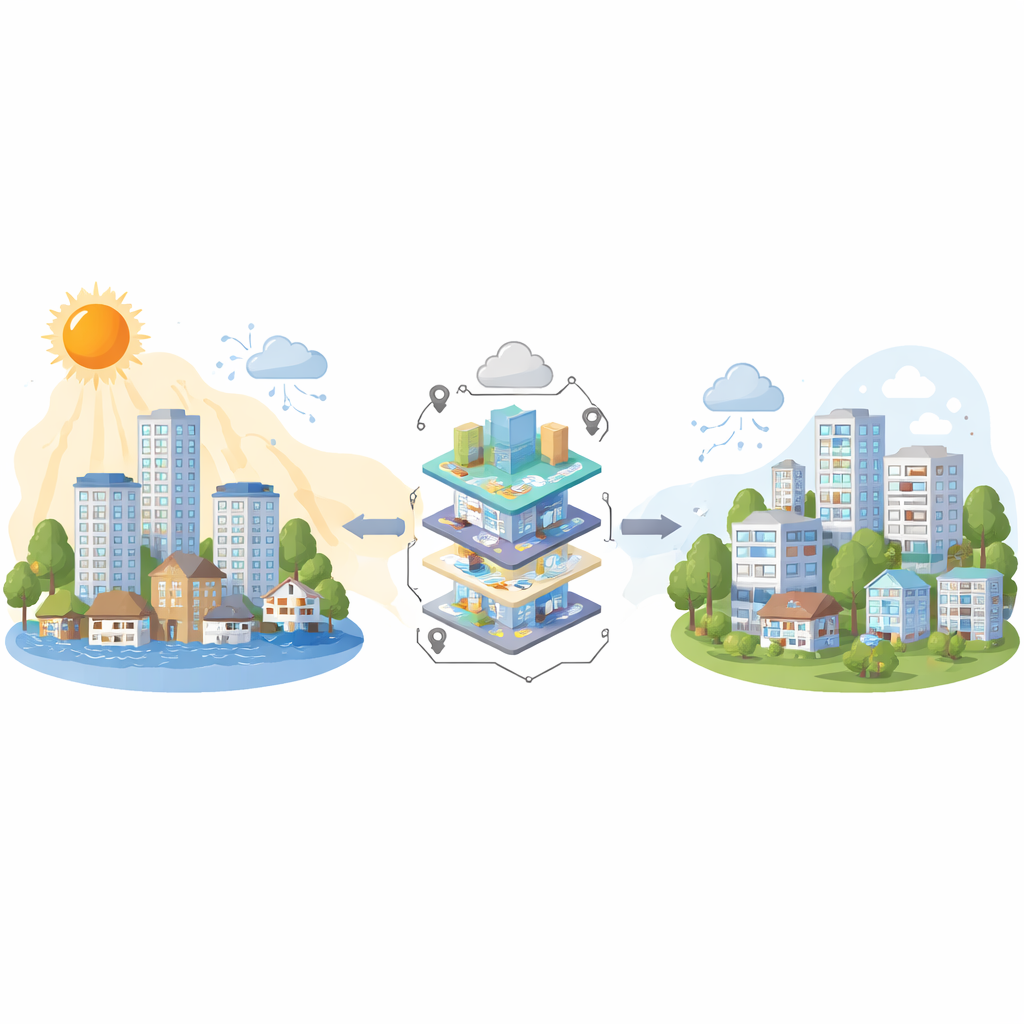
How Climate Threatens the Places We Live
Climate change is not an abstract future problem for buildings; it is already raising temperatures, pushing sea levels higher and making storms and floods more severe. These shifts threaten not only concrete and steel but also the people inside: overheating apartments, flooded homes and power cuts during heat waves all carry serious health and economic costs. To reduce this harm, decision-makers need to know which hazards are most likely, which buildings and communities are exposed and who is least able to cope. The article argues that data-driven methods and tools—collectively called DDMTs—are now central to answering these questions in a timely, detailed and reliable way.
What Modern Data Tools Can Do for Buildings
The authors review 61 key studies drawn from tens of thousands of papers to see how DDMTs are used across three stages of climate risk management: analysing hazards and vulnerability, assessing overall risk and planning responses. Early tools include life cycle assessments that compare the environmental impact of building materials, and basic statistical models that relate weather to energy use or health outcomes. Modern tools add detailed building energy simulations and mapping systems that link buildings to their surroundings. Advanced tools layer on artificial intelligence, machine learning, digital twins and networks of sensors, allowing researchers to predict overheating, flood damage or energy demand under future climates, and to test how changes like shading, better insulation or stronger roofs can reduce those risks.
Where These Tools Are Falling Short
Despite rapid progress, the article uncovers major gaps. Most work still focuses on the physical side of risk—energy use, temperatures and structural damage—rather than on who is most vulnerable socially and economically. Studies that use advanced tools to examine social vulnerability, such as energy poverty or heat risk for low-income households, are rare, especially in developing countries where climate threats are often greatest. Many models treat only one hazard at a time, even though real-world events can combine, such as heat waves, power cuts and poor air quality. High-quality data on buildings and households are often missing or locked away, and strict privacy rules make it hard to use detailed information safely. Complex software, high costs and limited technical skills also keep advanced tools out of reach for many cities and communities.
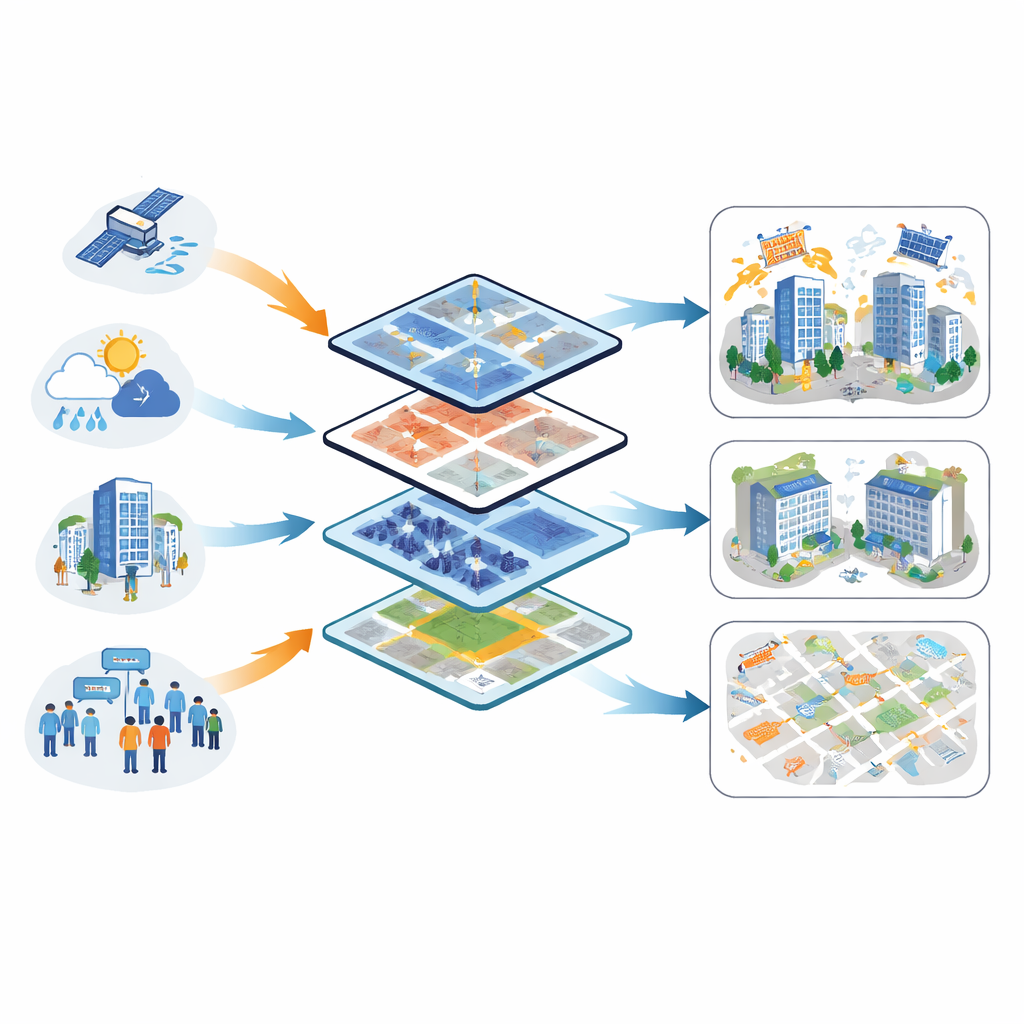
Chances to Do Better with Data
The study also highlights encouraging trends. Vast new streams of information—from satellites, weather stations, smart meters, building sensors and open government datasets—are becoming available. At the same time, cheaper computing power and open-source software make it easier to run complex models and share results. International efforts, from United Nations programs to university-led projects, are creating shared data portals and tools aimed at climate-vulnerable regions. The authors use a strengths-and-weaknesses analysis to propose strategies such as improving training, simplifying tools, promoting open data standards, building partnerships between researchers, governments and industry, and using funding and policy support to lower costs and build trust in data-driven decisions.
What This Means for Everyday Life
In plain terms, the article concludes that smart use of data can make buildings and cities much safer in a warming world, but only if these tools are made more accessible, more socially aware and better integrated. Combining different methods—like detailed maps, building simulations and machine learning—can give planners a clearer picture of where heat or floods will hit hardest, which buildings need upgrades and which groups of people need extra protection. Yet without better data on people’s living conditions, stronger collaboration among experts, clear rules for sharing information and dedicated support for poorer regions, the benefits of these powerful tools will remain uneven. If the recommended strategies are followed, data-driven methods could help deliver cooler homes, safer streets and fairer protection from climate risks for communities everywhere.
Citation: Charafeddine, M., Brijesh, M., Krushna, M. et al. Strategies to accelerate climate risk management in the building sector using data-driven methods and tools. Commun. Sustain. 1, 59 (2026). https://doi.org/10.1038/s44458-026-00067-1
Keywords: climate risk management, data-driven buildings, artificial intelligence, urban heat and flooding, building resilience