Clear Sky Science · en
Air quality and health benefits achievable by mitigating Indian coal-fired power plant SO2 emissions
Why Coal Plant Pollution Matters for Everyone
Across India, millions of people breathe air that is far more polluted than health guidelines recommend. A major culprit is sulfur dioxide released by coal-fired power plants, which are central to the country’s electricity supply. This gas does not just irritate lungs on its own; in the air it transforms into tiny particles that can enter deep into the body, raising the risk of heart and lung disease. This study asks a simple but far-reaching question: if India fully controlled sulfur pollution from its coal plants, how much cleaner would the air become, how many lives could be saved, and who would benefit the most?
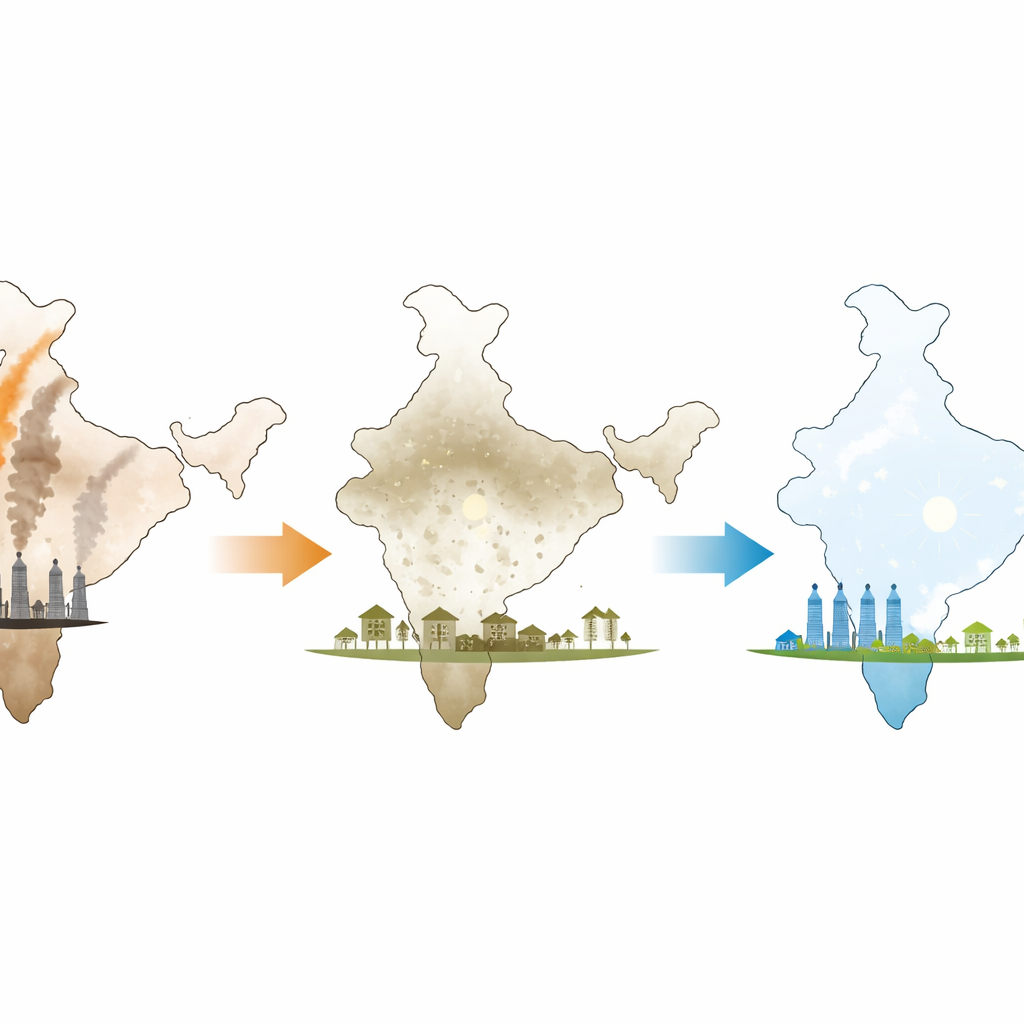
From Power Plant Smoke to Invisible Dust
Coal-fired power plants release sulfur dioxide into the atmosphere, where it reacts with other gases to form a fine haze of particles known as PM2.5. These particles are so small that dozens could fit across the width of a human hair, yet they are linked to strokes, heart attacks, breathing problems, and shortened life spans. While many wealthy countries have slashed sulfur emissions from power plants using technologies such as flue gas desulfurization, India’s emissions from this source have grown as electricity demand has climbed. Government reports have sometimes argued that Indian coal contains less sulfur, suggesting that installing costly control equipment might not be worth it—a claim this study directly tests.
Using Satellites and Models to Track Hidden Pollution
Because these fine particles form in the air rather than being emitted directly, they are hard to measure with ground monitors alone. The researchers combined a new global catalogue of large sulfur sources, built from satellite measurements, with a detailed computer model of the atmosphere over India. They ran the model twice—once with measured sulfur emissions from coal power plants, and once as if those emissions were completely removed. By comparing the two runs under the same weather conditions, they could isolate how much sulfur from coal plants contributes to both sulfur gas in the air and to the secondary fine particles that form downwind.
Cleaner Air and Fewer Deaths
The simulations show that eliminating sulfur emissions from coal plants could reduce annual average fine particle levels by about 0.3 to 12 micrograms per cubic meter, depending on the region. The largest gains would be in industrial belts of central and eastern India, such as Chhattisgarh and Odisha, where coal plants are dense and local populations are heavily exposed. Even modest-sounding reductions matter when applied across hundreds of millions of people. Using health data from a large Asian analysis of air pollution and mortality, the team estimates that full control of sulfur from coal plants could prevent roughly 125,000 premature deaths every year in India, including many from heart disease and respiratory illnesses.
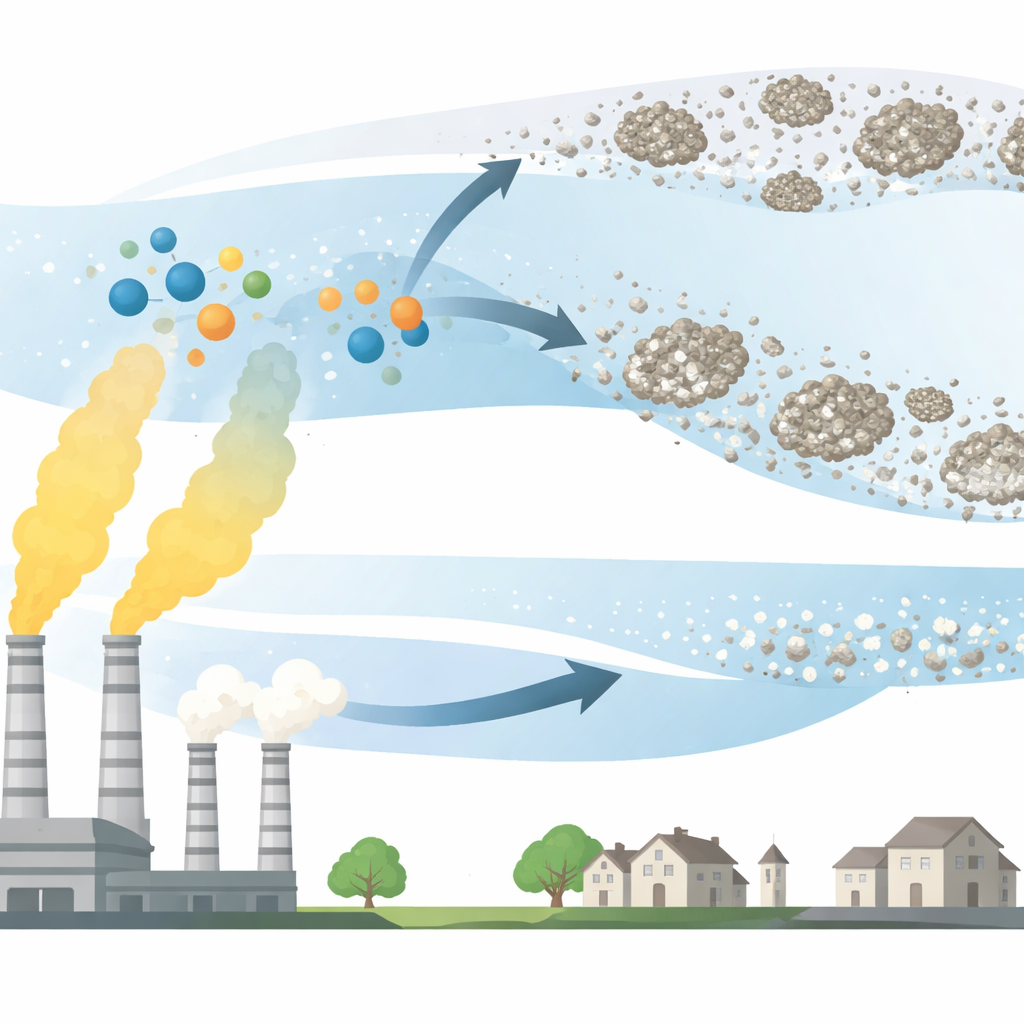
Who Wins the Most from Cleaner Power?
The benefits of cleaner air would not be shared equally. By linking their air quality estimates with data from India’s National Family Health Survey, the researchers examined outcomes for different groups by gender, wealth, caste, and urban–rural residence. They found that poorer and middle-income households, and people from historically disadvantaged caste groups, would see slightly larger improvements in air quality than wealthier and General-caste groups. In rural areas, deprived communities would gain especially large health benefits, reflecting both higher exposure and higher vulnerability. Men and women would experience similar average gains, though patterns varied by region.
What This Means for Policy and Everyday Life
To a layperson, the message is clear: if India rigorously removed sulfur from the exhaust of its coal power plants, the air would become noticeably cleaner and tens of thousands of early deaths could be avoided every year, particularly among disadvantaged communities. The study also suggests that previous official assessments may have undervalued these health gains by relying on outdated emission data and foreign risk estimates. While installing and running pollution-control equipment is costly and uses extra energy and water, the authors argue that the savings in avoided illness and deaths, along with progress toward clean air and climate goals, are likely to outweigh those expenses. In short, cutting sulfur from coal power is not just a technical tweak—it is a powerful public health intervention.
Citation: Ghosh, S., Philip, S., Sarkar, D. et al. Air quality and health benefits achievable by mitigating Indian coal-fired power plant SO2 emissions. npj Clean Air 2, 30 (2026). https://doi.org/10.1038/s44407-026-00075-4
Keywords: air pollution, coal power plants, sulfur dioxide, PM2.5 health impacts, India energy policy