Clear Sky Science · en
Cognitive impairment and its associated health conditions in American Indian communities
Why Brain Health in Native Communities Matters
As people live longer, many worry about staying mentally sharp. For American Indian and Alaska Native communities, this concern is especially urgent: they face higher rates of chronic illness, trauma, and poverty, all of which can affect the brain. This study looked at how common memory and thinking problems are among American Indian adults age 55 and older, and which health issues most strongly travel alongside these problems. The findings highlight both a serious burden and clear opportunities for earlier detection and prevention.
Taking a Closer Look at Thinking and Memory
Researchers worked with community partners in the Pacific Northwest, Rocky Mountains, and Northern Plains to survey 712 American Indian adults aged 55 and over between 2019 and 2023. Instead of long clinic tests, they used an adapted version of an eight-question checklist called the AD8, which asks about everyday changes such as forgetting appointments or struggling with money decisions. Community advisors helped rewrite wording to be clearer, culturally relevant, and easier to understand, while keeping the original meaning. People who answered “yes” to at least two items were considered to have possible cognitive impairment—early signs that thinking and memory may not be working as well as before.
High Rates, Especially in the Younger Old
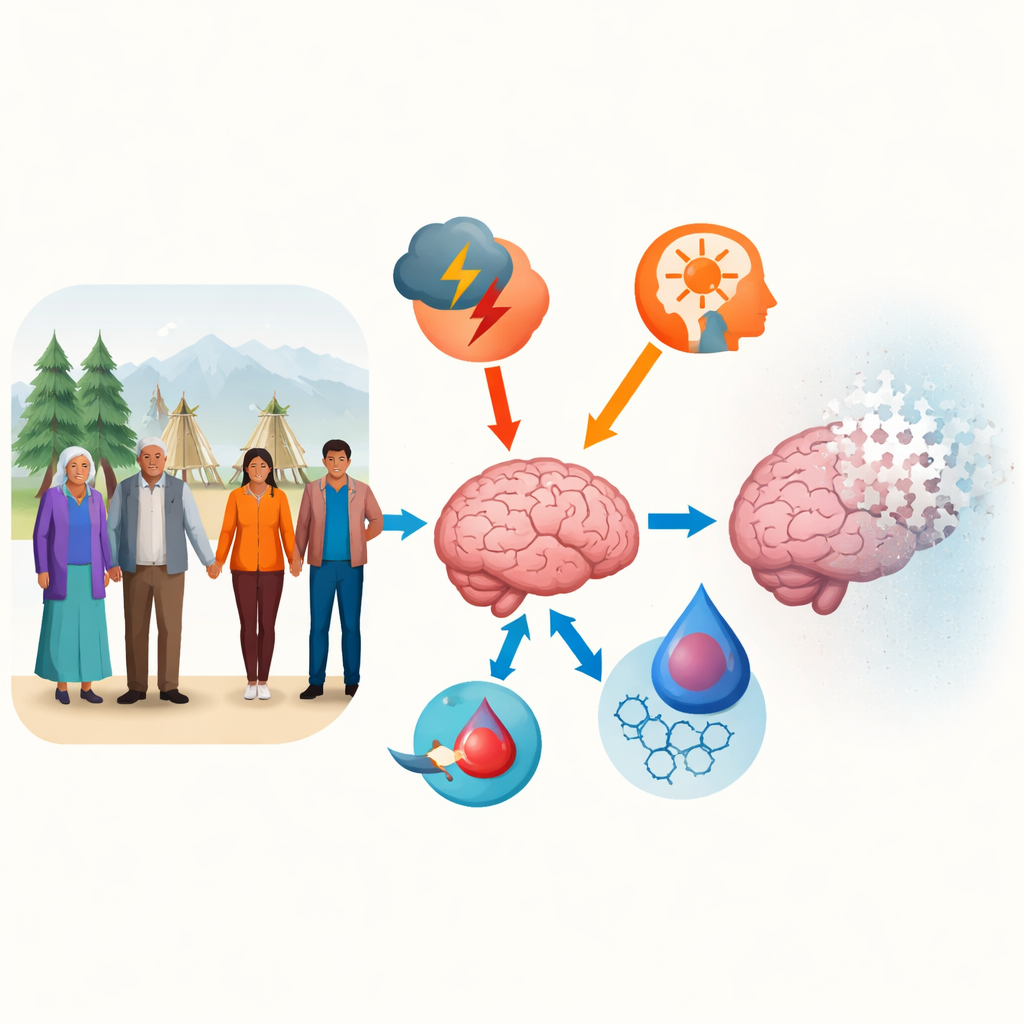
The results were striking. About one in three participants (34 percent) met the threshold for cognitive impairment. Even more surprising, the highest share was found among those aged 55 to 59, where roughly four in ten screened positive. Rates were also high in the early 60s and then dipped somewhat in later age groups. People with possible cognitive impairment were more likely to report several health problems, including emotional distress, diabetes, high blood pressure, prior head injury, alcohol use disorder, and obesity. On average, they had more health conditions overall than those who did not screen positive, underscoring how physical and mental health are deeply intertwined.
Which Health Problems Matter Most
To tease apart which conditions were most closely tied to worse AD8 scores, the team used statistical models that accounted for age, sex, and the presence of multiple illnesses at once. Three stood out across the sample: emotional distress, a history of head injury, and diabetes. People who reported high levels of psychological distress had more than double the AD8 score of those without distress, indicating noticeably worse thinking and memory. Those with a past head injury or diabetes also had substantially higher scores. When the researchers split the group into those younger than 65 and those 65 or older, patterns shifted: among the younger group, distress and head injury were most strongly linked to poorer cognitive functioning, while among the older group, diabetes showed the clearest connection.
Different Patterns for Men and Women
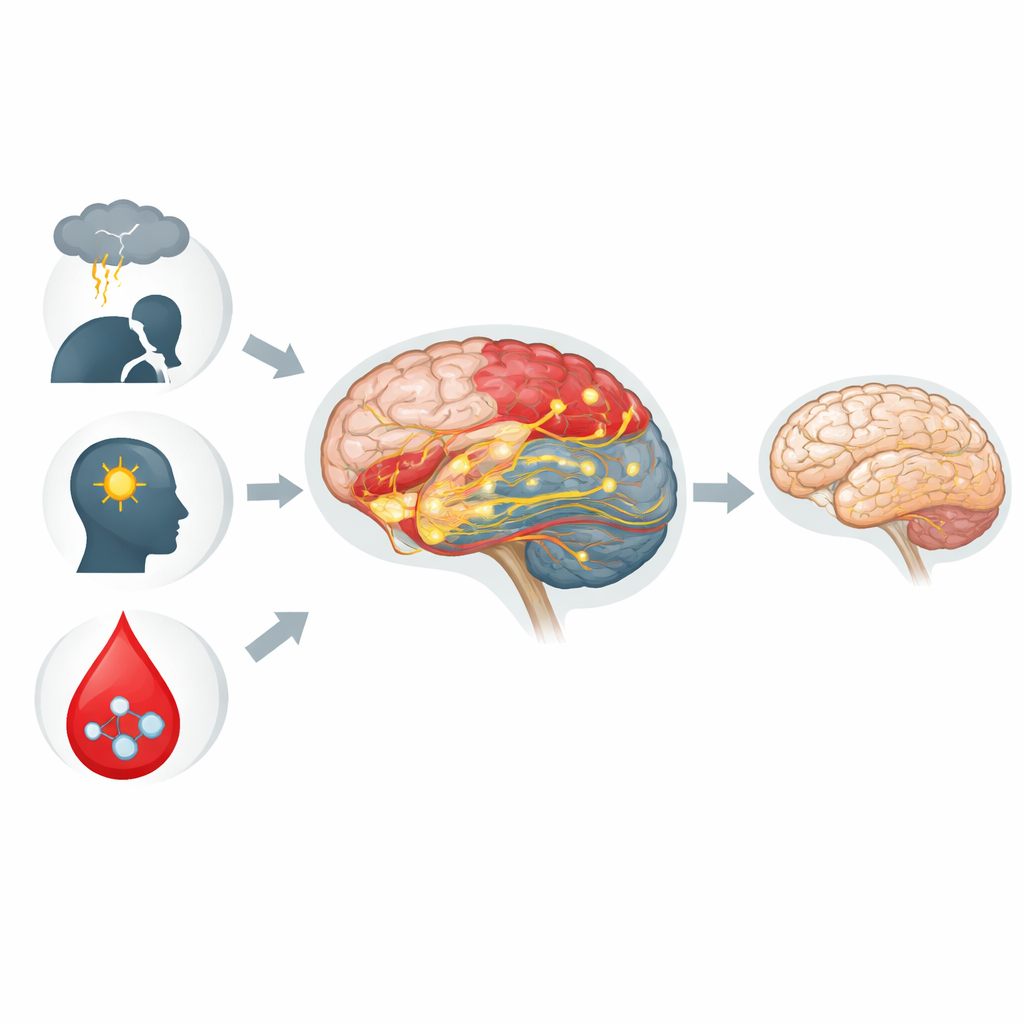
The study also found that these links can look different for men and women. Among women, emotional distress was strongly associated with worse AD8 scores, while prior head injury was more closely tied to poorer scores among men. The authors point out that American Indian communities carry a heavy burden of traumatic brain injuries, often from motor vehicle crashes and violence, and that men have somewhat higher rates of such injuries. At the same time, cultural and social pressures may make emotional distress more intense or more openly acknowledged among women, potentially affecting their cognitive health and how they answer self-report questions.
What These Findings Mean for Everyday Life
Taken together, the study paints a sobering picture: many American Indian adults are experiencing possible cognitive problems years earlier than is typical in the broader U.S. population. Yet the work also points to practical steps forward. Because the adapted AD8 is short, inexpensive, and designed with community input, it could be used in clinics, health fairs, and other local settings to spot early warning signs. Most importantly, several key risk factors—distress, head injury, and diabetes—are at least partly preventable or manageable. Addressing mental health needs, improving safety to prevent head injuries, and strengthening diabetes care could all help protect brain health. By acting earlier in midlife rather than waiting until old age, communities and health systems may be able to lessen the heavy burden of cognitive impairment among American Indian adults.
Citation: Fan, W., Dai, J., Shi, Y. et al. Cognitive impairment and its associated health conditions in American Indian communities. npj Dement. 2, 34 (2026). https://doi.org/10.1038/s44400-026-00080-0
Keywords: cognitive impairment, American Indian health, diabetes and brain, head injury, emotional distress