Clear Sky Science · en
Rapid screening of animal coronaviruses in livestock and wildlife using a silicon photonics biosensor
Why Watching Animal Viruses Matters
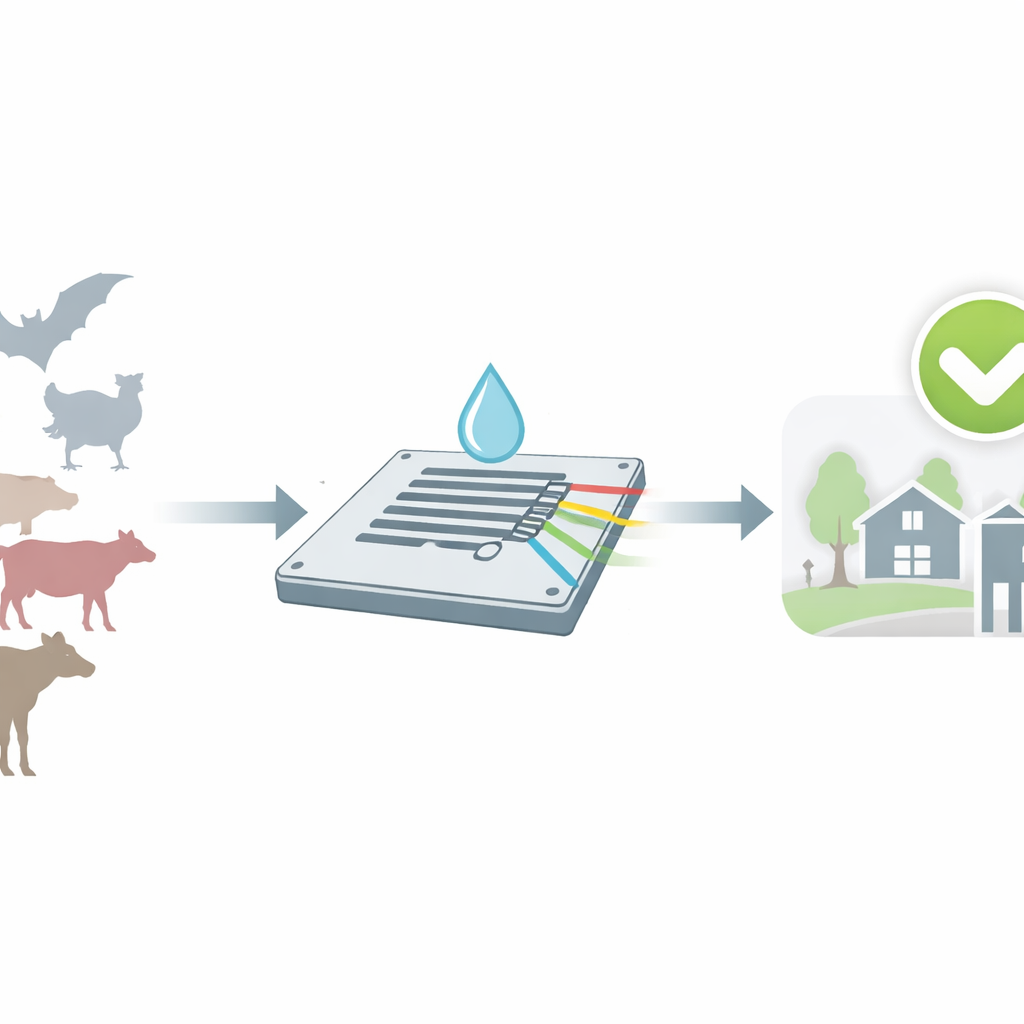
In a world where people, farm animals, and wildlife are increasingly packed together, viruses that start in animals can more easily jump into humans. Coronaviruses are a prime example: several major outbreaks, including COVID-19, trace back to animal hosts. This paper describes a new chip-based sensor that can quickly spot a wide range of animal coronaviruses in bats and chickens, without the long lab procedures usually needed. By making virus checks faster and simpler, this technology could strengthen our early-warning systems against future pandemics.
A Growing Traffic Jam Between Animals and People
Modern life has greatly intensified contact between humans, livestock, and wildlife. Expanding farms, global trade, and the clearing of natural habitats bring species together that rarely met in the past. Coronaviruses thrive in this crowded landscape because they readily mutate and swap genetic material, allowing them to adapt to new hosts. Bats, some farm animals, and other wildlife can quietly carry many coronavirus strains. Detecting these viruses in animals before they spill over into humans is crucial, but current gold-standard tests like PCR are slow, require complex equipment, and must be run in specialized laboratories. This makes routine screening of many animals in the field difficult and expensive.
A Light-Based Chip as a Virus Detector
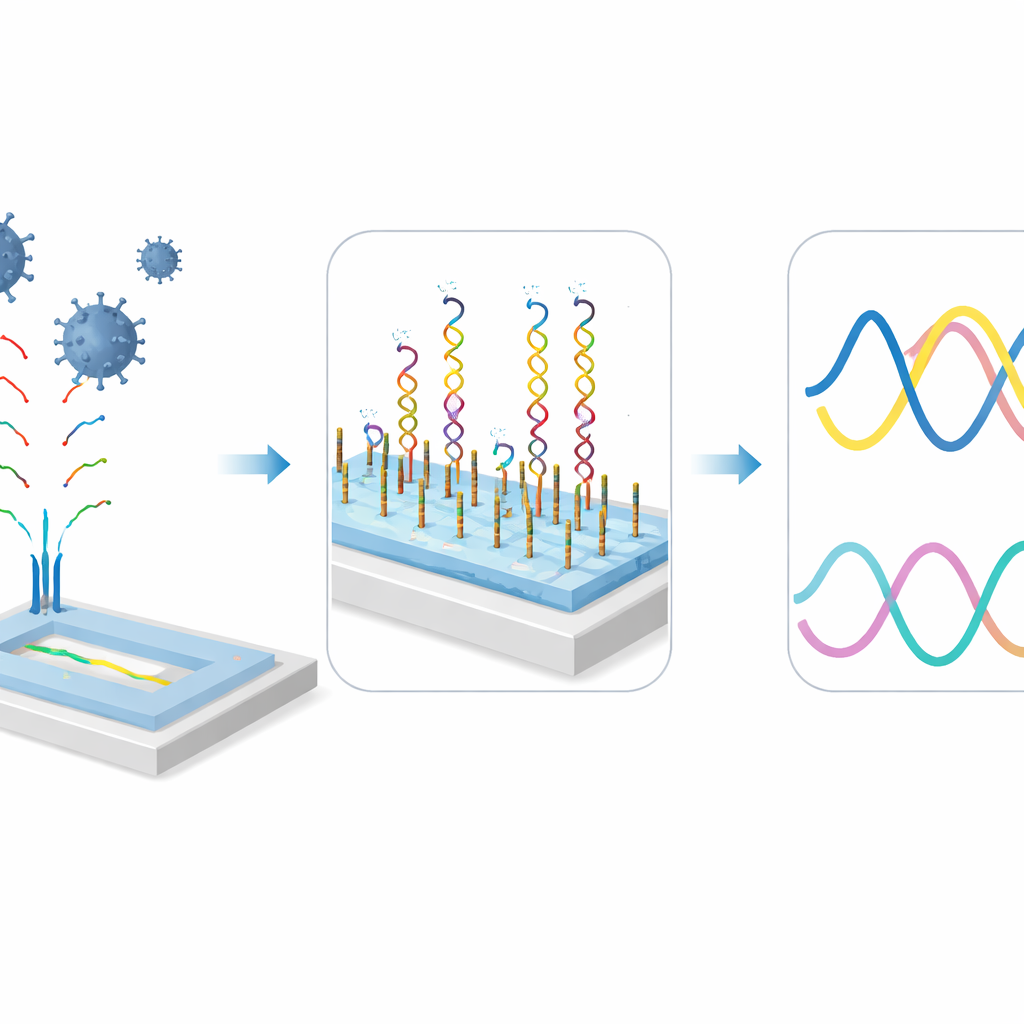
The research team developed a tiny silicon chip that uses light to detect coronavirus genetic material directly, without needing amplification or chemical labels. On the chip, there are very small pathways called waveguides that guide a beam of light in two different patterns at the same time. The surface of these waveguides is coated with short DNA strands designed to latch onto matching coronavirus RNA from animal samples. When viral RNA binds to these strands, it subtly changes how light travels in the waveguides. The interferometric design of the device turns this change into a measurable signal in real time, allowing the chip to sense even tiny amounts of virus-related material within minutes.
Designing the Chip to Catch Many Coronavirus Types
To cover both mammals and birds, the scientists built two versions of the sensor. One targets a highly conserved section of the coronavirus machinery gene used by alpha and beta coronaviruses, common in bats and many other mammals. The other focuses on a stable region near the front of the genome in gamma coronaviruses, which often affect poultry. They carefully tuned how many DNA probes sit on the chip surface and mixed them with flexible spacer molecules to keep them accessible for binding. They also optimized the salt content and added a small amount of formamide, a solvent that helps straighten RNA strands, so they can pair more easily with the probes. A regeneration step lets the chip release bound RNA between tests, so the same device can be reused many times.
How Well the New Sensor Performs
In controlled tests with synthetic viral fragments and longer laboratory-made RNA, the chip could detect very low concentrations, in some cases down to a few copies of viral RNA per microliter. Its measurements closely matched those from standard PCR, but the readout time was around 20–25 minutes instead of several hours. The team then challenged the sensor with real-world samples: bat droppings and swabs from chickens infected with a common poultry coronavirus. In bats, the sensor correctly identified most positive and negative samples, though performance was modest for very low-level infections. In chickens, results were stronger, with high sensitivity and specificity across a broad range of viral loads, showing that the chip can reliably flag infected birds without any amplification step.
What This Could Mean for Future Outbreaks
Although the current setup still needs basic laboratory handling to extract RNA, the chip itself is compact, made with standard microelectronics methods, and designed to be mass-produced at low cost. The authors argue that, as the optics and fluidics are further miniaturized and automated, similar devices could move closer to farms, markets, and wildlife monitoring sites. There, they could serve as rapid, routine screens for animal coronaviruses, complementing PCR rather than replacing it. For non-specialist readers, the key takeaway is that this light-based chip offers a fast, reusable, and scalable tool to watch animal viruses where they start, improving our chances of catching dangerous strains before they become the next human pandemic.
Citation: Serrano, B., Soler, M., Courtillon, C. et al. Rapid screening of animal coronaviruses in livestock and wildlife using a silicon photonics biosensor. npj Biosensing 3, 26 (2026). https://doi.org/10.1038/s44328-026-00091-0
Keywords: coronavirus surveillance, silicon photonics biosensor, animal reservoirs, rapid diagnostics, One Health