Clear Sky Science · en
The role of tech workers in ethnicity- and class-based urban segregation
Why Tech Workers Change City Life
In many big cities, people from different ethnic backgrounds and income levels tend to live in separate neighborhoods. At the same time, digital technology has created a fast-growing group of well-paid tech workers who can often work from anywhere. This study asks a simple but important question: as more minority workers move into tech jobs, do they keep living mainly with their own ethnic group, or do they start to live more like other high-earning professionals, reshaping the social map of the city?
The Digital Shift and Where People Live
The researchers focus on Tallinn, the capital of Estonia, a country famous for its highly digital society. They look especially at Estonian-majority residents and Russian-minority residents, who together make up most of the population. Using complete census records from 2011 and 2021, they track where people live, what kind of jobs they hold, and how those patterns change over time. Tech workers, who are managers and professionals in programming and related fields, stand out because they earn higher salaries than most others and have the greatest freedom to work remotely, which should give them more choice of where to live.
From Ethnic Lines to Income Lines
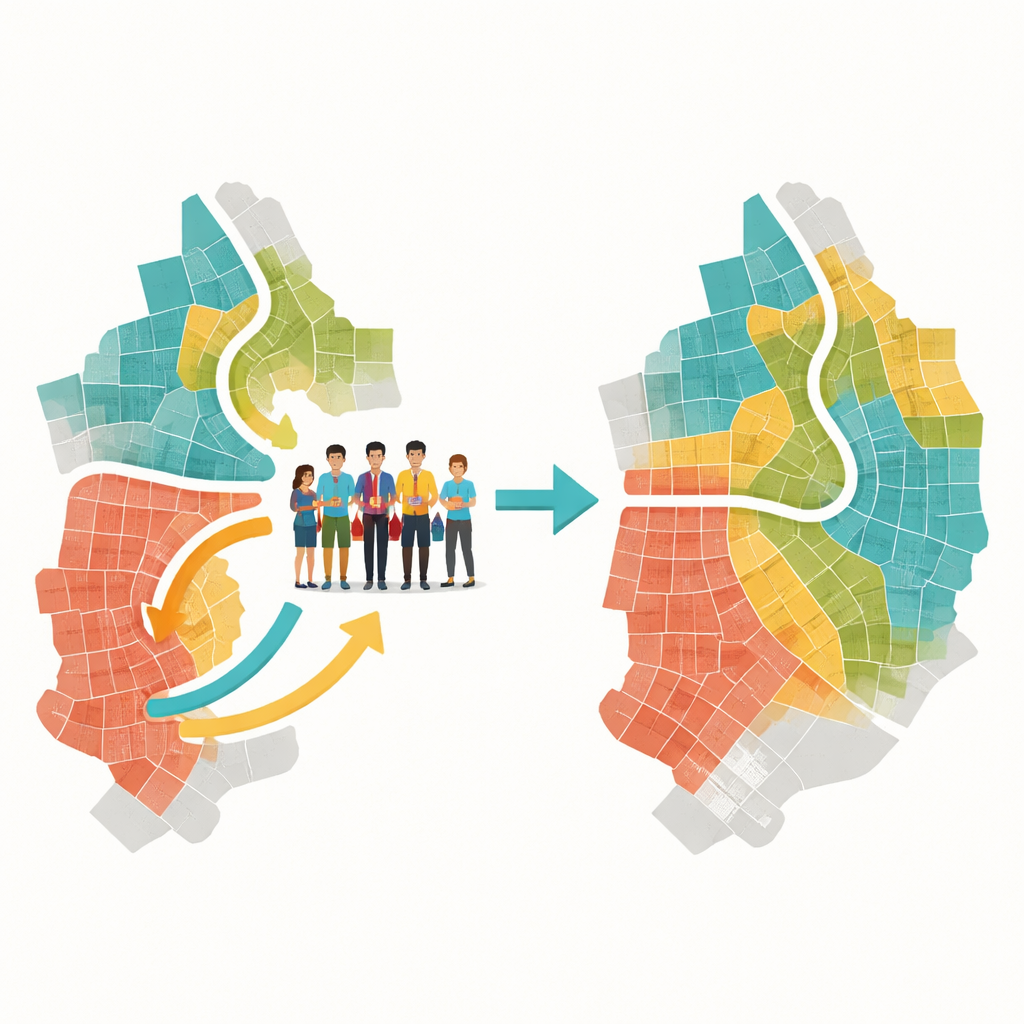
Across Estonia as a whole, tech workers concentrate strongly in Tallinn, even more than other high-skilled professionals. Within the city, there has long been a sharp divide: inner-city areas with attractive, often expensive housing are dominated by the ethnic majority, while large, high-rise housing estates on the fringes are home to many Russian-speaking residents. The study finds that over the decade, minority tech workers increasingly move away from the heavily Russian-speaking estates and into central and more mixed neighborhoods. Measures of segregation show a marked drop in how separated minority tech workers are from majority residents, while similar changes do not appear for other highly educated workers. This suggests that it is their tech occupation, not just their education, that is reshaping where they end up living.
New Mixers and New Gaps
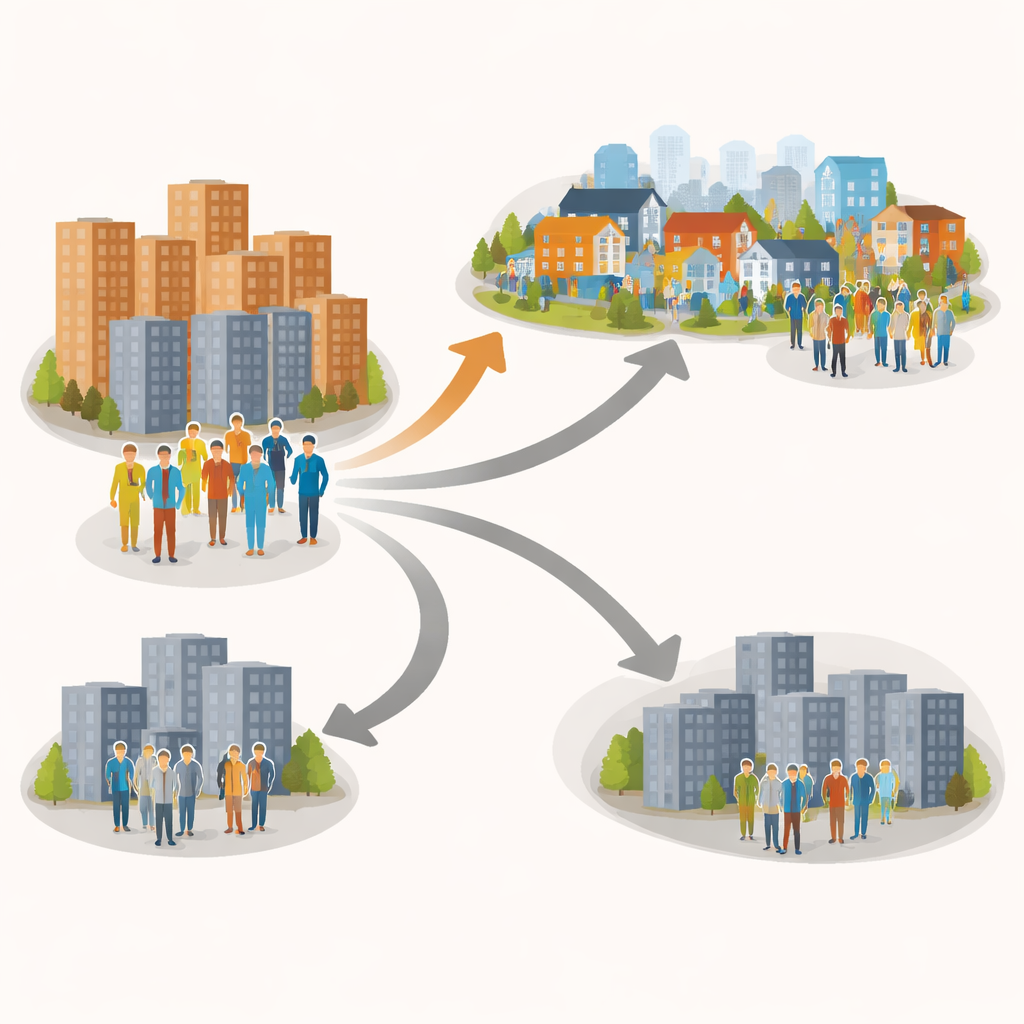
At the neighborhood level, the picture becomes more nuanced. By 2021, there are many more areas where majority and minority tech workers both live, especially in the inner city and in pleasant low-rise districts, as well as near tech hubs like university campuses and business parks. Minority tech workers are especially drawn to these desirable areas. Yet this integration comes with a twist: as well-off minority tech workers leave the old minority strongholds, those neighborhoods are increasingly left to lower-income minorities working outside the tech sector. Segregation between minority tech workers and non-tech minority workers grows, meaning that class divisions within the minority population itself are becoming sharper.
Different Paths for Newcomers and Long-Term Residents
The study also uncovers differences inside the minority tech group. Foreign-born minority tech workers are more likely to live in areas with a high share of majority residents, while native-born minority tech workers are more inclined to stay closer to long-established ethnic communities. Age and family stage matter too: older majority tech workers with children tend to live in majority-heavy neighborhoods, while younger workers of both groups are more likely to share mixed areas. These patterns remain even after accounting for income, education, and other factors, hinting that personal ties, histories, and preferences shape residential choices alongside money and job type.
What This Means for Fair Cities
For everyday city life, the findings carry both promise and warning. On the one hand, minority tech workers are helping loosen rigid ethnic divides by moving into majority and mixed neighborhoods, showing that digital-era careers can open doors to more integrated living. On the other hand, the same process leaves lower-income minority residents more concentrated in dense, low-cost fringe areas, deepening class-based separation. The authors argue that city policies need to recognize this double edge of the digital transition: supporting inclusive schools, public spaces, housing and transport so that the benefits of tech-driven opportunity do not simply redraw old lines of segregation in a new, income-based form.
Citation: Zālīte, J., Kalm, K., Leetmaa, K. et al. The role of tech workers in ethnicity- and class-based urban segregation. Nat Cities 3, 371–379 (2026). https://doi.org/10.1038/s44284-026-00420-4
Keywords: urban segregation, tech workers, digital transition, Tallinn, ethnic inequality