Clear Sky Science · en
Machine learning and artificial intelligence in liquid biopsy-based early detection of pancreatic cancer: a scoping review
Why early clues in blood and urine matter
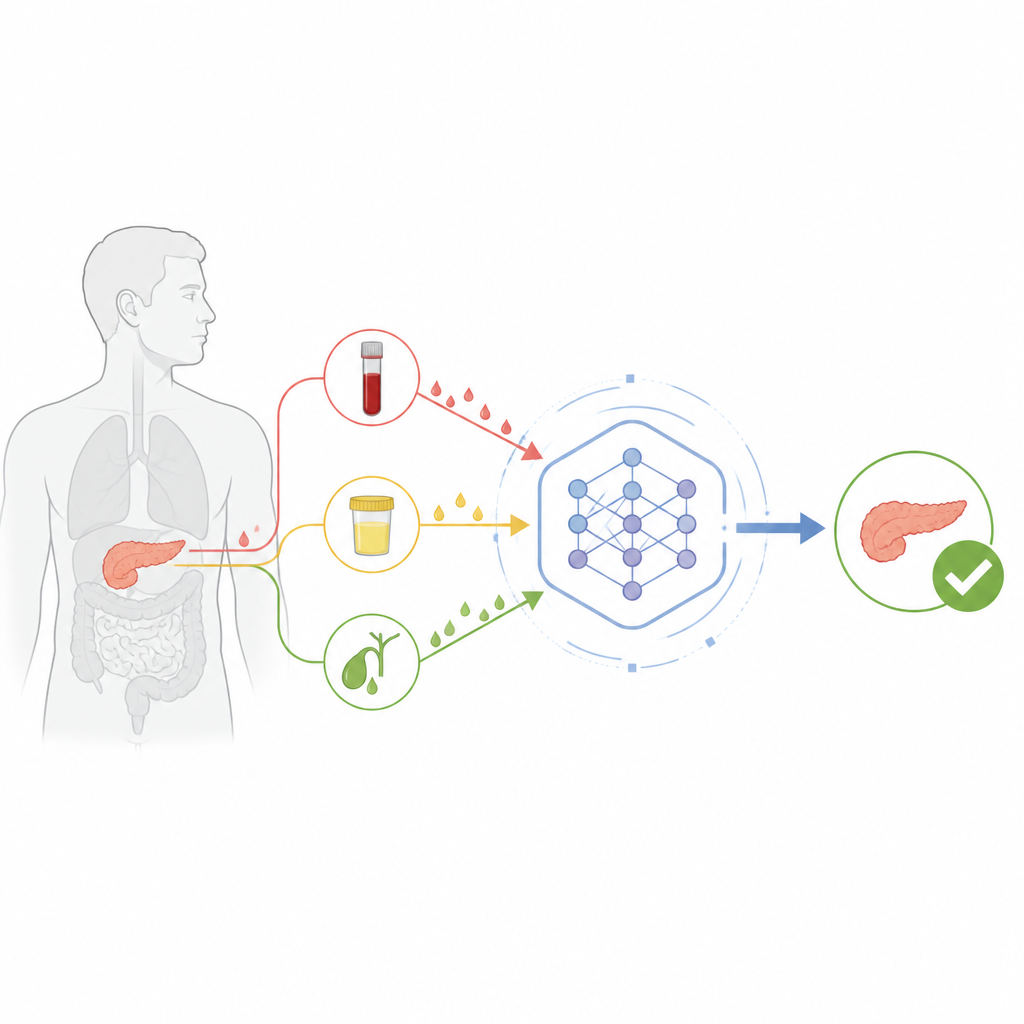
Pancreatic cancer is one of the deadliest common cancers because it rarely causes clear symptoms until it has already spread. This review looks at how doctors might catch it earlier by studying tiny traces of tumor material floating in everyday body fluids and using artificial intelligence to spot hidden patterns. For patients and families, the hope is that a simple blood or urine test could one day flag trouble long before a tumor becomes life threatening.
A hard to reach organ with silent warning signs
The pancreas sits deep in the abdomen, which means tumors can grow quietly for a long time. Many people first notice only vague problems such as tiredness, stomach or back pain, weight loss, or yellowing of the skin. By the time pancreatic ductal adenocarcinoma is found, more than three quarters of patients already have cancer that has spread nearby or to distant organs, and very few are candidates for surgery. Even with modern treatments, only about one in ten patients in the United States are alive five years after diagnosis, so shifting the timeline toward much earlier detection is critical.
Liquid biopsy as a gentler window into cancer
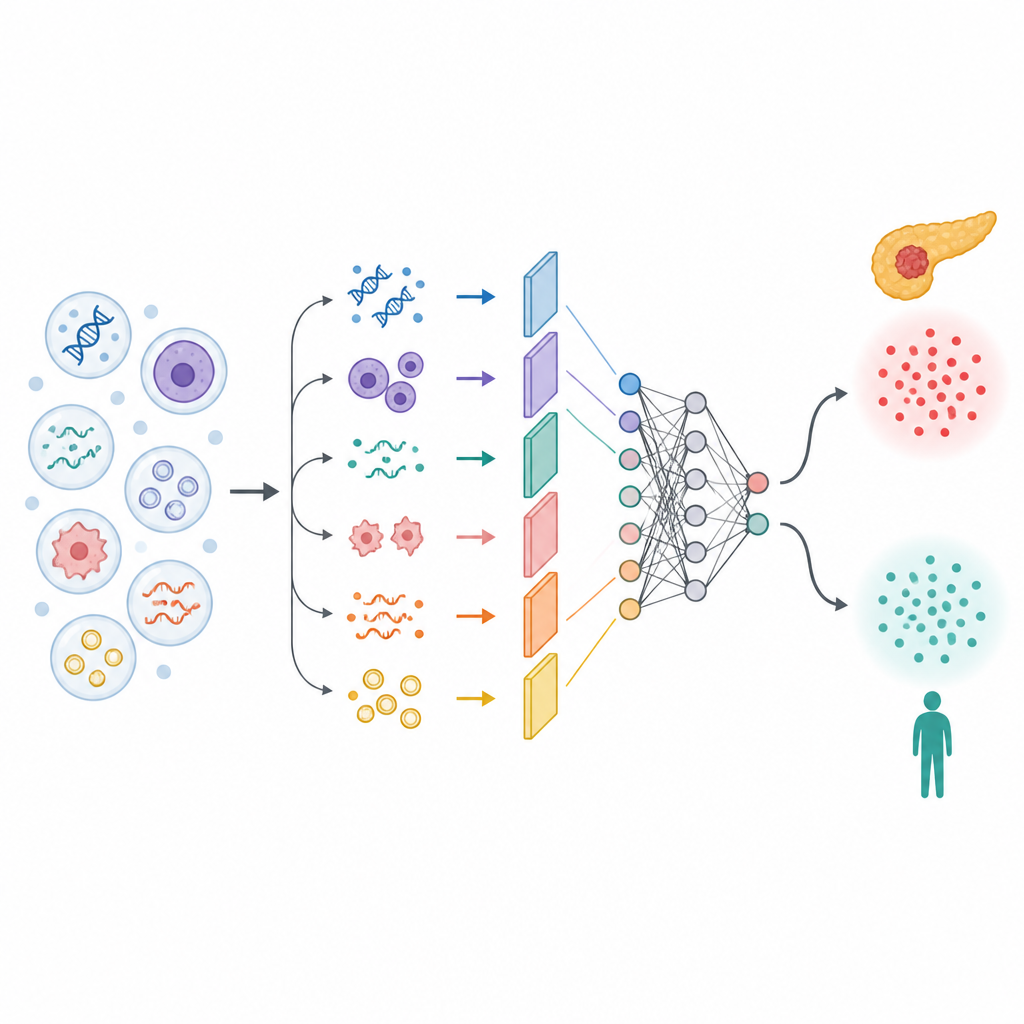
Current screening tools for high risk people rely on imaging scans and endoscopic ultrasound, which can be expensive, uncomfortable, and occasionally risky. Liquid biopsy offers a different route. Instead of looking directly at the pancreas, clinicians analyze blood, urine, bile, or cyst fluid for molecules shed by tumors. These include fragments of tumor DNA, whole tumor cells, tiny membrane bound vesicles, and short RNA molecules that help control genes. Because these markers can be collected with a simple blood draw or urine cup, they could support more frequent and widely available checks, especially if used together in panels rather than relying on a single marker like the long standing blood test CA19 9.
Teaching computers to read complex molecular signals
The challenge is that these body fluids contain a crowded mix of normal and abnormal material, and early stage cancers may leave only faint traces. The authors review 18 recent studies that turn to machine learning and deep learning to pick out subtle patterns in this sea of data. Most studies used blood samples, with a few exploring urine, bile, or pancreatic cyst fluid. Common computer methods such as random forests and support vector machines were trained to separate patients with pancreatic cancer from healthy volunteers, from people with other cancers, or from those with noncancerous pancreatic problems like chronic inflammation or benign cysts. Two studies used more complex neural networks that could learn patterns directly from large sets of measurements.
What works best so far and what still falls short
Across the studies, performance varied widely, but some themes emerged. Tests built around small RNA molecules in fluids, especially when protected inside vesicles, often reached very high accuracy and strong discrimination between cancer and noncancer samples. In contrast, methods based on whole tumor cells or some types of vesicles struggled more, in part because these particles are fragile, rare, and harder to isolate reliably. Several teams showed that combining CA19 9 with new markers improved performance over CA19 9 alone, echoing past success with multi marker prenatal blood tests. Still, most studies used modest numbers of patients, often with already confirmed cancer, and reported their results in different ways, which makes fair comparison difficult.
Where this leaves patients and doctors today
The review concludes that artificial intelligence powered liquid biopsy is a promising companion to imaging based screening rather than a replacement today. The field is young, and few of the tested panels are ready for routine clinic use. Larger, better designed studies in people at high risk and in those with early changes like chronic pancreatitis are needed, along with clearer standards for reporting how well models perform. If these hurdles can be overcome, simple fluid based tests guided by smart algorithms may someday help identify pancreatic cancer earlier, reduce the need for invasive procedures, and give more patients a chance at curative treatment.
Citation: Ku, J., Singhal, M., Burnette, M. et al. Machine learning and artificial intelligence in liquid biopsy-based early detection of pancreatic cancer: a scoping review. BJC Rep 4, 26 (2026). https://doi.org/10.1038/s44276-026-00232-y
Keywords: pancreatic cancer, liquid biopsy, machine learning, early detection, blood biomarkers