Clear Sky Science · en
Repurposing Birabresib to target Gram‑positive bacteria
Why this research matters
Antibiotic resistant infections are rising so quickly that, within a few decades, they could kill as many people each year as cancer. Yet very few new antibiotics are reaching patients. This study explores an inventive shortcut: taking a drug originally developed for cancer, called Birabresib, and testing whether it can be reused to selectively stop dangerous bacteria. The work focuses on Gram positive bacteria, a group that includes common causes of skin, lung, and bloodstream infections.
A new way to attack bacteria
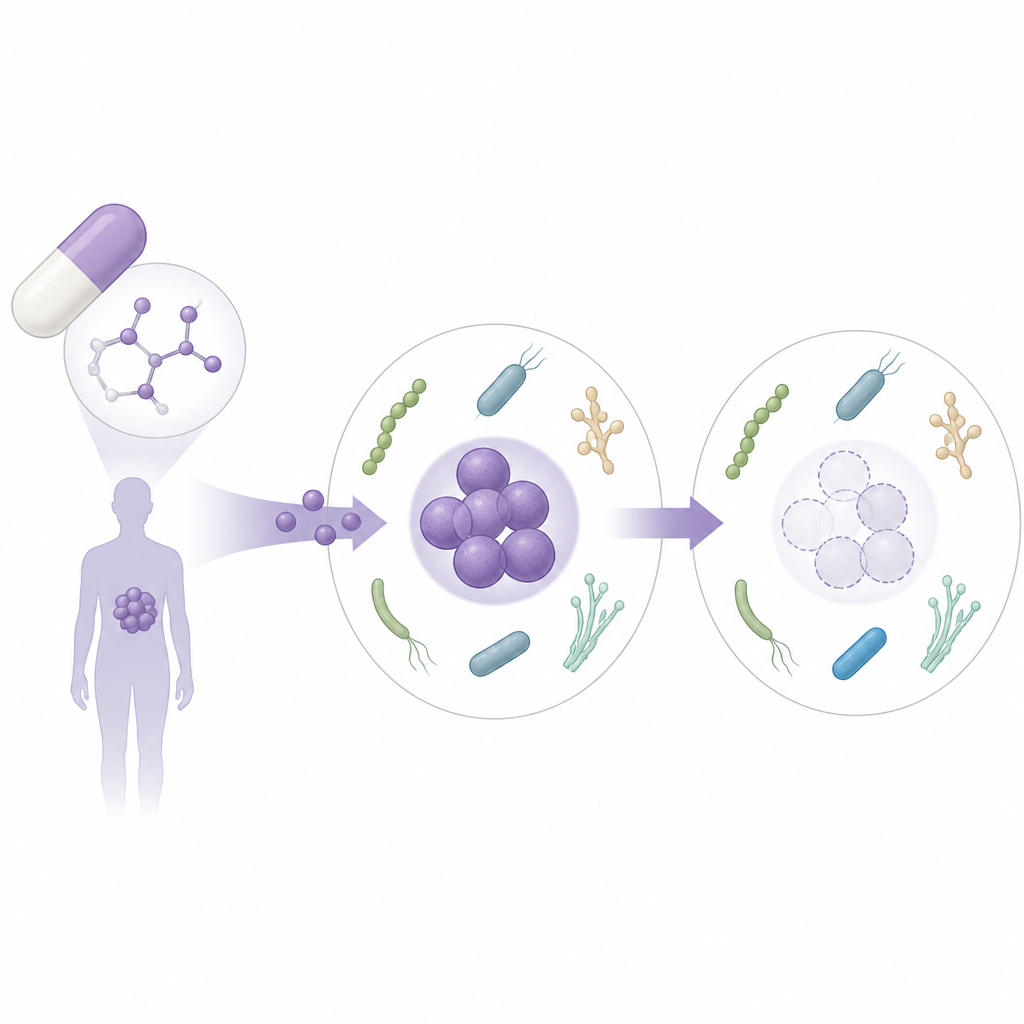
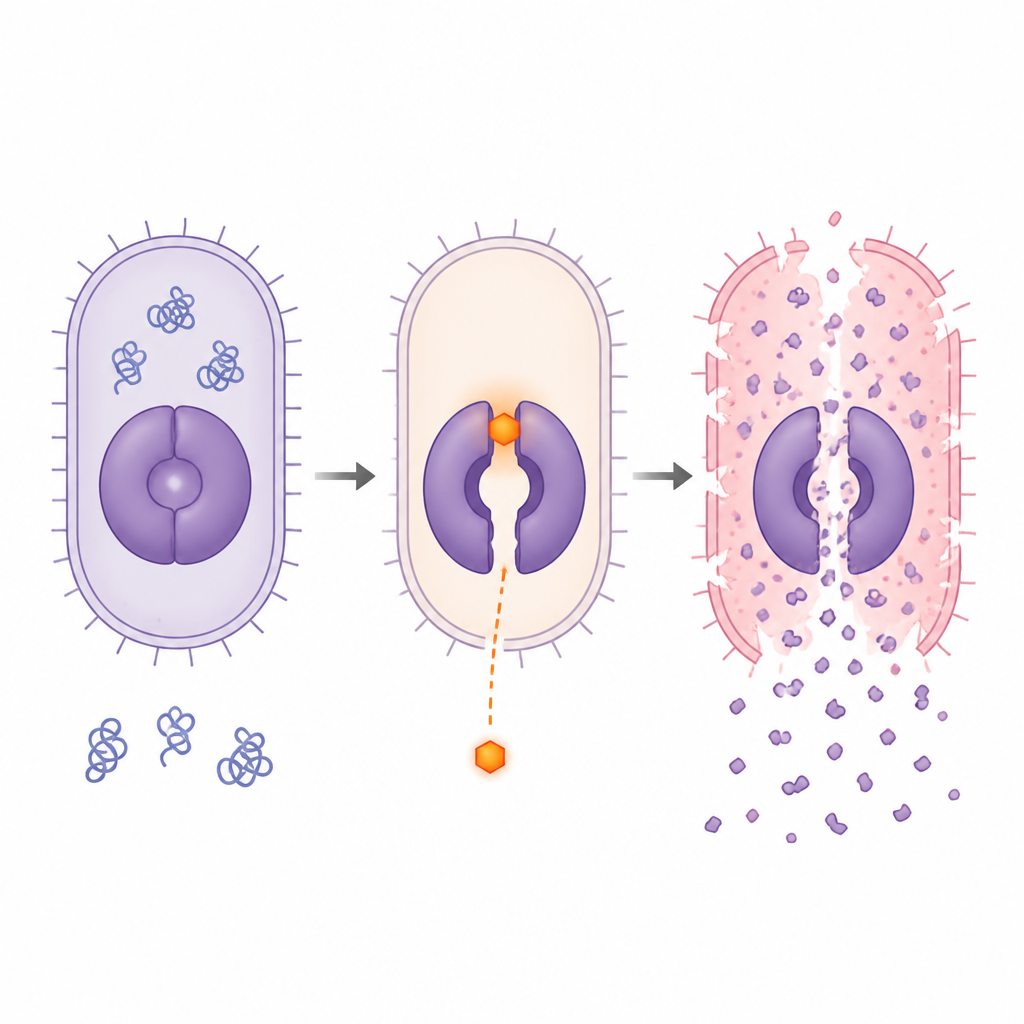
Most antibiotics target familiar processes such as how bacteria copy their DNA or build their cell walls. The authors instead aim at a different kind of machinery inside bacterial cells, a protein shredder called ClpP. Under normal conditions, ClpP carefully recycles damaged or unneeded proteins with help from partner helpers. Earlier work showed that certain rare compounds can force ClpP into an overactive state so that it chews up proteins uncontrollably, which kills the cell. Inspired by this idea, the team used computer modeling to search thousands of existing molecules for ones predicted to latch onto ClpP in the same way.
Finding a promising candidate
Using virtual docking programs and drug behavior calculators, the researchers compared how well different molecules were likely to fit into the ClpP structure and how suitable they might be as medicines. They focused on small compounds that did not resemble current antibiotics and that met common guidelines for absorption and safety. Birabresib emerged as a top hit, binding in the same region where known ClpP activators sit and interacting with many of the same amino acid building blocks. These in silico results suggested that Birabresib might switch ClpP into an always-on mode and therefore act as an antimicrobial.
Hitting harmful bacteria while sparing others
The team next tested Birabresib directly on living bacteria. In plate tests, disks soaked with Birabresib produced clear halos where four different Gram positive species could not grow, including Bacillus subtilis and Staphylococcus aureus. In contrast, three Gram negative species, including Escherichia coli and Pseudomonas aeruginosa, were largely unaffected under the same conditions. Liquid culture experiments confirmed strong growth inhibition in Gram positive strains and only a minor effect on Gram negative cells. Because Gram negative bacteria make up large parts of the normal gut and skin microbiome, this narrow hit list suggests Birabresib might fight pathogens without broadly disturbing helpful microbes.
Clue to how the drug works
To find out whether ClpP is truly involved, the scientists compared normal B. subtilis with a mutant that lacks the clpP gene. When exposed to Birabresib, normal cells showed strong growth inhibition and clear kill zones on plates, while the mutant strain, which cannot make ClpP, survived much better. This pattern is consistent with Birabresib needing ClpP to harm the bacteria, supporting the idea that the drug turns this protein shredder against the cell. The study also showed that Birabresib works even better when paired with the antibiotic rifampicin, which targets bacterial RNA polymerase. Subtle combinations of substandard doses of both drugs together killed B. subtilis more effectively than either drug alone, a hallmark of synergy.
Balancing power and safety
Any antibiotic candidate must hurt bacteria more than it hurts human cells. The researchers tested Birabresib on human intestinal cells grown in the lab and found that, at a dose that stopped B. subtilis, about 62 percent of the human cells still survived. Clinical cancer trials of Birabresib have already mapped some side effects, particularly temporary lowering of platelet counts during long dosing schedules. However, antibiotic treatments are usually shorter and, combined with the observed low toxicity in cell culture, the findings suggest a potentially workable safety window. The study notes technical challenges, such as poor water solubility, and points to chemical tweaks or new formulations as future improvements.
What this means going forward
This work shows that Birabresib, a drug first tested against tumors, can also block the growth of certain Gram positive bacteria, likely by overdriving a protein shredding machine inside their cells. It acts mainly on a narrow set of bacterial targets, works well with rifampicin, and appears less harmful to human cells at effective doses. While more studies are needed in additional cell types, animal models, and with improved formulations, the results illustrate how repurposing existing drugs can quickly expand our options against antibiotic resistant infections.
Citation: Koly, H.K., Razzaq, R., Hossain, T. et al. Repurposing Birabresib to target Gram‑positive bacteria. npj Antimicrob Resist 4, 39 (2026). https://doi.org/10.1038/s44259-026-00215-6
Keywords: antibiotic resistance, Gram positive bacteria, drug repurposing, ClpP protease, Birabresib