Clear Sky Science · en
Changes in antimicrobial resistance profiles of Escherichia coli and the metagenome on Dutch pig farms after antimicrobial usage interventions
Why pig medicine matters to us all
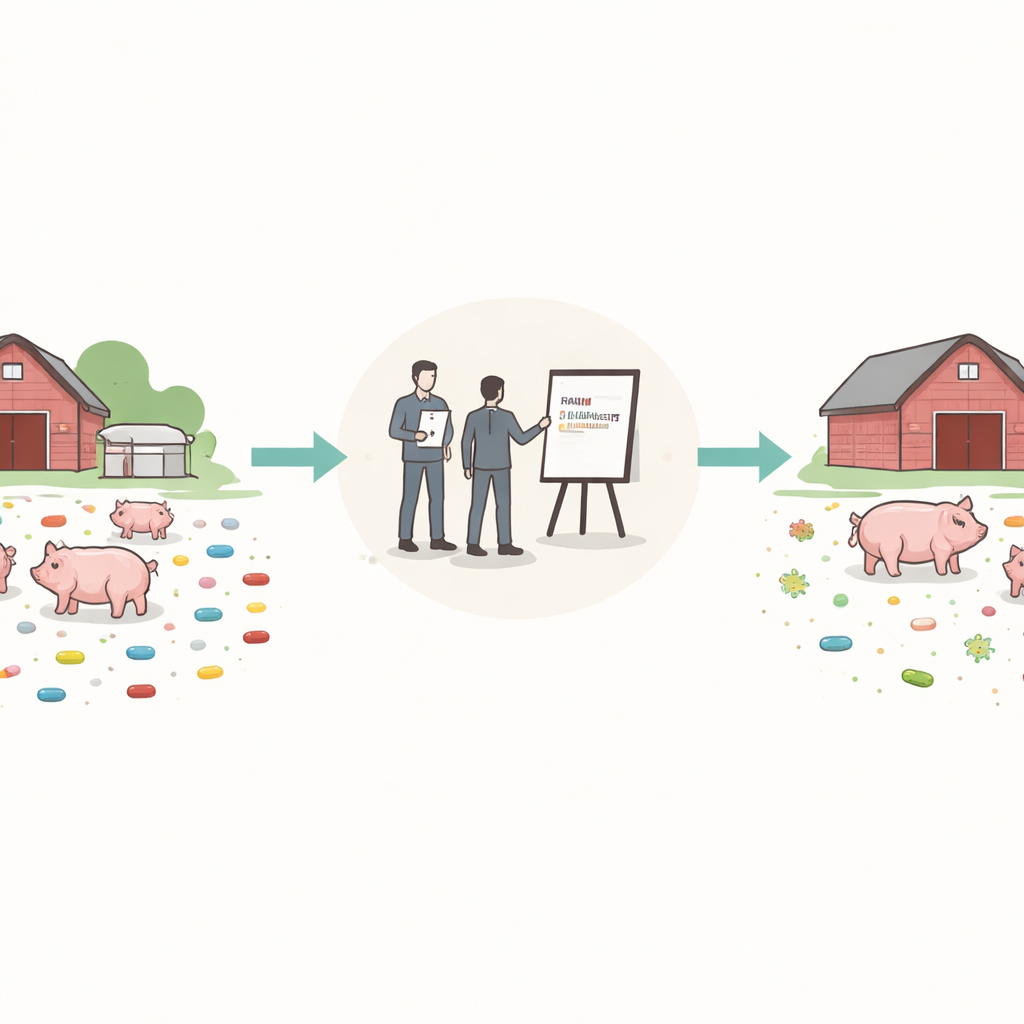
Antibiotics keep farm animals healthy, but their heavy use can also fuel bacteria that no longer respond to treatment. This study followed Dutch pig farms that used a lot of antibiotics and then took part in a coaching program to cut back. By tracking both common gut bacteria and all the resistance genes in the pigs’ manure, the researchers asked a simple but crucial question: if farmers use fewer antibiotics, does resistance on the farm really go down—and how quickly?
A closer look at life on high-use pig farms
The research team worked with 45 commercial pig farms in the Netherlands that treated their animals with antibiotics more than the national average. Some farms raised young, recently weaned piglets; others raised older pigs headed for slaughter. Over about one to two years, veterinarians and advisors coached each farm’s management team. Together they designed practical changes—such as improving housing, hygiene, or treatment routines—aimed at preventing disease and reducing the need for antibiotics rather than simply telling farmers to “use less.”
How the team measured resistance
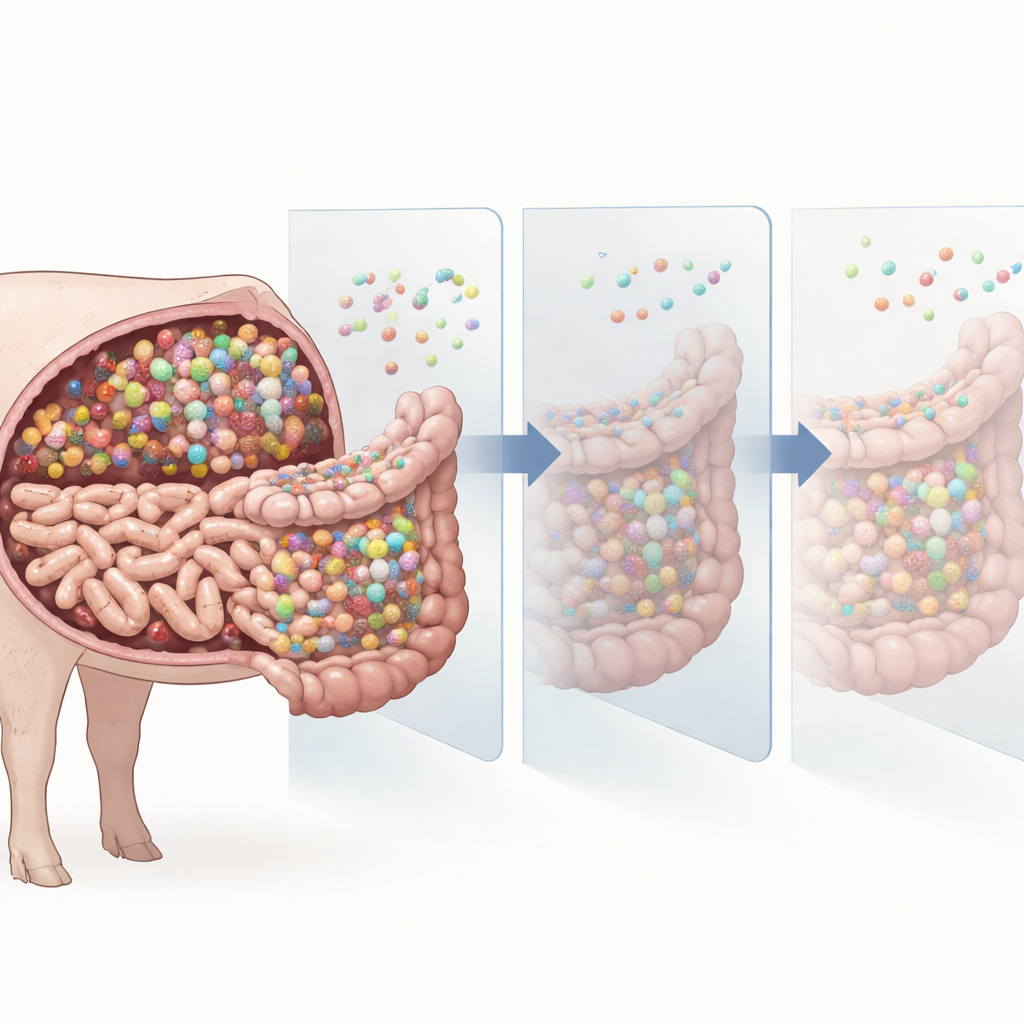
To understand what was happening below the surface, the scientists collected fresh manure from barns at the beginning and end of the intervention period. In the lab, they studied antimicrobial resistance in two ways. First, they isolated Escherichia coli, a very common gut bacterium, and tested how many of these strains could grow in the presence of different antibiotics. Second, they used a metagenomic approach: instead of focusing on a single species, they sequenced all DNA in the pooled manure samples to count resistance genes carried by the entire microbial community, often called the “resistome.” This allowed them to see not just resistant E. coli, but the broader reservoir of genes that could potentially spread to other bacteria.
What changed when antibiotic use dropped
Across the farms, antibiotic use went down during the study, confirming that the coaching and tailored farm measures helped reduce treatments. The metagenomic data showed that the total number of resistance genes in the pigs’ gut communities also decreased over time, especially genes that protect bacteria against tetracyclines and aminoglycosides, two important antibiotic families. On farms with weaned piglets, genes linked to beta-lactam antibiotics also dropped. For some antibiotic types, such as those related to colistin, resistance genes were not detected at all. In contrast, resistance measured directly in E. coli was more mixed: for most antibiotics, changes were small, and in a few cases resistance was slightly higher at the end of the study, even though these drugs were rarely or never used in pigs.
Linking use on the farm to resistance in microbes
To dig deeper, the researchers compared how much of each antibiotic class a farm used in the six months before sampling with the resistance levels they measured. They found clear links: more tetracycline use went hand in hand with more tetracycline resistance, both in E. coli tests and in the total pool of resistance genes. Similar connections appeared between macrolide use and the corresponding resistance genes, between beta-lactam use and certain beta-lactam-resistant E. coli, and between colistin use and colistin-resistant E. coli. These patterns remained even after correcting for pig age group, season, and general time trends, suggesting that present-day antibiotic practices on a farm do shape its resistance landscape, though they are not the only factor.
Why the story is not simple or instant
The findings also show that resistance does not vanish as soon as antibiotic use goes down. Past treatment histories, farm hygiene, housing conditions, and the biology of resistance genes themselves all matter. Some resistance genes can sit stably in gut bacteria for long periods with little cost to the microbes, so they may linger even when selection pressure drops. The study’s follow-up period—roughly one to two years—may not be long enough to see the full effect of reduced antibiotic use, especially over several generations of pigs. Still, the steady decline in total resistance genes suggests that the microbial community is slowly shifting in a healthier direction.
What this means for animals, farmers, and people
In plain terms, the study shows that better antibiotic stewardship on pig farms can measurably shrink the pool of resistance genes within a relatively short time, even if the most visible bacteria, like E. coli, do not immediately become fully susceptible. Coaching farmers to improve herd health and rely less on routine treatments leads to fewer resistance genes circulating in animal guts and manure, which in turn lowers the risk that hard-to-treat bacteria will spread from farms into the wider environment and eventually to people. Longer-term studies are needed, but this work reinforces a key message: smarter antibiotic use on farms is a practical, achievable step in protecting both animal welfare and human health from the growing threat of antimicrobial resistance.
Citation: Luiken, R., Prinsen, H., Dasari, S.N. et al. Changes in antimicrobial resistance profiles of Escherichia coli and the metagenome on Dutch pig farms after antimicrobial usage interventions. npj Antimicrob Resist 4, 26 (2026). https://doi.org/10.1038/s44259-026-00200-z
Keywords: antimicrobial resistance, pig farms, antibiotic stewardship, Escherichia coli, metagenomics