Clear Sky Science · en
Impacts of non-native invertebrates and plants on polar soil systems
Why changes in frozen soils matter
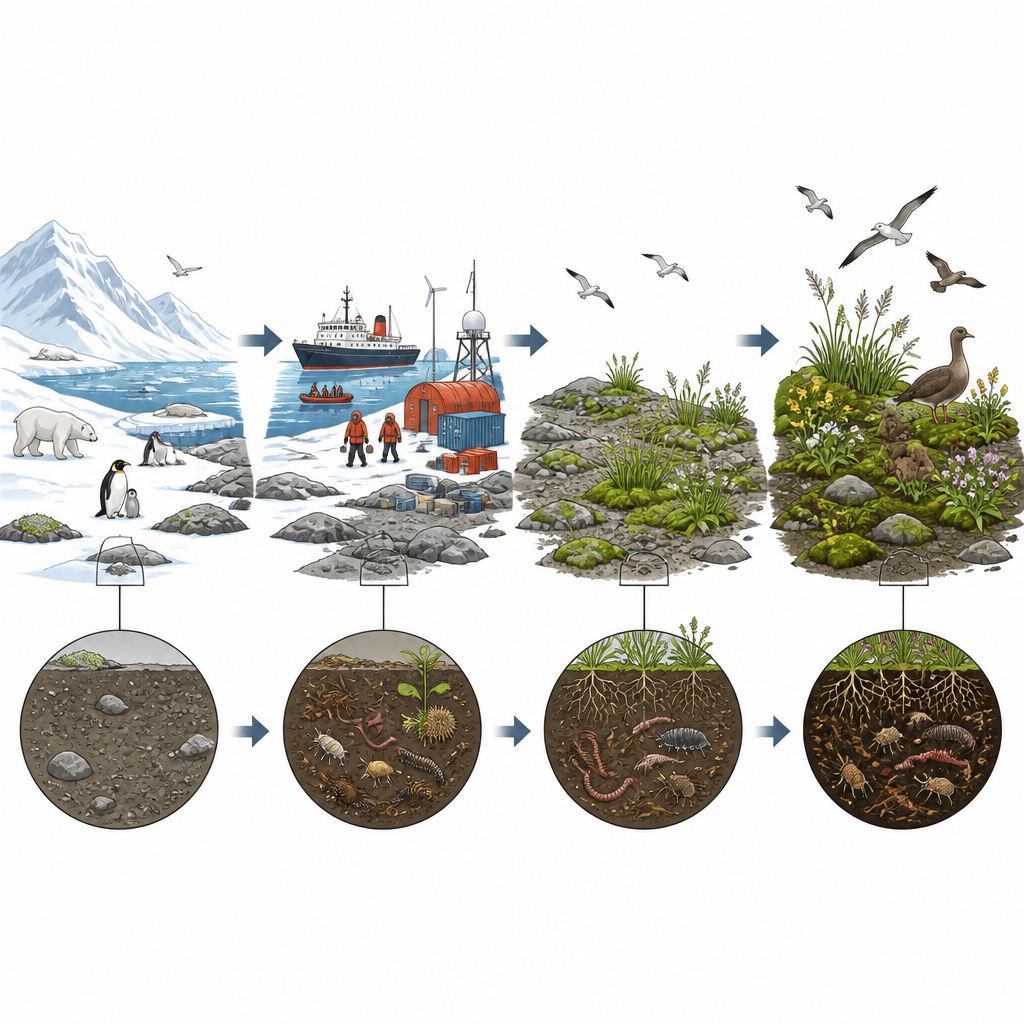
Earth’s polar regions may seem safely isolated by ice and distance, but they are beginning to face a quiet invasion. As more people visit and work in the Arctic and Antarctic, plants and small animals from elsewhere hitchhike in on boots, cargo and soil. This review explains how these newcomers can change the chemistry and life of polar soils, which are central to how much carbon and nutrients are stored or released in a warming world.
New arrivals in remote cold lands
Non-native species are organisms that humans move beyond their natural range. A few of these arrivals become invasive, spreading and harming local life or ecosystem health. Because the poles are remote, harsh and lightly populated, they have so far received fewer invaders than warmer regions. Still, records already show nearly a hundred non-native plants established in High Arctic Svalbard and more than 200 non-native species on the milder sub-Antarctic islands, plus a smaller but growing list in the maritime Antarctic. Many were brought accidentally with tourists, researchers and imported soil, often clustering around settlements and research stations where disturbance and warmth make survival easier.
Hidden partners: microbes that travel with guests
Every non-native plant or invertebrate arrives carrying its own microscopic partners. These microbiomes of bacteria and fungi help their hosts cope with stress and can be richer and more versatile than those of native polar species. Microbes living in roots, guts or on body surfaces can speed up the breakdown of dead material and transform key nutrients such as nitrogen and phosphorus. In polar soils, where nutrients are scarce and food webs are simple, such changes can ripple through the whole system. Yet almost no studies have directly linked imported microbiomes with shifts in polar soil chemistry, making this an urgent gap in our understanding.
Warming climates opening the door
Climate change is sharply reducing the natural barriers that once kept most newcomers out. The Arctic has warmed almost four times faster than the global average in recent decades, while parts of the Antarctic Peninsula have also seen strong warming. Melting sea ice, snow and permafrost raises temperatures and water availability, boosts microbial activity and releases long-frozen carbon dioxide and methane. Longer, milder summers mean transported plants and invertebrates can grow faster, complete life cycles and spread. However, detailed measurements of soil temperature and moisture near the ground are still rare, limiting our ability to predict where non-native species will gain a foothold and how quickly soil processes will respond.
How newcomers change soil life and nutrients
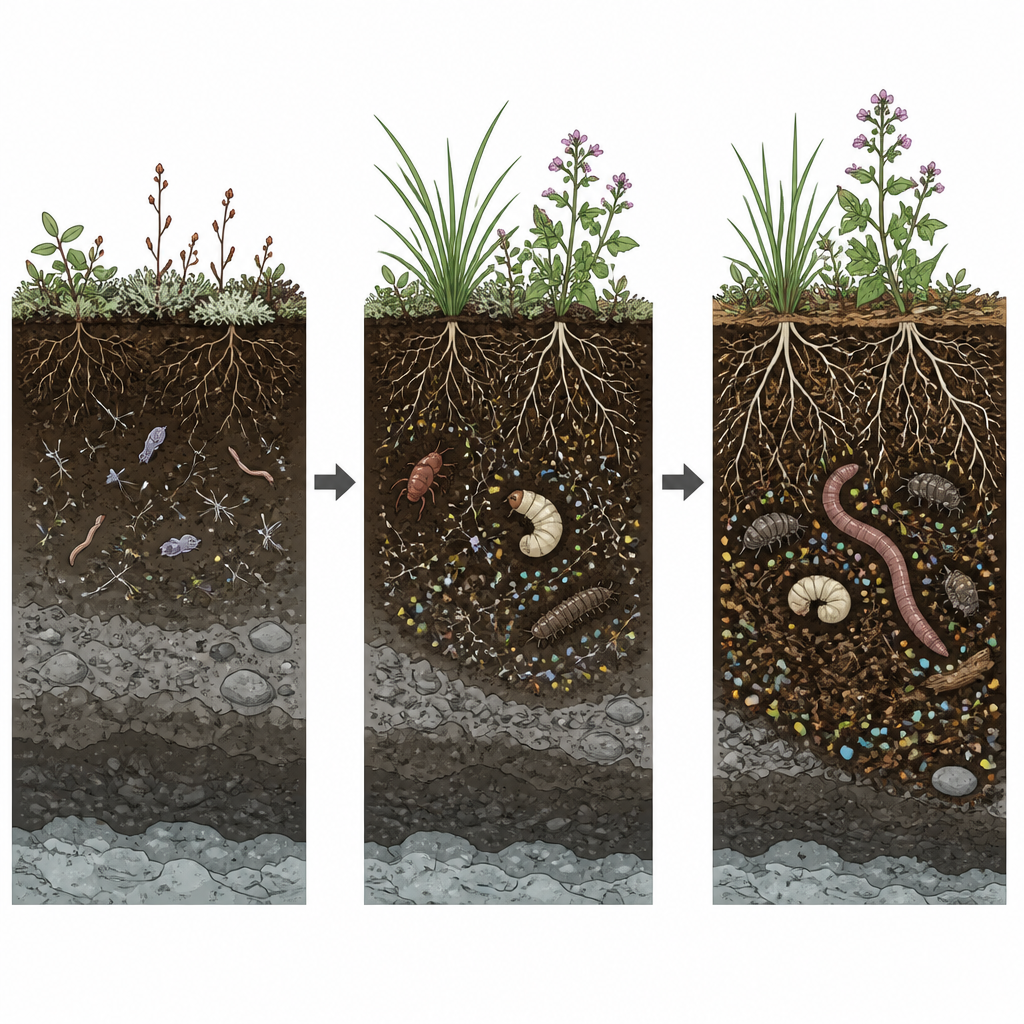
Polar soils are usually poor in nitrogen and phosphorus, and most of the action is driven by microbes rather than large animals. The review brings together case studies showing how non-native species can alter this balance. Introduced earthworms in Arctic Sweden, for example, shredded plant litter and increased nitrogen available to grasses. In the maritime Antarctic, the imported midge Eretmoptera murphyi greatly speeds moss peat breakdown and raises inorganic nitrogen in soil to levels similar to those near penguin colonies. On sub-Antarctic islands, large non-native invertebrates such as midges and woodlice accelerate litter turnover, boost soil respiration and interact with native springtails, especially under warmer conditions. Non-native grasses like Poa annua not only compete with native plants but also bring fungal partners that enhance stress tolerance and may help them reshape soil nutrient use. Together, these changes can favour further invaders or alter which native species thrive.
Protecting fragile ground for the future
The authors conclude that non-native plants and invertebrates are already nudging the nutrient and carbon cycles of polar soils in measurable ways, and these impacts are likely to grow as the climate warms and human activity expands. Because polar ecosystems have few species and simple food chains, even small shifts in soil chemistry can have outsized effects. The review calls for closer study of the microbiomes that travel with invaders, more fine-scale monitoring of soil climate and chemistry, and standard methods to compare results across sites. Strengthened biosecurity and early detection at high-risk locations, such as stations and visitor areas, will be essential to keep polar soils healthy before changes become too large to reverse.
Citation: Brayley, O.D.M., Convey, P., Ullah, S. et al. Impacts of non-native invertebrates and plants on polar soil systems. npj biodivers 5, 18 (2026). https://doi.org/10.1038/s44185-026-00127-8
Keywords: polar soils, invasive species, Arctic ecosystems, Antarctic biology, nutrient cycling