Clear Sky Science · en
Fasting ghrelin as mediator between obesity and depressive symptoms: a pre-registered study
Why hunger hormones and mood matter
Many people know that carrying extra weight can affect the heart and metabolism, but it may also shape how we feel emotionally. This study asks whether a hunger hormone produced in the stomach, called ghrelin, helps explain why people with obesity are more likely to have symptoms of depression. Understanding this gut–brain link could point to new ways to support mental health in a world where obesity is increasingly common. 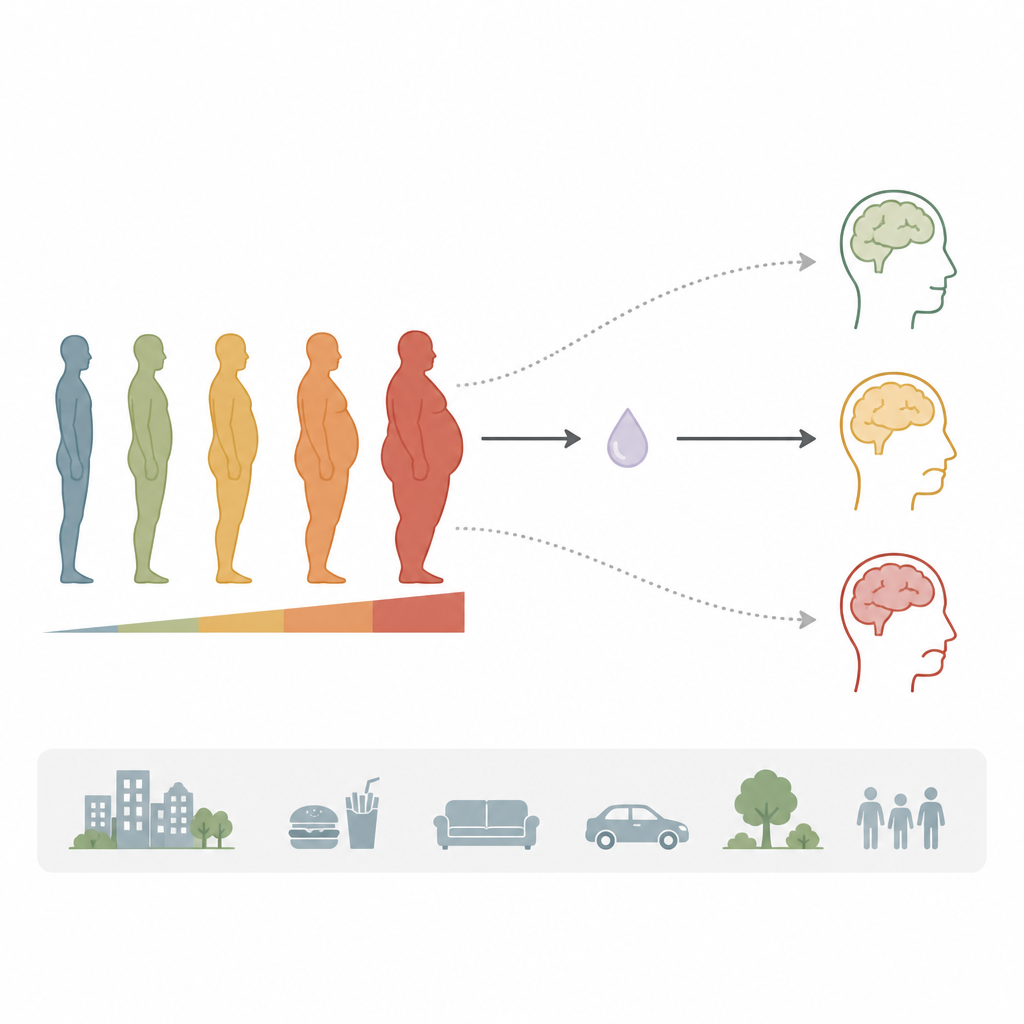
Looking at weight and low mood together
The researchers drew on a large health study of more than 6000 adults from Leipzig, Germany, ranging in age from young adulthood to old age. Participants answered detailed questionnaires about mood, including sleep, energy, appetite, and enjoyment of daily life. Their height and weight were measured to calculate body mass index, a common marker of weight status. A subset also had blood taken after an overnight fast to measure ghrelin levels, and some underwent brain scans to measure the size of the hippocampus, a region involved in memory and emotion.
What higher weight meant for mood and hormones
Across the full group, people with higher body mass index tended to report more depressive symptoms, even after accounting for age, sex, smoking, alcohol use, physical activity, diabetes, season, and thyroid function. The effect was not large, but it was clear. At the same time, among those with blood tests, higher body mass index was linked to lower fasting ghrelin levels in the bloodstream. This confirms earlier work showing that people with obesity often have a dampened hunger hormone signal when they have not eaten.
The hunger hormone that did not explain low mood
The central question was whether ghrelin might be the missing piece that connects obesity and depressive symptoms. To test this, the team focused on 263 participants with obesity. In this group, fasting ghrelin levels showed no meaningful link to overall depression scores, and statistical tests suggested only slight support for the idea that there is truly no effect. In other words, people with obesity who had lower or higher fasting ghrelin did not differ in how depressed they felt. Ghrelin also did not relate to the size of the hippocampus on brain scans, despite animal experiments suggesting a protective role in this region. 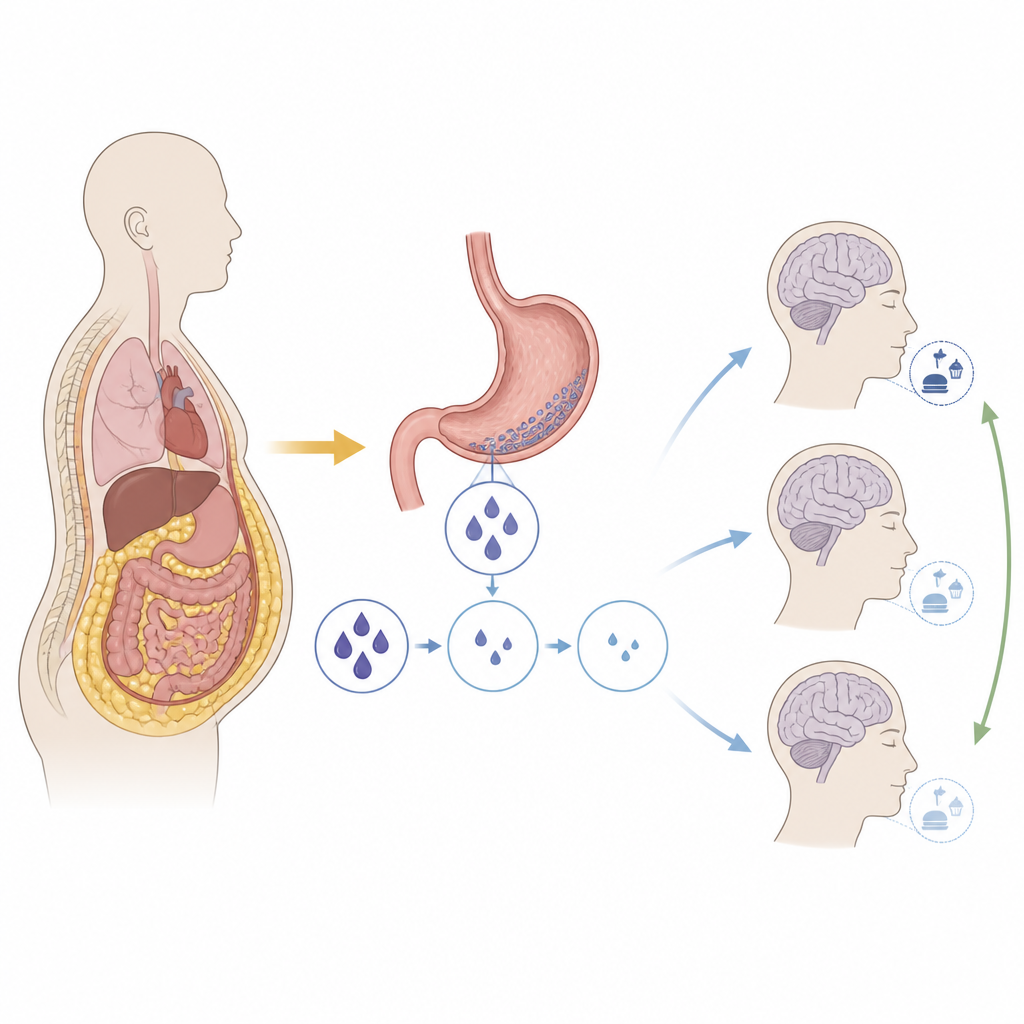
Clues from appetite and recent weight change
When the team looked more closely at specific mood symptoms, some finer patterns appeared. Among participants with obesity, higher ghrelin levels were tied to reports of less recent weight loss and to depressive symptoms involving reduced appetite. These findings fit with ghrelin’s known role in stimulating eating and helping the body defend its weight, hinting that the hormone may respond when appetite drops during a low mood. Still, these were exploratory results, and the study was not designed to test cause and effect, so they must be interpreted with caution.
Different impact for women and remaining questions
An important sex difference emerged: the link between higher body mass index and more depressive symptoms was driven mainly by women, while it was weak and not statistically clear in men. Yet ghrelin itself did not behave differently between women and men in its relation to mood, weight, or hippocampal size. This points to other biological and social factors, such as hormone cycles or weight stigma, as more likely drivers of women’s greater emotional burden in the context of obesity.
What this means for everyday health
For a layperson, the main takeaway is that while extra weight is modestly linked to feeling more depressed, this study suggests that a single hunger hormone measured during fasting does not explain that connection. Ghrelin did not serve as a useful signal of overall depression in people with obesity, though it may still influence appetite-related symptoms. The findings highlight that the relationship between body weight and mental health is complex, especially for women, and shaped by many biological and social forces rather than one hormone alone.
Citation: Endres, K.J., Lammer, L., Beyer, F. et al. Fasting ghrelin as mediator between obesity and depressive symptoms: a pre-registered study. npj Mental Health Res 5, 28 (2026). https://doi.org/10.1038/s44184-026-00217-2
Keywords: obesity, depressive symptoms, ghrelin, gut brain connection, women’s mental health