Clear Sky Science · en
Multimodal artificial intelligence and online learning in youth mental health: a scoping review
Why this matters for young people and families
Youth mental health problems are rising around the world, yet many children and teens never receive timely help. At the same time, young people are constantly generating digital traces—from smartphones, wearables, school platforms, and social media—that may reveal how they are really doing. This review explores how new kinds of artificial intelligence (AI) that learn from many types of data and keep updating over time could one day help spot stress, depression, and other problems earlier, and support more personalized care for young people.
New tools for a growing youth mental health crisis
Global data show that mental health problems affect a large share of children and adolescents, and that these issues worsened during and after the COVID-19 pandemic. Emergency visits for mental disorders and remote appointments with doctors increased, especially for teen girls. Yet services remain hard to access, and many young people fall through the cracks, particularly when they age out of child services but are not fully integrated into adult care. Because most lifelong mental disorders begin before age 25, the authors argue that better ways to detect and monitor problems during this window could have long-term benefits for individuals, families, and health systems.
How smarter machines could help
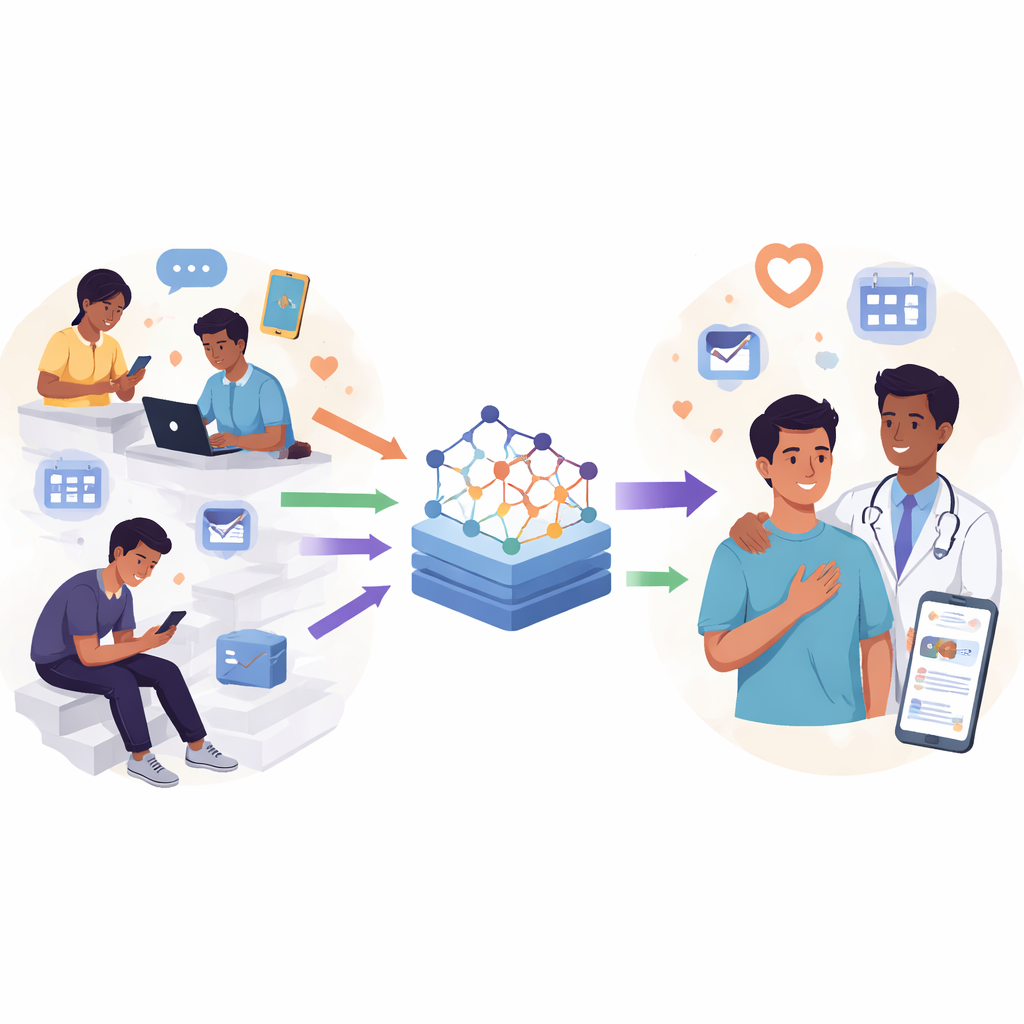
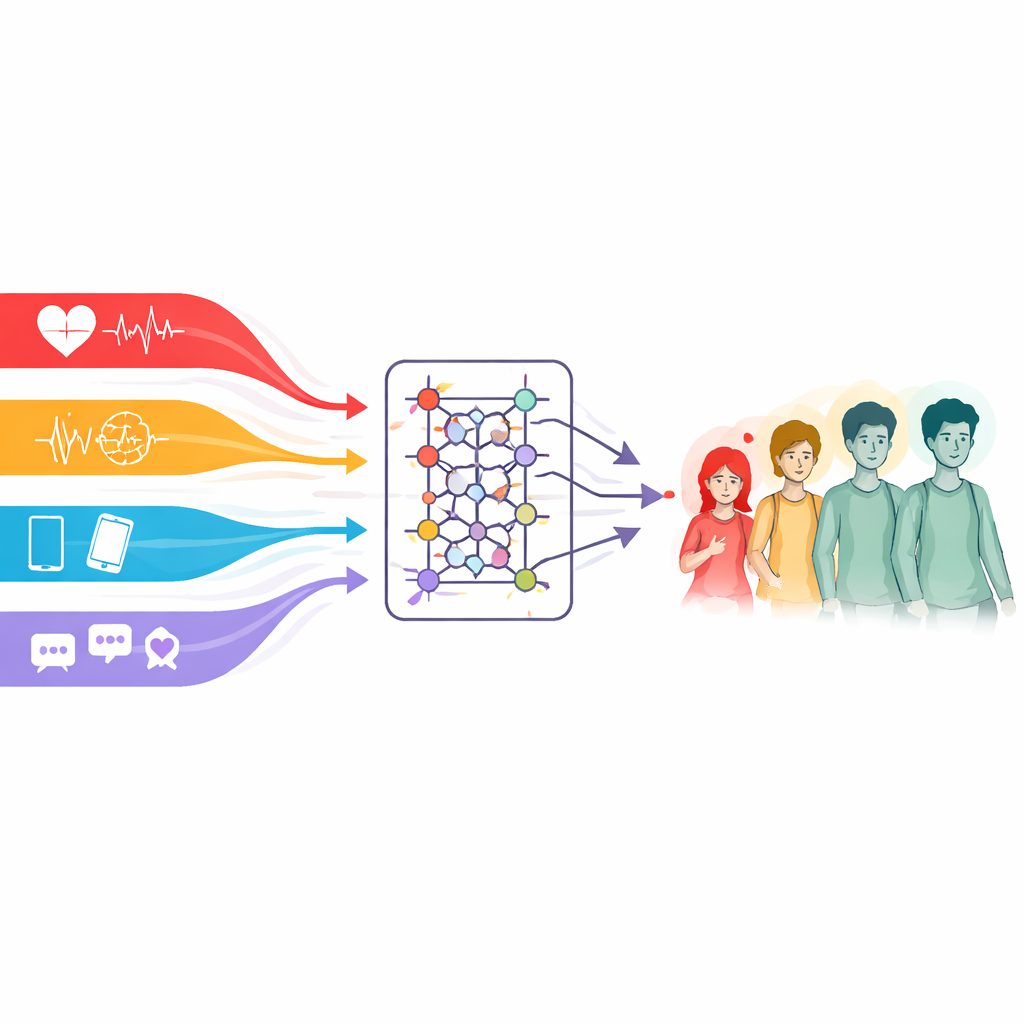
AI systems can learn patterns from data and use them to detect or predict outcomes, such as signs of stress or low mood. Traditional models usually rely on a single data source—such as text, a brain scan, or a questionnaire—and are trained once on a fixed dataset. The review focuses on two advances that are especially promising for youth. The first is multimodal AI, which combines several types of information, for example heart signals from wearables, sleep and movement from phones, voice or facial expressions, and written posts or survey answers. The second is online learning, where models do not stay frozen but keep updating as new data arrive, allowing them to adapt when a young person’s life, behavior, or environment changes.
What current research is actually doing
The authors systematically searched major medical and engineering databases for studies since 2015 that used AI on data from young people (up to age 25) to detect, monitor, or treat mental health–related problems. Out of more than 500 papers, only 24 met their criteria, and just a handful combined multiple data types and online learning. Most work targeted early warning signs such as stress, emotional state, or cognitive strain, rather than formal diagnoses. For example, several projects used wearable sensors to measure heart activity or skin conductance while students performed stressful tasks, then trained neural networks to recognize stress and refine their predictions as more data came in. Others analyzed smartphone and sleep patterns over a semester to group students with similar stress profiles and adapt models to new users with very little data.
Promising results, but important gaps
Across the studies that used some form of continual updating, models generally became more accurate and better tailored to individuals than systems trained only once. Online learning helped track shifting emotional states from brain activity and adjust stress detection for each user. Nevertheless, the authors note that many papers labeled as “online” actually used looser forms of incremental retraining rather than true, real-time adaptation to data streams. Most studies relied on small, narrow samples—often college or graduate students—and rarely tested models on independent datasets. Ethical and practical questions loom large: collecting detailed physiological and behavioral data from minors raises sensitive issues around consent, privacy, long-term storage, and who controls ongoing updates to models that may influence care decisions.
Where this field needs to go next
The review concludes that AI for youth mental health is a fast-emerging but still early-stage area. To move from lab prototypes to tools that can safely support real care, researchers will need larger and more diverse datasets, clearer reporting of age and background, and standardized ways to collect and share multimodal youth data. Models must be tested over time and across different settings to ensure they remain reliable as conditions change. Future work should extend beyond stress and mood detection to include a wider range of clinically recognized disorders and, crucially, to study how AI can assist actual interventions rather than just flag problems. As conversational systems and large language models become more common, careful evaluation of their benefits and risks for young users will be essential. For now, multimodal, continually learning AI offers a promising direction—but one that demands strong safeguards, transparency, and close collaboration between technologists, clinicians, young people, and their families.
Citation: Ramirez Campos, M.S., Barati, K., Samavi, R. et al. Multimodal artificial intelligence and online learning in youth mental health: a scoping review. npj Mental Health Res 5, 26 (2026). https://doi.org/10.1038/s44184-026-00207-4
Keywords: youth mental health, multimodal AI, online learning, stress detection, wearable sensors