Clear Sky Science · en
Climate change perspectives and associations with mental health in a population-based study
Why Feelings About the Climate Matter
Climate change is often discussed in terms of melting ice and rising seas, but it also affects how we feel, sleep and function in our daily lives. This study from Geneva, Switzerland, asks a simple but pressing question: how are people’s views about climate change tied to their mental health, and where are these worries most concentrated? By looking at both mood and geography, the researchers show that concern about a warming planet is widespread—and closely intertwined with symptoms of depression and anxiety.
Taking the Pulse of a City
The researchers drew on a large digital health study in Geneva called Specchio, which regularly surveys residents about their health and lifestyle. More than 3,100 adults who completed two online questionnaires in 2024 were included in this analysis. One survey asked about mental health using brief, well-validated checklists for symptoms of depression and anxiety. Months later, participants answered questions about how important climate change felt to them, how much they worried about it, and how much harm they expected it to cause now and in the future. The team also knew where in the canton of Geneva each person lived—city center, nearby suburbs, or more rural zones—allowing them to explore not just who was worried, but where those worries clustered.
A City Deeply Worried About Climate
The results revealed a population that is far more concerned about climate change than many other countries studied to date. Three out of four participants fell into the two most concerned groups, labeled “Alarmed” or “Concerned,” while only a tiny minority were doubtful or dismissive. Women were more likely than men to be in these high-concern groups and to report strong climate worry. Education also played a role: people with university-level education tended to worry more about climate change than those with only primary schooling. Surprisingly, age and household income did not show strong or consistent ties with overall climate views, and Swiss and non-Swiss residents looked broadly similar in their responses.
Links Between Low Mood, Anxiety, and Climate Worry
A key goal of the study was to see how mental health and climate views move together. People with more symptoms of depression were more likely to hold strongly concerned views about climate change overall, even after accounting for their age, sex, education, job situation and income. Anxiety told a slightly different story. Higher anxiety scores were strongly tied to higher levels of specific climate worry—feeling very worried about global warming—rather than to the broader pattern of beliefs and expectations captured by the overall climate perspective measure. Together, these patterns suggest that depression may color a person’s general outlook on the issue, while anxiety is more closely linked to intense, day-to-day climate fear.

Where Worry and Anxiety Cluster
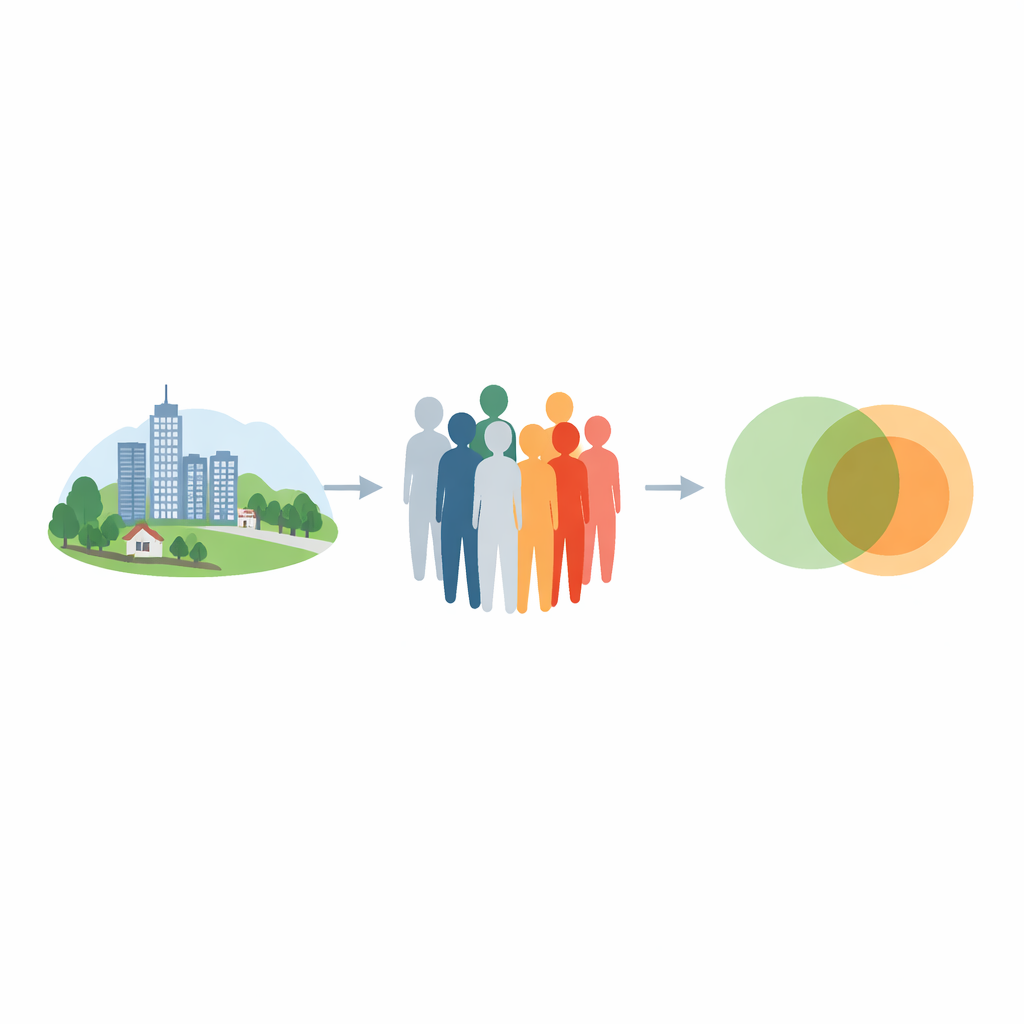
Because they knew where participants lived, the researchers could map out “hot spots” and “cold spots” of climate worry and anxiety across Geneva. Using a spatial analysis technique that looks for clusters of high or low values, they found that people with both higher anxiety and higher climate worry tended to live in and around the urban core. In contrast, areas on the outskirts were more likely to be “cold spots,” with lower levels of both anxiety and climate worry. Additional mapping showed that places with many highly educated residents overlapped with areas of strong climate worry, hinting that who lives where—and with what educational background—helps shape the geography of concern.
What This Means for People and Policy
The study concludes that in this Swiss urban setting, climate change concern is not a fringe preoccupation but a mainstream feeling that sits alongside, and often overlaps with, symptoms of depression and anxiety. For lay readers, the takeaway is twofold. First, if you feel distressed about climate change, you are far from alone—especially if you live in a city and follow environmental issues closely. Second, these worries are important signals for health and policy makers. The authors argue that climate communication and climate policy should recognize the psychological toll of a warming world, and that mental health services may need to explicitly address climate-related distress in the communities where it is most concentrated.
Citation: De Ridder, D., Dumont, R., Bouhet, A.R. et al. Climate change perspectives and associations with mental health in a population-based study. npj Clim. Action 5, 48 (2026). https://doi.org/10.1038/s44168-026-00377-z
Keywords: climate anxiety, mental health, urban populations, environmental concern, Switzerland