Clear Sky Science · en
Exploring DIY urbanism as an unconventional solution for urban climate adaptation
Why small street projects matter for a warming world
As heatwaves, floods, and sudden downpours become more common, many people feel that city hall is moving too slowly to keep up. This article explores an emerging response from residents themselves: small, do‑it‑yourself changes to streets, sidewalks, and vacant corners that add shade, greenery, or places for rainwater to soak in. It asks whether these improvised projects—like pocket gardens, temporary trees, or rain barrels—can meaningfully help cities adapt to climate change, and how they might push formal planning systems to change.
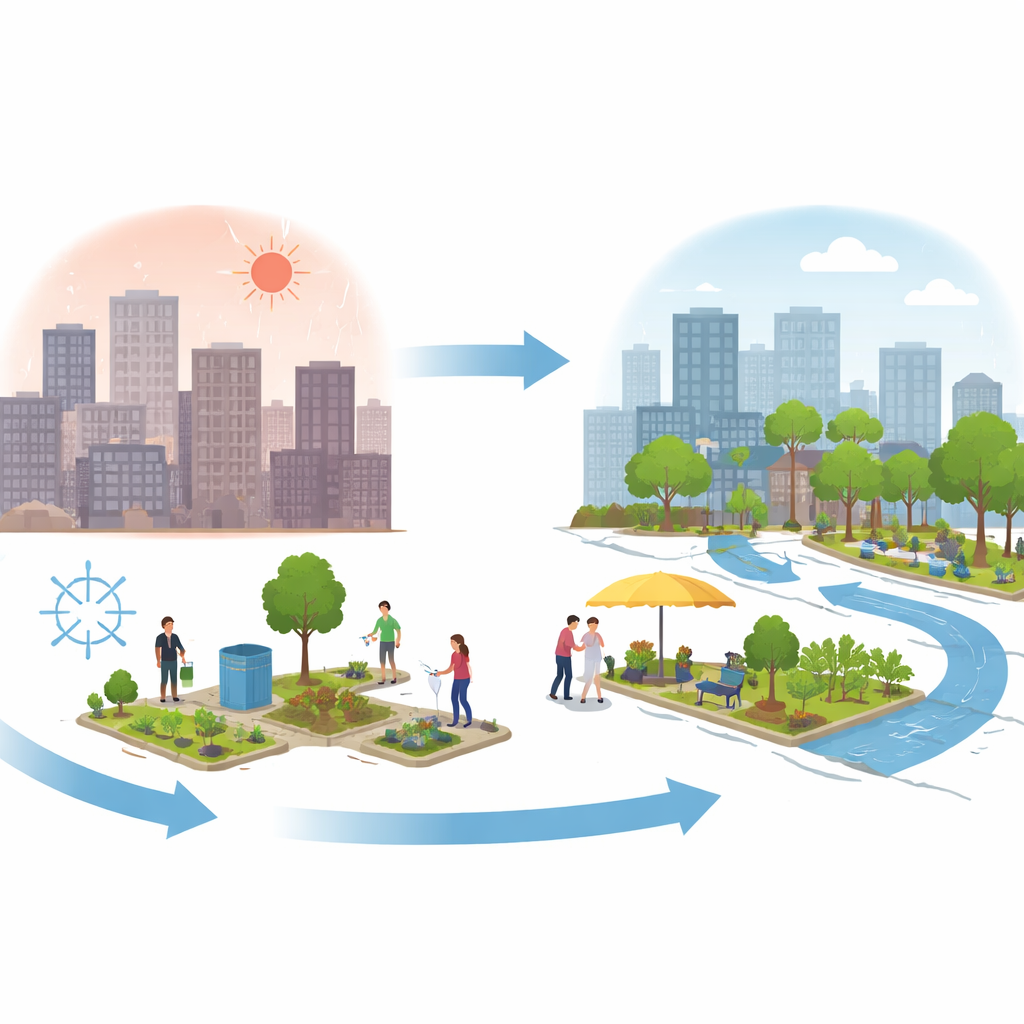
Everyday fixes for hotter, wetter cities
The authors focus on what they call DIY urbanism: visible, small‑scale alterations in public space, led by residents, done quickly and often without official permission. Unlike classic neighborhood groups or charities, these efforts usually start with individuals who see a problem on their doorstep—too much asphalt, no shade, puddles after rain—and simply act. Well‑known examples include turning a parking space into a tiny park for a day, planting flowers or vegetables in neglected tree pits or vacant lots, adding simple benches, or setting up barrels to catch rain from roofs. These acts are usually low‑cost and temporary, but they challenge the idea that only professionals are allowed to shape streets and squares.
Where and why people take action
By reviewing 19 studies from around the world, mostly in Europe and North America but also in Africa and Asia, the authors find that people engage in DIY urbanism when climate‑related problems feel immediate and tangible. Flooding in front of homes, sweltering sidewalks, or a lack of nearby green space can all trigger action. Emotional ties to a place and strong local social networks make it more likely that projects will appear and spread. At the same time, DIY urbanism tends to flourish where residents have time, education, and resources, raising concerns that poorer communities may benefit less. The political setting also matters: in some cities these actions are seen as playful or experimental; in others, where formal planning is weak or absent, they may be the only practical way to protect homes and health.
From small experiments to lasting change
Resident‑led projects often begin as temporary tests but can inspire permanent solutions. The article highlights cases where informal efforts to care for street trees or harvest rainwater grew into city‑supported programs, and how the international “Parking Day” movement helped normalise the idea of replacing car spaces with small public sitting or green areas. Pop‑up parks and similar short‑term installations give people a chance to experience new uses of space before they are locked in, lowering resistance and providing real‑world evidence for planners and politicians. However, many interventions fade away without leaving a trace, especially when they are not linked to broader campaigns or when authorities respond defensively, worrying about liability or loss of control.
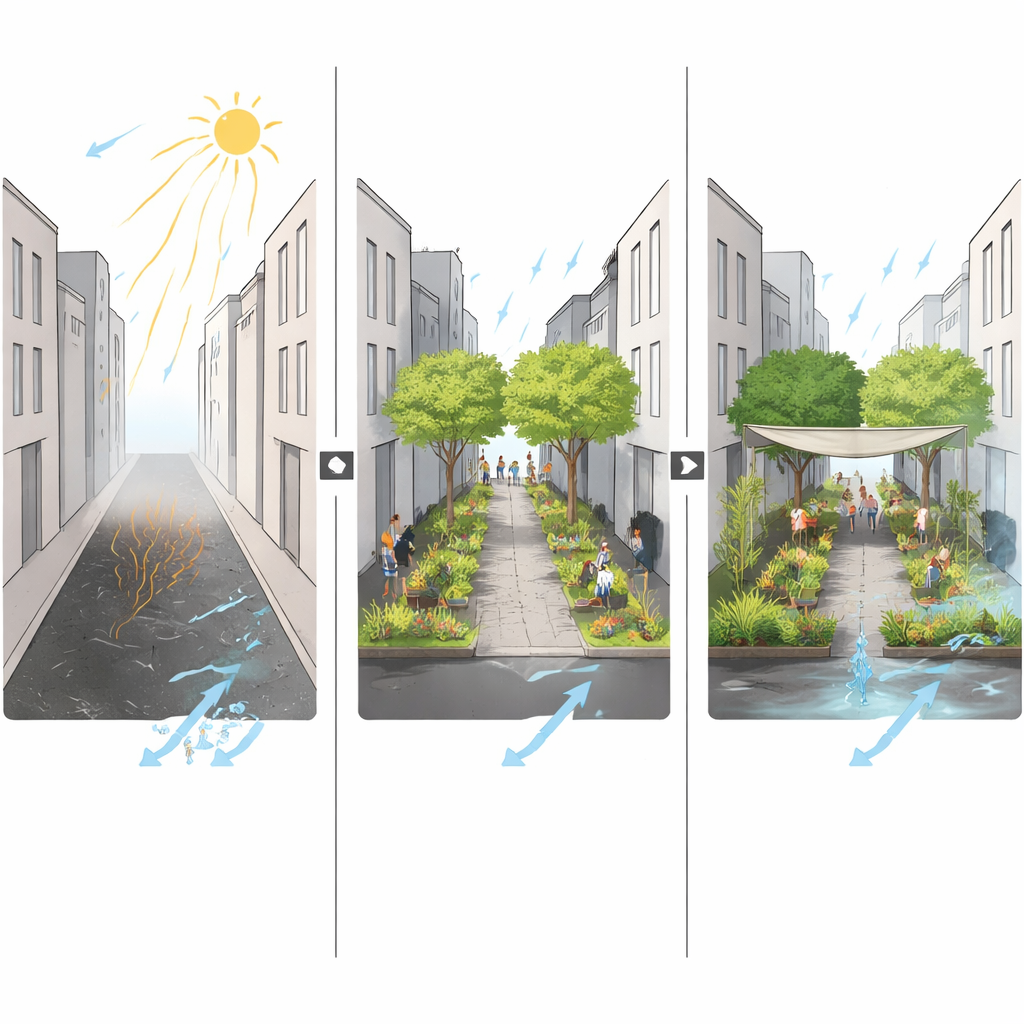
What tiny projects can actually do to heat and water
Because very few studies measure the physical effects of DIY projects directly, the authors compare them with similar, professionally designed measures. They identify nine types of interventions that could aid climate adaptation: street greening, community gardens, movable trees, parklets, rainwater harvesting, curb cuts that guide runoff into soil, water sprinklers or misters, sun canopies, and reflective street painting. At the scale of a few square metres, some of these can noticeably improve comfort right where people stand or sit—especially adding trees, plants, and shade, or using sprinklers on hot days. Simple rainwater systems and curb inlets can also help local soils soak up more water instead of sending it straight into drains. Yet the overall impact on city‑wide temperatures or flood risk remains very small unless such measures are repeated many times over larger areas.
Benefits beyond degrees and millimetres
The authors argue that the greatest strength of DIY urbanism may lie not in measurable drops in temperature or runoff, but in how it changes people and institutions. Hands‑on projects can raise awareness of climate risks, build trust and cooperation among neighbors, and signal where official planning has fallen short. They can press governments to experiment, speed up procedures, and integrate residents’ ideas into formal climate plans. Still, the paper warns that some measures—such as poorly designed misting systems or highly reflective paving—can have side effects, and suggests focusing on “no‑regret” options like greening and shading that are unlikely to cause harm and offer many side benefits, including better mental well‑being.
What this means for our streets
In plain terms, the article concludes that do‑it‑yourself street projects are no silver bullet for climate change, but they are a valuable piece of the puzzle. A single tree in a pot or a repurposed parking space will not cool an entire neighborhood or prevent a flood, yet it can make one spot more bearable on a hot day and show what a more livable street could look like. When multiplied, documented, and connected to official planning efforts, these modest experiments can help cities move from talk to action, turning passive residents into partners in building cooler, safer, and more welcoming urban spaces.
Citation: Jänicke, B., Hahn, R.P. Exploring DIY urbanism as an unconventional solution for urban climate adaptation. npj Clim. Action 5, 45 (2026). https://doi.org/10.1038/s44168-026-00370-6
Keywords: DIY urbanism, urban climate adaptation, street greening, stormwater management, citizen-led initiatives