Clear Sky Science · en
Personalized scenario testing uncovers feasible and effective choices for climate change mitigation
Everyday Choices That Shape the Climate
When we think about climate change, we often picture factories, power plants, or distant negotiations between governments. Yet a large share of global emissions comes from everyday decisions about how we travel, heat our homes, and what we eat. This study asks a simple, practical question: if ordinary people could see the impact and cost of their own choices, which changes would they actually be willing to make, and how far could those changes go toward cutting emissions?
A Personal Test Bench for Your Carbon Footprint
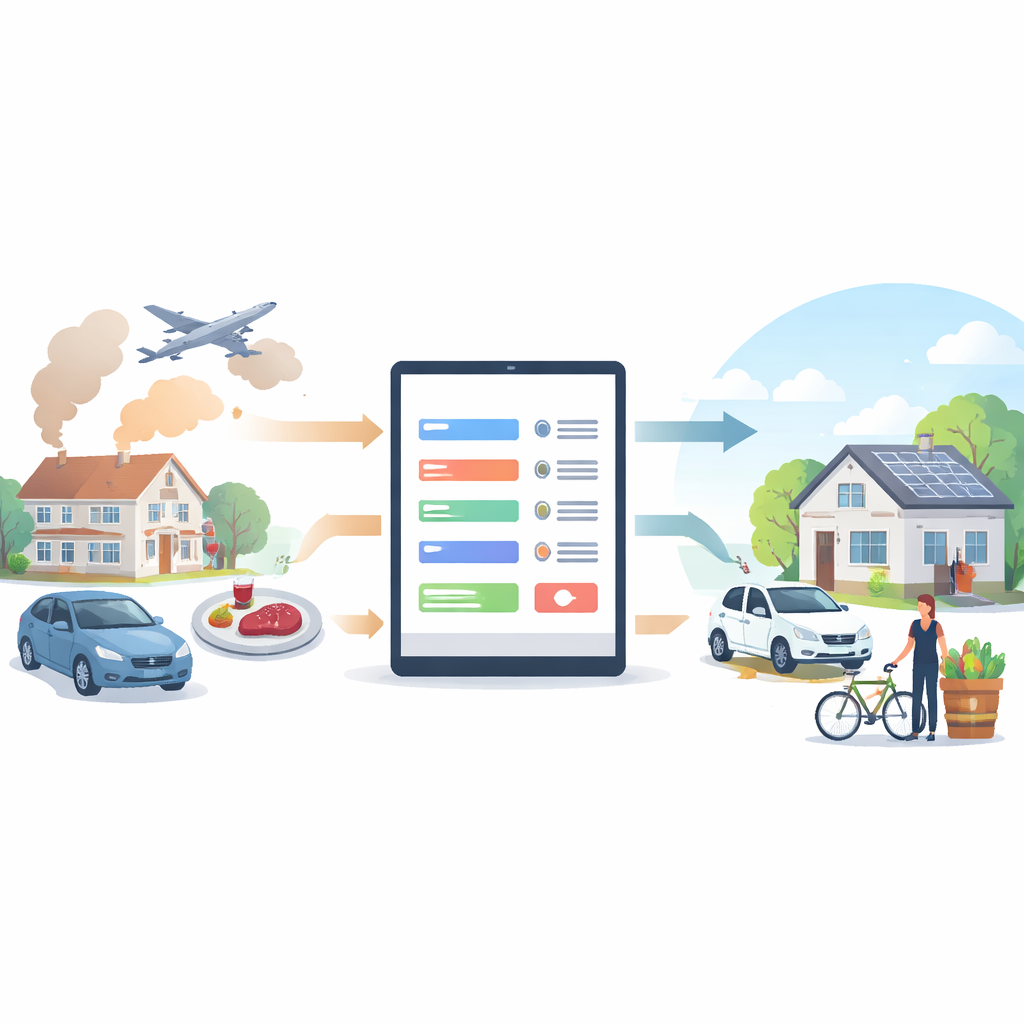
The researchers created an interactive tool that builds a personal climate "test bench" for each participant in a large, representative sample of Swiss residents. First, a carbon calculator estimates each person’s yearly emissions from housing, transport, and food, including emissions that occur abroad when goods are produced or flights are taken. Then, participants enter a “priority evaluator” screen where they see a tailored menu of actions—such as installing a heat pump, driving less, flying less, changing diet, or buying carbon offsets—each with its estimated emission reduction and financial cost or saving for their own situation. They are invited, but not forced, to assemble a package of actions that would cut their personal emissions by 30 percent.
Who Manages to Cut Emissions
About half of participants reached the 30 percent reduction target in this virtual exercise, but success was far from random. Younger people, those with higher education, higher incomes, and those living in detached houses were more likely to hit the target. So were people who fly at least once a year—a group that has larger cuts available from reducing flights—and those who see themselves as politically left or highly concerned about climate change. Personal attitudes mattered: people who felt a moral duty to act or believed their actions could make a difference were more willing to assemble stronger reduction plans.
Preferred Paths: Comfort, Cost, and Big Wins
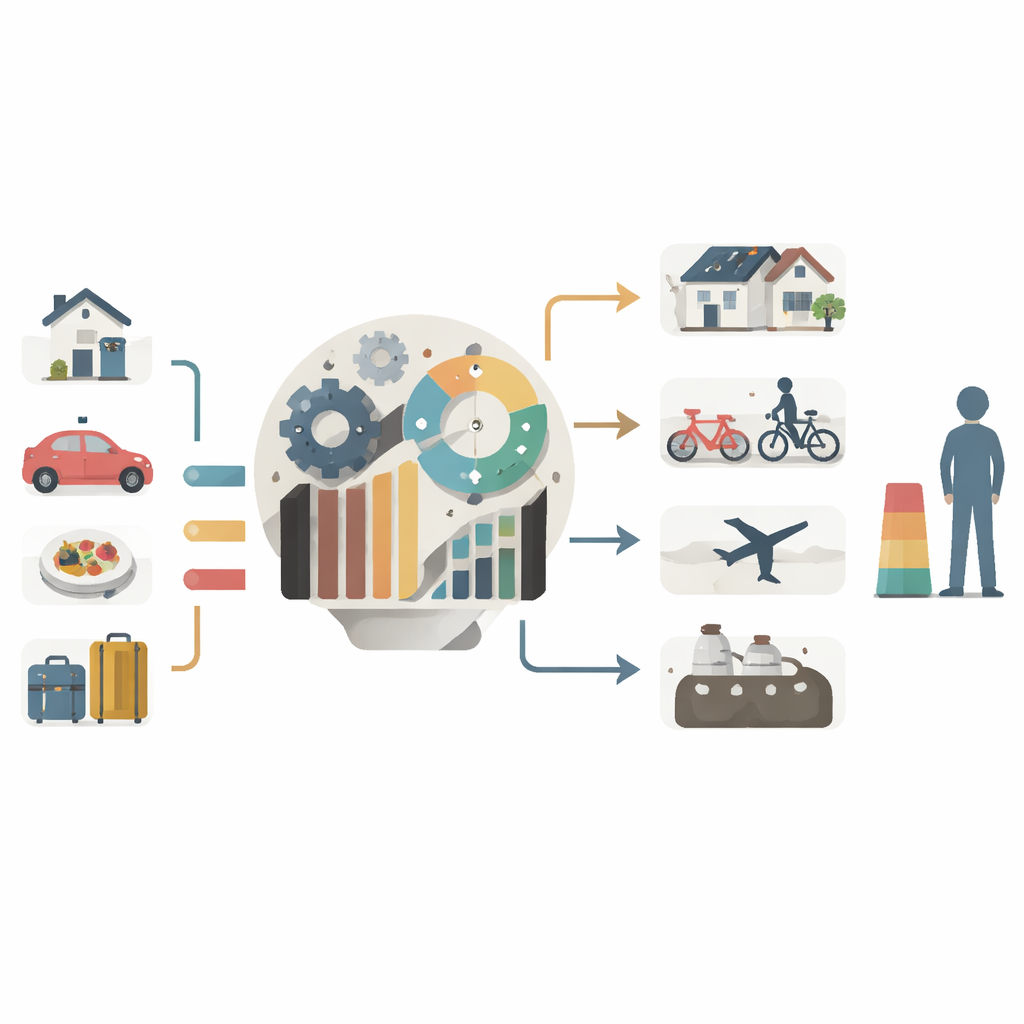
Faced with many options, participants gravitated toward measures that offered a good balance between impact and personal burden. On the technology side, heat pumps were the clear favorite: when available, nearly six in ten chose them, achieving large cuts in emissions despite high upfront costs. Solar panels and replacing fossil-fuel cars with electric ones were also attractive, though somewhat less transformative. Many people also chose relatively painless everyday tweaks, like modestly lowering room temperatures or driving a bit less, even though these changes cut emissions only slightly on their own. Surprisingly, a substantial share said they would reduce medium- and long-haul flights—choices that can slash emissions but require giving up valued trips. Buying inexpensive carbon offsets was another popular way to close the remaining gap.
Why Money and Motivation Matter
The study reveals that income and climate concern steer people toward different mixes of actions. Higher-income households were more likely to adopt costly technologies like heat pumps and electric cars, while lower-income households showed slightly more interest in certain building upgrades and, in some cases, giving up a car entirely. People who were very worried about climate change were notably more willing to accept behaviorally demanding steps—such as flying less, driving less, changing diet, or selling a car—as well as to invest in cleaner technologies and offsets. In short, money opens doors to some solutions, while strong concern makes people more willing to change daily habits.
What This Means for Climate Policy
By mapping which options are both effective and widely acceptable, the study offers a kind of political roadmap. It suggests that policy should first support actions people already favor that also deliver sizable emission cuts, such as helping households afford heat pumps, cleaner cars, and efficient travel alternatives, while making carbon removal technologies cheaper and more reliable. Governments can also safely encourage low-cost, modest steps like small reductions in driving and heating, which add up when many people take them. In contrast, policies that push rarely chosen and low-impact measures risk political backlash without much climate benefit. Overall, the research shows that when people see clear, personalized trade-offs, many are willing to design credible low-carbon lifestyles—and that aligning policy with these realistic choices can accelerate climate action without relying solely on unpopular top-down demands.
Citation: Lichtin, F., Heimgartner, D., Smith, E.K. et al. Personalized scenario testing uncovers feasible and effective choices for climate change mitigation. npj Clim. Action 5, 40 (2026). https://doi.org/10.1038/s44168-026-00369-z
Keywords: individual climate action, low-carbon lifestyles, heat pumps and electric vehicles, air travel emissions, climate policy design