Clear Sky Science · en
Projected global and national energy and climate futures using an alternative integrated assessment framework
Why this study matters for our future
As the world scrambles to keep global warming in check, governments rely on computer models to decide who should cut emissions, how fast, and at what cost. But most of these models quietly assume that today’s deep global inequalities in income and energy use largely persist. This paper introduces a new, simpler modeling tool that puts fairness at the center. It asks: can we imagine futures where people everywhere get enough energy for a decent life, while the countries most responsible for past pollution shoulder more of the cleanup burden?
A new way to picture the climate challenge
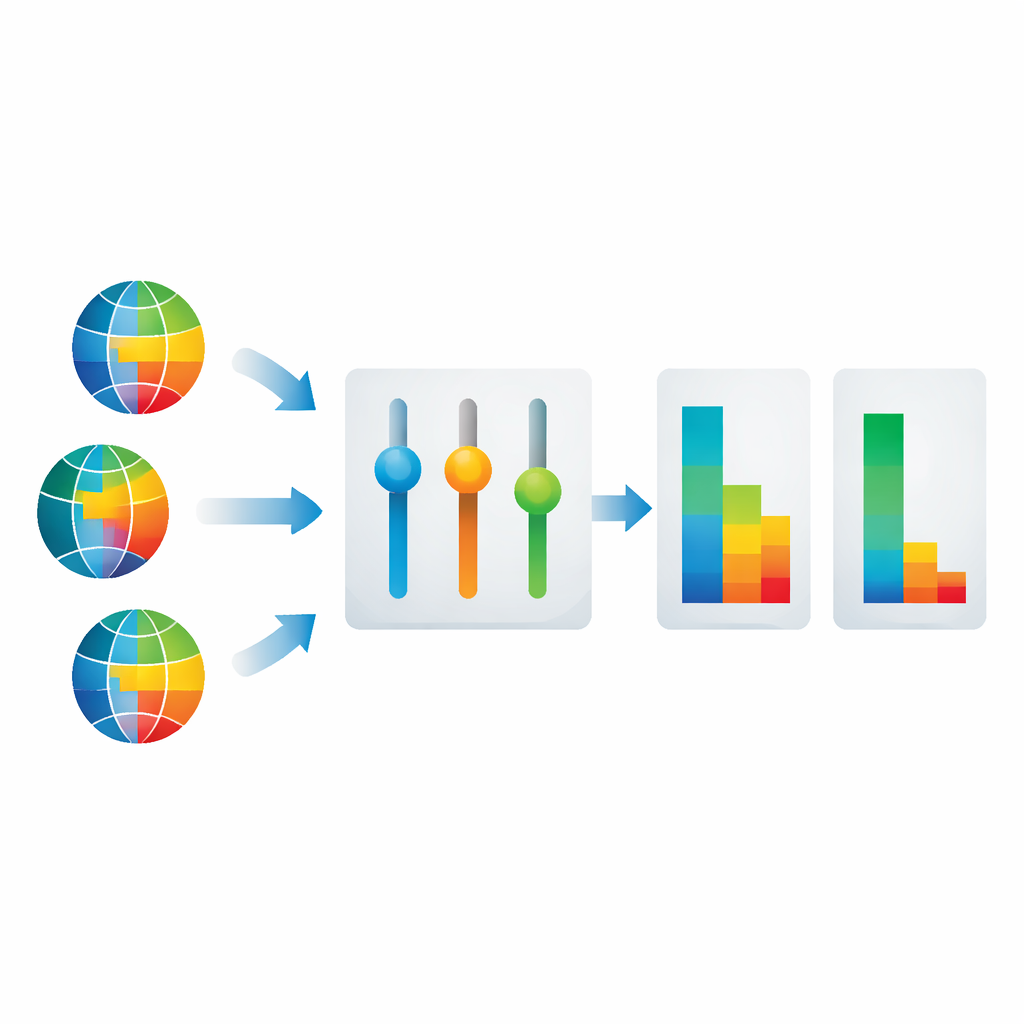
The authors present the Model for Energy Equity and Climate Compatibility, Version 1 (MEECC_V.1), an analytical framework that links three basic ingredients: how fast economies grow, how much energy people use, and how dirty or clean that energy is. Rather than simulating every sector in detail, the model works with economy‑wide averages and clear, adjustable assumptions. Countries are grouped not by geography but by their level of development and other factors such as past emissions, access to energy, and health and education indicators. This lets users compare futures for rich and poor groups in a more meaningful way than standard regional groupings.
Putting fairness into numbers
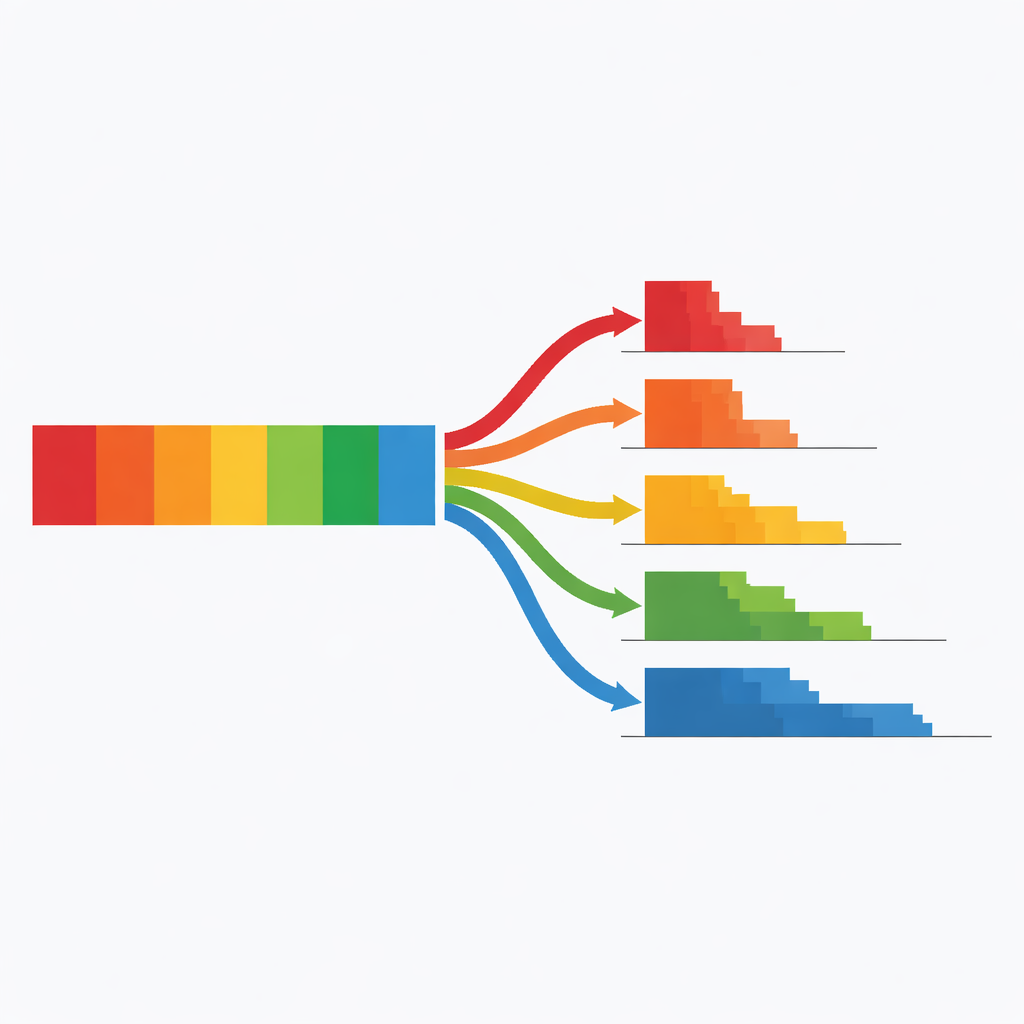
A key innovation is how the model weaves equity into its calculations. First, it allows energy use per person in poorer countries to rise toward a chosen threshold—around current global average levels—while richer countries gradually reduce their very high use. Second, it allocates the remaining global “carbon budget” (how much carbon dioxide can still be emitted while staying within specific temperature limits) using different fairness rules. These can be based on equal rights per person, extra weight for historical responsibility, extra weight for current wealth, or, at the other extreme, simply extending each country’s share of today’s emissions into the future. Users can also set when countries’ emissions peak and how quickly they fall to net‑zero, and the model then checks whether those choices fit within the chosen global carbon limit.
Three stories about our shared future
To show what the tool can do, the authors construct three contrasting “socio‑economic alternatives.” In the first (SEA‑1), both energy and climate equity are pursued: all groups converge to roughly 75 gigajoules of primary energy per person by 2050, and the remaining carbon budget is divided fairly, giving extra consideration to who polluted most in the past and who is richest today. In the second (SEA‑2), energy use still converges, but high emitters keep a larger share of the carbon budget, undermining climate fairness. In the third (SEA‑3), neither energy use nor the carbon budget is shared equitably: rich groups remain high‑energy users, poorer groups stay far below basic energy needs, and the leftover carbon space is again skewed toward current big emitters.
Who bears the burden under different choices
Across all three stories, global carbon dioxide emissions must fall sharply to meet temperature goals like limiting warming to 1.7 °C or 2 °C. What changes dramatically is who has to do how much, how fast. Under SEA‑1, rich country groups (and formal Annex‑I parties under the UN climate treaty) have to cut the carbon content of their energy far more steeply than poorer groups, reflecting their higher incomes and long history of emissions. Poorer groups are allowed later peaks and slower declines so they can expand energy use to fight poverty. In SEA‑2 and especially SEA‑3, this pattern flips: many developing countries face either mathematically impossible requirements—such as peaking and reaching net‑zero almost back‑to‑back—or they must suppress energy demand so strongly that basic development goals become unattainable. Case studies for India and Germany illustrate this tension: with a fair share of the carbon budget, India can still expand energy use and reach net‑zero later; without fairness, even modest development‑oriented energy growth can make its targets infeasible.
A tool for fairer climate decisions
The study concludes that if the world wants both to eradicate poverty and to respect the temperature goals of the Paris Agreement, the remaining carbon budget cannot be divided as a continuation of today’s patterns. Rich, high‑emitting countries must move faster and further toward clean energy, while poorer countries need room to grow their energy use to minimum thresholds. MEECC_V.1 does not prescribe a single future; instead, it lets policymakers, researchers, and civil society explore how different choices about growth, energy, and burden‑sharing play out. By keeping the math transparent and the focus on equity, it offers a way to judge whether national pledges and global pathways are not only climate‑compatible but also fair.
Citation: Kanitkar, T., Jayaraman, T. & Lavanyaa, V.P. Projected global and national energy and climate futures using an alternative integrated assessment framework. npj Clim. Action 5, 41 (2026). https://doi.org/10.1038/s44168-026-00368-0
Keywords: climate equity, energy access, carbon budget, integrated assessment, global mitigation pathways