Clear Sky Science · en
Combining ADA, IFN-γ, and IL-6 as host biomarkers enhances diagnosis of paucibacillary and extrapulmonary tuberculosis
Why Hard-to-Detect TB Matters
Tuberculosis is often pictured as a lung disease that is easy to spot on a chest X-ray or sputum test. In reality, many patients have only a few bacteria in their bodies or infections that hide outside the lungs, where standard tests frequently miss them. These hard-to-diagnose cases can delay treatment, fuel ongoing transmission, and are especially common in countries with limited laboratory resources. This study explores whether looking at the body’s own immune response—rather than hunting for the bacteria directly—can make it easier to find these elusive forms of TB quickly and affordably.
Looking at Signals From the Immune System
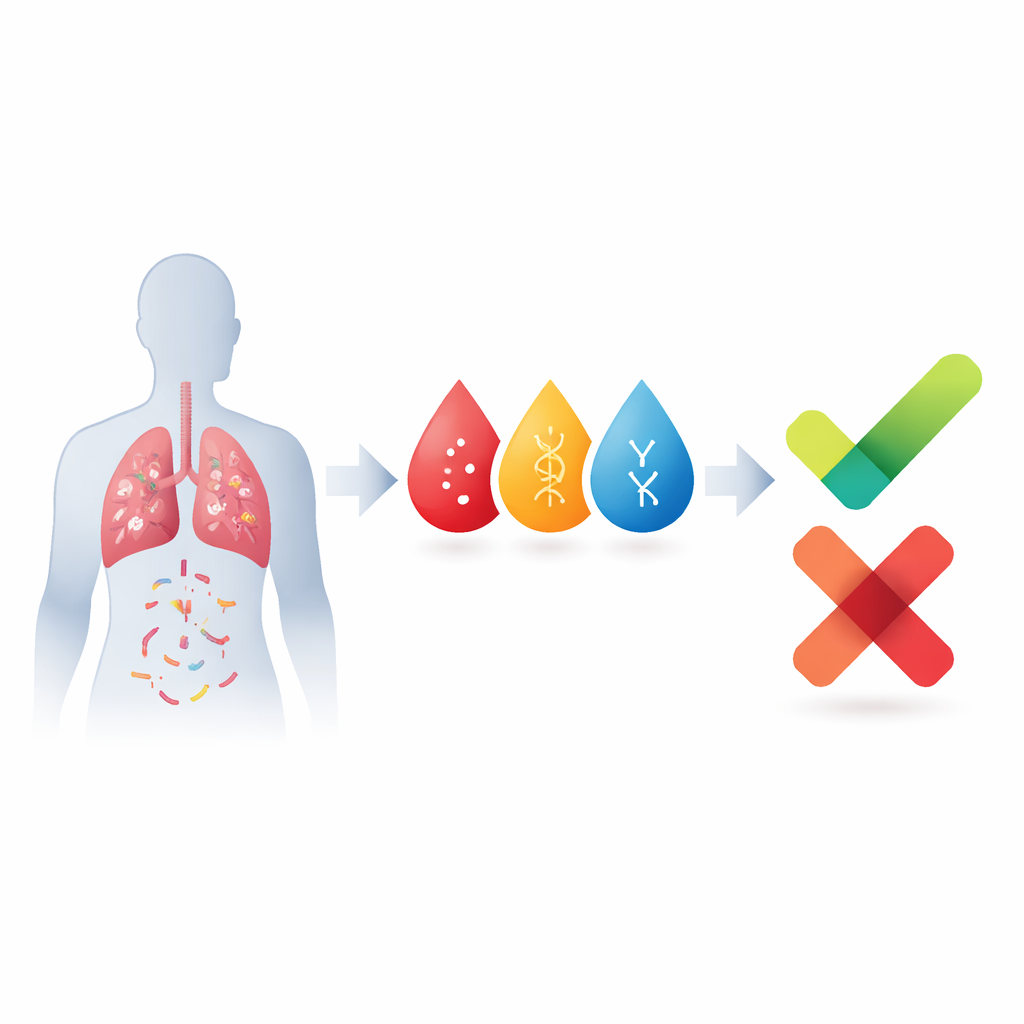
Instead of focusing solely on the germ itself, the researchers turned to three substances in blood and other body fluids that rise when the immune system reacts to TB: adenosine deaminase (ADA), interferon-gamma (IFN-γ), and interleukin-6 (IL-6). Each reflects a different facet of the body’s defense—T-cell activation, a key protective immune signal, and general inflammation, respectively. Because these markers can be measured with relatively simple lab equipment and in many kinds of samples, they offer a promising way to support diagnosis in places where advanced molecular tests are scarce or slow.
How the Study Was Carried Out
The team analyzed medical records from 605 patients treated at a major chest hospital in southern China between 2020 and 2025. All had symptoms that could be caused by TB, such as cough, fever, or fluid around the lungs or abdomen. A sensitive nucleic acid amplification test—the kind that detects TB DNA and is considered a strict microbiological standard—was used to decide who truly had TB and who did not. The researchers then matched those results to measurements of ADA, IFN-γ, and IL-6 taken from blood or body fluid samples around the same time, carefully selecting one representative set of measurements per patient.
What Single and Combined Markers Revealed
On their own, each immune marker did better than chance at separating TB from non-TB illness, but none was accurate enough to stand alone as a diagnostic test. IFN-γ performed best individually, while ADA had steady but moderate value, and IL-6 was very sensitive but tended to flag many people without TB. When the team mathematically combined markers, however, performance clearly improved. Pairing IFN-γ with IL-6 gave the strongest overall separation between TB and non-TB cases. Other combinations also helped: linking ADA with IFN-γ raised the chance of catching true TB cases, and adding all three together improved the ability to avoid false alarms.
Two Testing Paths: Ruling In and Ruling Out
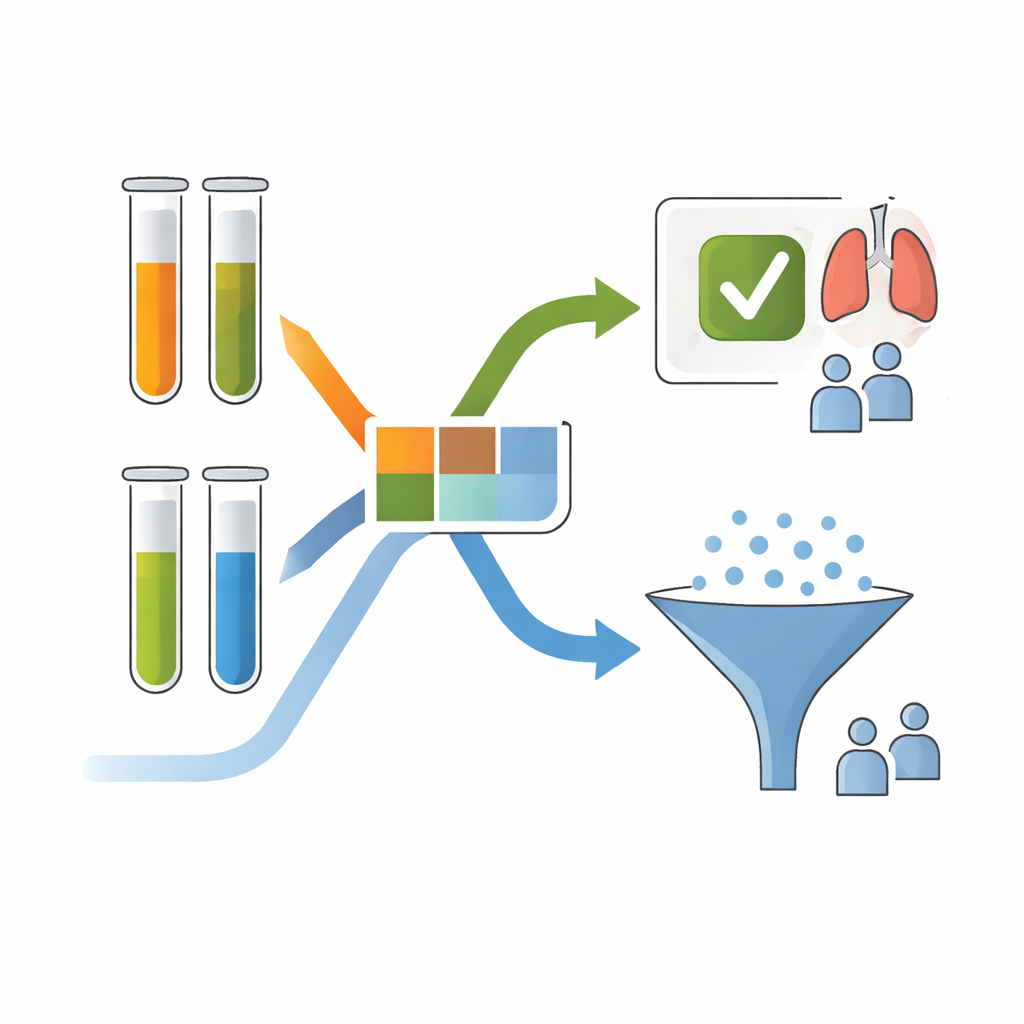
A key insight from the study is that the same three markers can be arranged into different “algorithms” depending on what a clinic needs most. In a serial strategy, a patient is considered to have TB only if more than one marker is raised. This tight requirement greatly reduces false positives and makes the result highly trustworthy when it is positive. In this study, using ADA and IFN-γ together in this way reached very high specificity, meaning it is well suited as a confirmation tool. In contrast, a parallel strategy counts a patient as suspicious for TB if any one of the markers is elevated. This casts a very wide net, catching nearly all true TB cases at the cost of more false alarms. Here, checking ADA, IFN-γ, and IL-6 in parallel produced very high sensitivity, making it a useful first-pass screen for safely ruling out TB when all three markers are low.
What This Means for Patients and Clinics
For a layperson, the takeaway is that no single immune signal can reliably “prove” or “disprove” TB in difficult cases, but combining a few simple blood or fluid tests can come close. By thoughtfully pairing and interpreting ADA, IFN-γ, and IL-6, clinics can build flexible diagnostic pathways: one geared toward confidently confirming TB in patients who are hard to test by conventional means, and another geared toward quickly excluding TB so attention can shift to other causes of illness. Because these markers are relatively inexpensive and do not require advanced machinery, this approach could strengthen TB diagnosis in resource-limited settings and help more people receive timely, life-saving treatment.
Citation: Mao, Z.Q., Mao, J., Zheng, H. et al. Combining ADA, IFN-γ, and IL-6 as host biomarkers enhances diagnosis of paucibacillary and extrapulmonary tuberculosis. Commun Med 6, 274 (2026). https://doi.org/10.1038/s43856-026-01580-z
Keywords: tuberculosis diagnosis, immune biomarkers, adenosine deaminase, interferon gamma, interleukin 6