Clear Sky Science · en
Prenatal and postnatal droughts interact in shaping cognitive development
Why dry years before birth can matter for school later
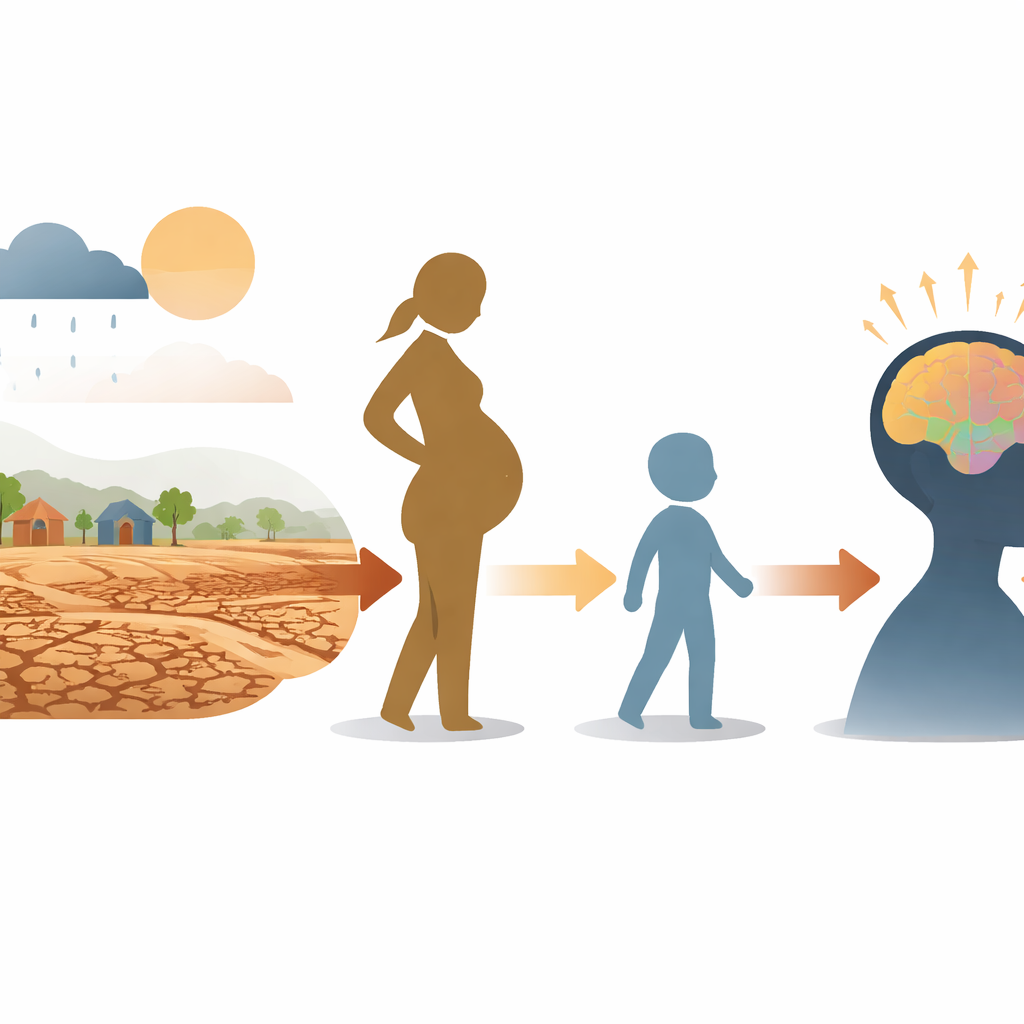
In many farming communities, a failed monsoon is more than bad weather – it can mean less food on the table. This study asks a surprising question with big human stakes: when a baby’s earliest months, even before birth, coincide with drought, does that change how well they learn a decade later? And does it matter whether the childhood years that follow are dry or plentiful?
Growing up where the rains decide the harvest
The researchers focused on rural India, where most families depend on rainfed agriculture and food supplies rise and fall with the monsoon. They combined reading and math test results from more than two million adolescents aged 11 to 16 with satellite-based records of rainfall in their home districts. Years with unusually low rainfall – the driest fifth of years in the long-term record – were treated as drought years, standing in for periods when food is likely scarcer and diets less varied.
Early life as a period of special sensitivity
Pregnancy and the first three years of life are a critical window for brain growth. During this period, the brain’s structure and the connections between nerve cells are laid down at high speed, and nutrition plays a central role. The study drew on a biological idea called developmental plasticity: organisms adjust their development in response to early cues from the environment. If those cues correctly “predict” what the future will be like, the body may be better prepared. But if conditions later on are very different, the early adjustments can backfire.
Tracking drought exposure before and after birth
For each child in the survey, the team used age and survey year to infer the year of birth and then checked whether that child’s district experienced drought during the year before birth and in each of the first three years of life. They then compared average test scores between children with and without drought exposure at these ages, always comparing children from the same district to avoid mixing in long-standing regional differences in wealth or schooling. This design takes advantage of the fact that, within a district, the timing of droughts is largely down to chance rather than family choices.
Early hardship hurts, but matching hardship can cushion the blow
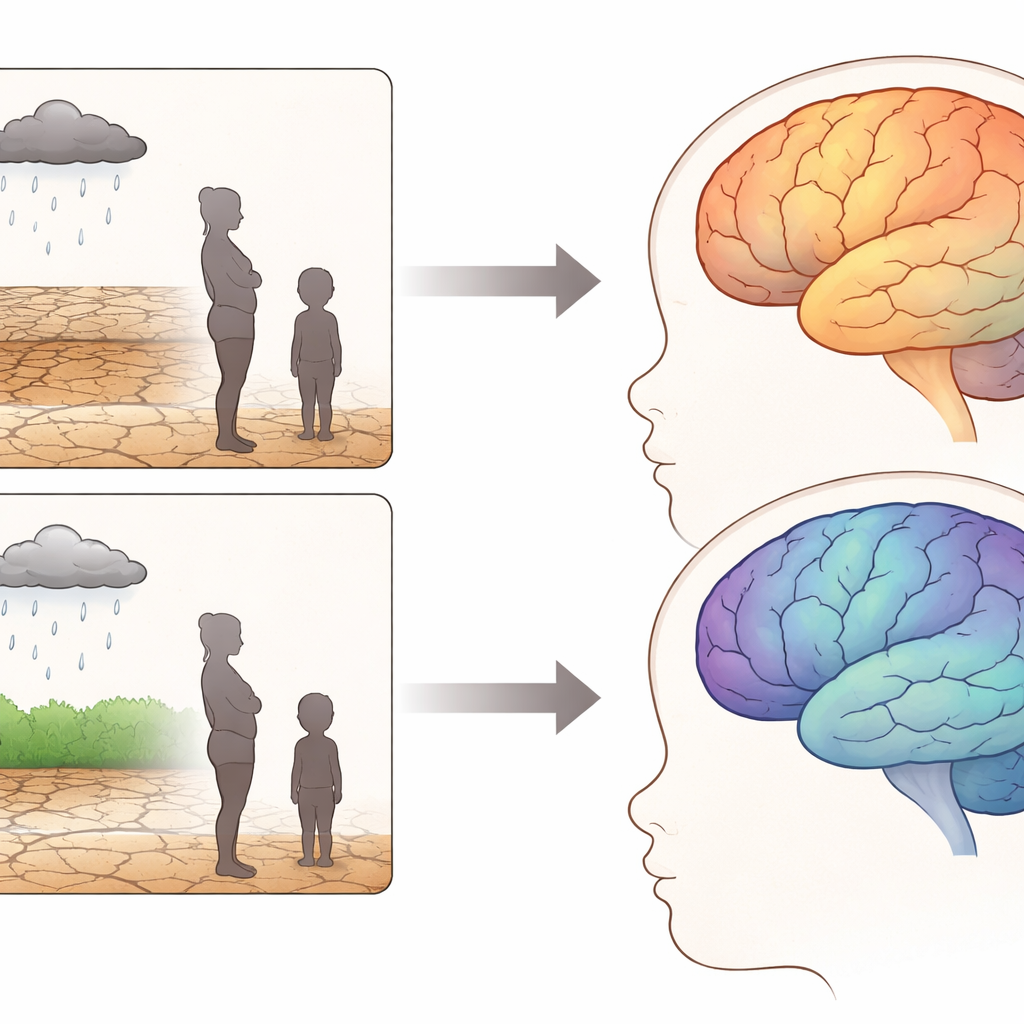
The results show that drought in early life generally goes hand in hand with slightly worse reading and math performance in adolescence. Children whose mothers were pregnant during a drought scored a bit lower than peers whose prenatal period fell in normal years, and droughts in the toddler years also tended to reduce the likelihood of achieving top test scores. Yet a more nuanced pattern emerged when the researchers looked at combinations of exposures. When droughts struck both before birth and again in the second or third year of life, the later drought’s harmful effect on test performance was smaller. In other words, children who had already faced drought conditions in the womb seemed somewhat better equipped to cope with a similar nutritional shock a few years later.
What this means in a changing climate
To a lay observer, it may seem paradoxical that hardship before birth can both harm and help. The authors interpret this pattern as evidence that human development can adjust to early signals about the environment, echoing observations in animals where early cues prepare offspring for future heat, predators, or food scarcity. However, this apparent “preparation” is no cause for comfort. As climate change makes rainfall more erratic, it becomes harder for prenatal cues to match what children will experience later. Many will face mismatches – for example, a relatively good prenatal period followed by worsening droughts – where early adaptations cannot protect them. The study thus underscores how climate-related shocks to nutrition in pregnancy and early childhood can quietly shape children’s learning prospects years down the line, and why stable, adequate nutrition in these formative years remains crucial.
Citation: Pradella, F., Gabrysch, S. & van Ewijk, R. Prenatal and postnatal droughts interact in shaping cognitive development. Commun Med 6, 233 (2026). https://doi.org/10.1038/s43856-026-01578-7
Keywords: prenatal nutrition, drought, cognitive development, rural India, climate change and health