Clear Sky Science · en
Predictive value of increased C-reactive protein levels in preterm infants on respiratory function at five to six years of age
Why tiny babies and their early fevers matter later
Many babies born very early and very small survive thanks to modern intensive care, but many of them grow up with lasting breathing problems. Parents and doctors often wonder which infants are most at risk and whether early warning signs can predict lung health years later. This study asks a simple question with big implications: can a routine blood marker of inflammation, called C-reactive protein, measured in the first month of life, help forecast how well prematurely born children will breathe and exercise when they reach school age?

Following fragile newborns into childhood
The researchers used data from the German Neonatal Network, a large collaboration of hospitals caring for very low birthweight infants, typically weighing less than 1.5 kilograms at birth. From more than 13,000 such babies born between 2009 and 2015, they focused on 353 children who had both detailed early blood tests and follow-up examinations at five to six years old; 268 of these children produced reliable lung test results. Doctors had measured C-reactive protein, or CRP, whenever infection or inflammation was suspected during the first 28 days of life. The team then compared these early CRP patterns with later breathing tests and a six-minute running test performed at school age.
Short flare-ups versus repeated inflammation
The key distinction in this study was not simply whether CRP ever rose, but whether it did so repeatedly. A CRP value above 10 milligrams per liter counted as elevated; if a child had at least two such peaks, separated by at least two weeks and with a clear drop in between, this was considered a recurrent elevation. One-time spikes were surprisingly common but, on their own, did not clearly predict poor lung performance years later. By contrast, babies with several distinct CRP peaks—suggesting repeated episodes of inflammation or infection—stood out as a group with more medical complications early on, including lower birthweight, more frequent growth restriction, and more brain and gut problems.
Breathing tests and running performance years later
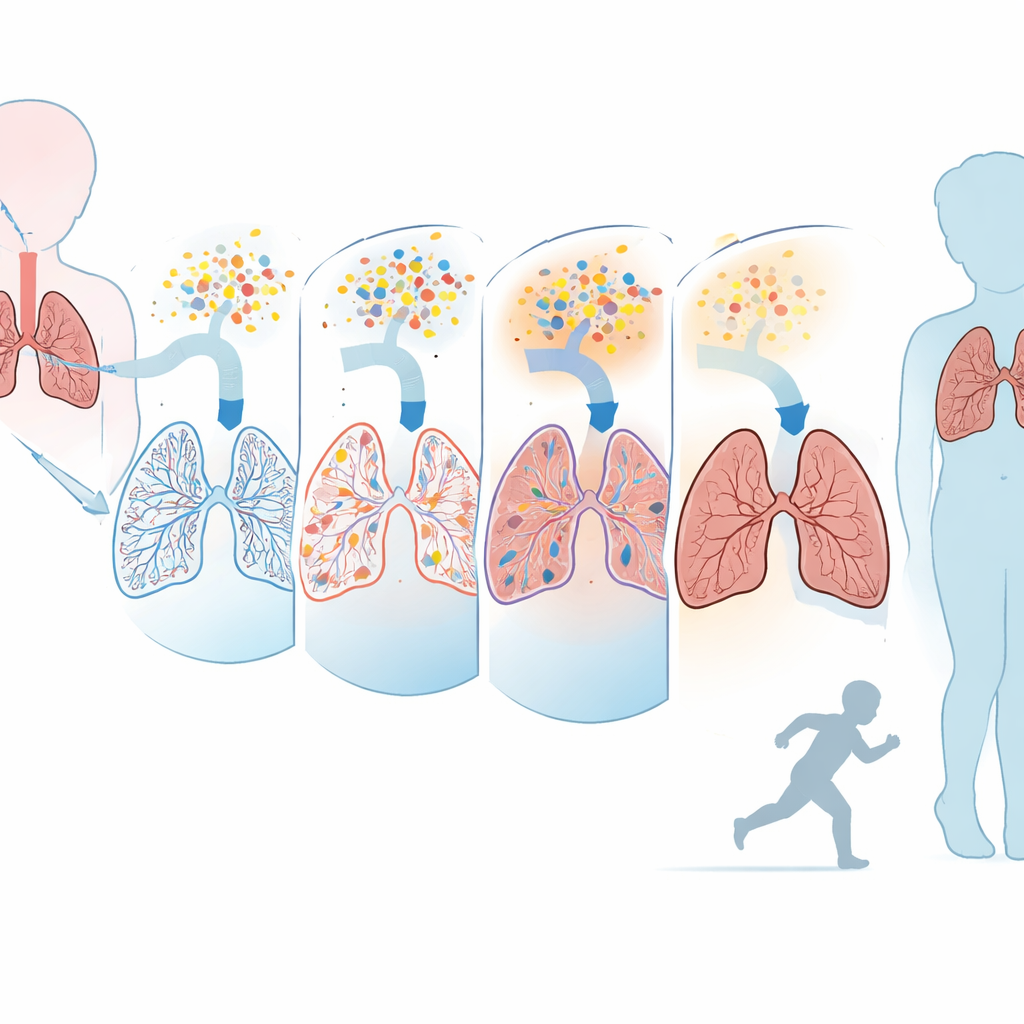
At five to six years of age, the children returned for checkups that included standard lung function tests and a running endurance test. Those who had experienced recurrent CRP elevations as newborns were more likely to have weaker lung function, especially a lower forced expiratory volume in one second (FEV1), a measure of how much air can be blown out quickly. A large majority of these children had FEV1 and related measures below the fifth percentile for their age. They also tended to perform worse in the six-minute run, with a higher share falling into the lowest fitness ranges. Importantly, these links between repeated early inflammation and poorer lung function remained even after accounting for many other known risk factors such as gestational age, birthweight, use and length of mechanical ventilation, and a diagnosis of chronic lung disease in infancy.
What CRP can and cannot tell us
When the researchers treated recurrent CRP peaks as a kind of early test for later serious lung impairment, they found a mixed picture. Children with repeated elevations had a high chance of having clearly reduced lung function at school age, making recurrent CRP a strong warning sign. At the same time, many children with breathing problems did not show this pattern of repeated CRP rises as newborns, meaning the marker missed a large number of future cases. In other words, recurrent CRP elevations were very specific but not very sensitive: they were good at confirming high risk when present, but not reliable enough to be used alone to rule out later problems.
What this means for families and future care
For families of very preterm infants, the study offers both concern and hope. It suggests that repeated bouts of inflammation in the first weeks of life can leave lasting marks on the lungs, reducing both breathing capacity and physical stamina years later. At the same time, the absence of such recurrent CRP elevations is associated with better long-term outcomes. While CRP alone cannot predict every child’s future, patterns of this simple blood test—combined with other clinical information—could help doctors identify which children need closer follow-up, tailored therapies, or preventive strategies. Ultimately, reducing repeated infections and inflammation in these fragile newborns may become a key step toward helping them breathe more easily and play more freely as they grow.
Citation: Fortmann, M.I., Dappen, R., Roll, C. et al. Predictive value of increased C-reactive protein levels in preterm infants on respiratory function at five to six years of age. Commun Med 6, 183 (2026). https://doi.org/10.1038/s43856-026-01569-8
Keywords: preterm infants, lung development, C-reactive protein, neonatal inflammation, long-term respiratory health