Clear Sky Science · en
TAS3351 is a brain penetrable EGFR-TKI that overcomes T790M and C797S resistant mutations
Why this research matters for people with lung cancer
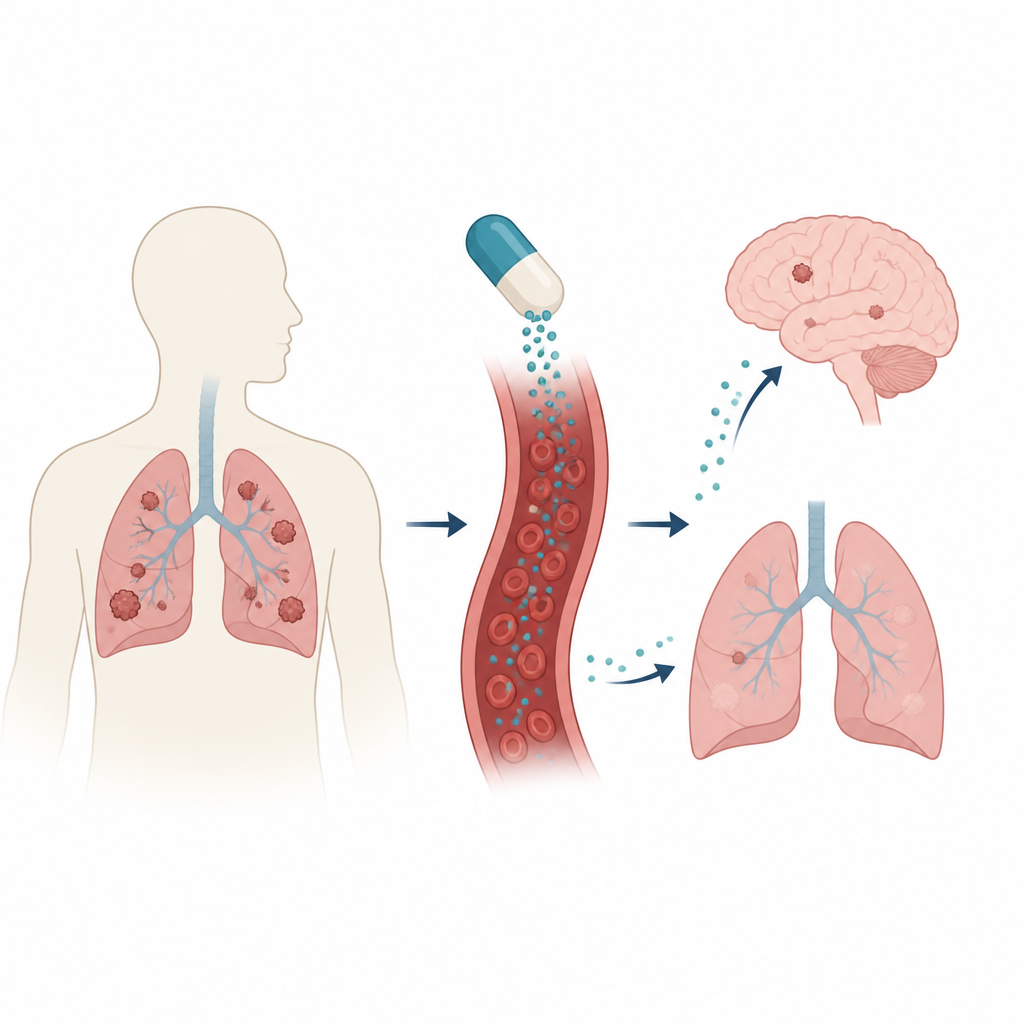
Many people with a common form of lung cancer initially benefit from targeted pills that block a growth signal in their tumor cells. Sadly, these benefits often fade as the cancer finds ways to evade treatment, and spread to the brain where many drugs cannot reach. This study introduces a new experimental pill, called TAS3351, designed to shut down stubborn tumor variants and to cross into the brain, offering a possible future option when current medicines no longer work.
The problem of cancer outsmarting targeted drugs
Some lung cancers depend on a protein switch called EGFR to keep growing. Existing EGFR-blocking drugs can shrink these tumors, but the cancer frequently evolves changes in EGFR that act like lock alterations on a door, preventing the old key from fitting. Two such changes, known as T790M and C797S, are especially troublesome. Today’s approved pills cannot effectively shut down tumors that carry both of these changes at once, and many do not enter the brain well, leaving patients vulnerable to brain tumors.
A new pill built to hit stubborn tumor targets
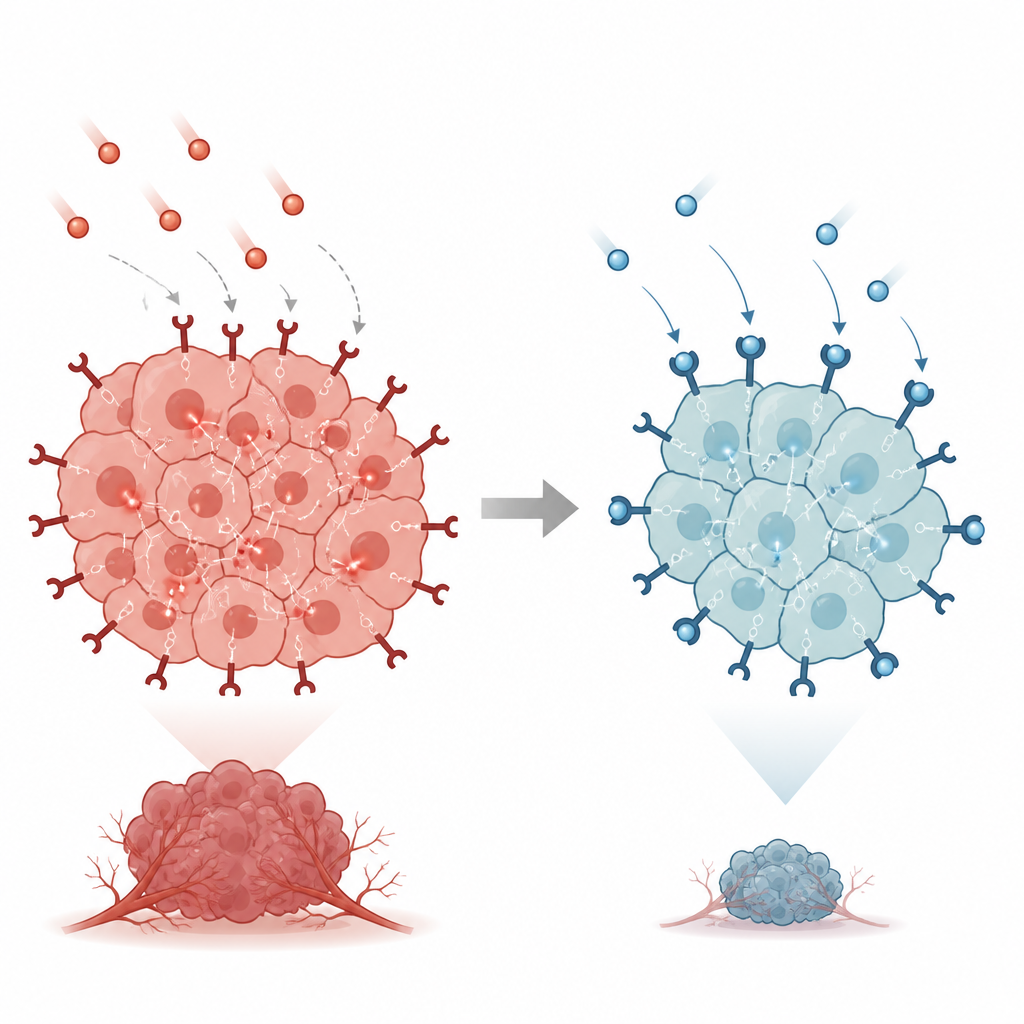
The researchers searched a large collection of chemical structures and refined a family of molecules to find one that would strongly bind the altered EGFR switch, whether or not it carried the T790M and C797S changes. Their chosen compound, TAS3351, grips a specific region of EGFR in a way that still works even after these alterations appear, while remaining relatively gentle on the normal version of the protein found in healthy tissues. Detailed structural studies showed how TAS3351 fits tightly into a pocket on EGFR and is not disrupted by the bulkier shape introduced by the T790M change or by the loss of a chemical attachment point at C797.
Testing the drug in cells and tumors
Next, the team tested TAS3351 in a variety of engineered cell lines and human cancer cells that naturally carry different EGFR changes. In dishes, TAS3351 efficiently turned down the EGFR signal and slowed or stopped the growth of cells with typical activating changes plus T790M, C797S, or both, while having much weaker effects on cells with normal EGFR. In mice, tumors built from cells carrying these hard-to-treat EGFR changes shrank or stopped growing when the animals received TAS3351 by mouth, at doses that the animals tolerated well. In contrast, existing drugs often lost their punch against the same resistant tumors unless their doses were pushed to levels that would likely cause side effects in people.
Reaching tumors hidden inside the brain
The study also addressed the challenge of brain metastases, which are shielded by the brain’s protective blood–brain barrier. Using laboratory models that mimic this barrier, TAS3351 behaved differently from many older cancer pills: it was not efficiently pumped out by key transporter proteins that normally expel drugs from the brain. When given to mice, the drug reached levels in brain tissue similar to or higher than those in the blood. In animals implanted with EGFR-mutant tumor cells inside the brain, treatment with TAS3351 reduced the apparent tumor burden and helped the mice live longer, pointing to meaningful activity against brain disease.
What this could mean for future treatment
Overall, the work shows that TAS3351 can switch off a range of EGFR-driven lung cancer models that have become resistant to current EGFR pills, including those with the difficult T790M and C797S combination, and that it can do so even when tumors are growing in the brain. While these findings come from preclinical experiments in cells and mice rather than people, they provide a strong scientific basis to test TAS3351 in clinical trials as a potential future option for patients whose tumors no longer respond to standard EGFR-targeted therapies.
Citation: Kasuga, H., Kataoka, Y., Yamamoto, F. et al. TAS3351 is a brain penetrable EGFR-TKI that overcomes T790M and C797S resistant mutations. Commun Med 6, 284 (2026). https://doi.org/10.1038/s43856-026-01546-1
Keywords: EGFR lung cancer, drug resistance, brain metastases, targeted therapy, T790M C797S