Clear Sky Science · en
Association of leukocyte mitochondrial DNA copy number and inflammation with mortality among older adults
Why this study matters for healthy aging
Many people now live well into their seventies and beyond, but more lives are being lost to long lasting illnesses linked to inflammation, such as heart disease. This study asks a simple but important question for older adults and their families: when the body faces long term, low level inflammation, does the aging of our cells make that inflammation more dangerous? By tracking thousands of older adults over several years, the researchers looked inside white blood cells at their tiny energy makers, called mitochondria, and linked changes there with inflammation in the blood and the chance of dying, especially from heart and blood vessel disease.
The tiny power units inside our blood cells
Mitochondria are often described as the power units of our cells, and each one carries its own small package of DNA. The number of copies of this mitochondrial DNA inside a cell helps reflect how well these power units can meet the cell’s needs. Earlier research showed that the amount of mitochondrial DNA in human white blood cells tends to fall with age, but it was not clear how this slow decline might interact with inflammation. In this study, the team focused on mitochondrial DNA copy number in white blood cells as a simple blood based marker of how aging cells may cope with stress and damage over time.
Following older adults over time
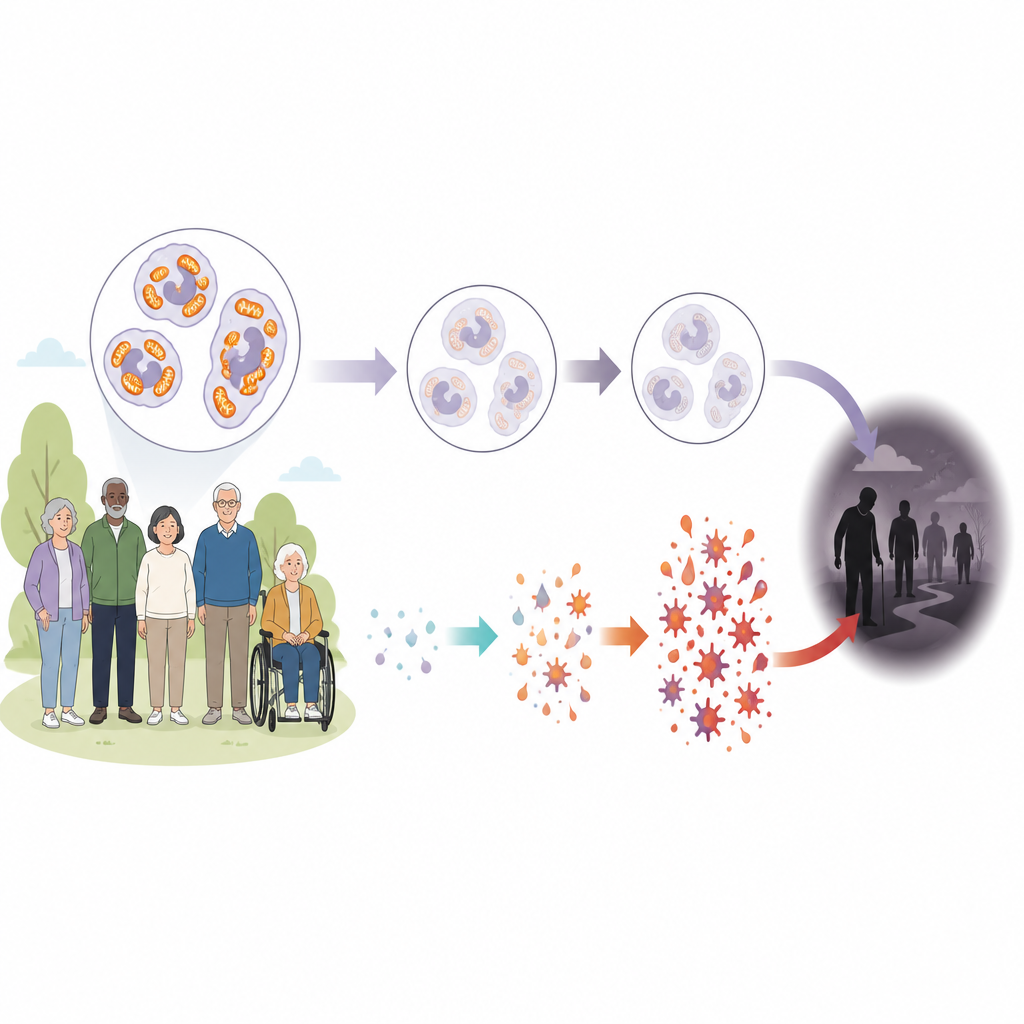
The researchers drew on the Healthy Aging Longitudinal Study in Taiwan, which follows thousands of community dwelling adults aged 55 and older. For 3520 participants, they measured mitochondrial DNA in white blood cells and levels of high sensitivity C reactive protein, a standard blood marker of inflammation, at two visits roughly five years apart. They then tracked who died, and from what causes, for a further median period of just over five years. By comparing each person with themselves over time, the team could see whether a drop in mitochondrial DNA and a rise in inflammation together shaped the risk of death, while also accounting for age, smoking, blood fats, existing illnesses, and other health factors.
When aging cells and inflammation coincide
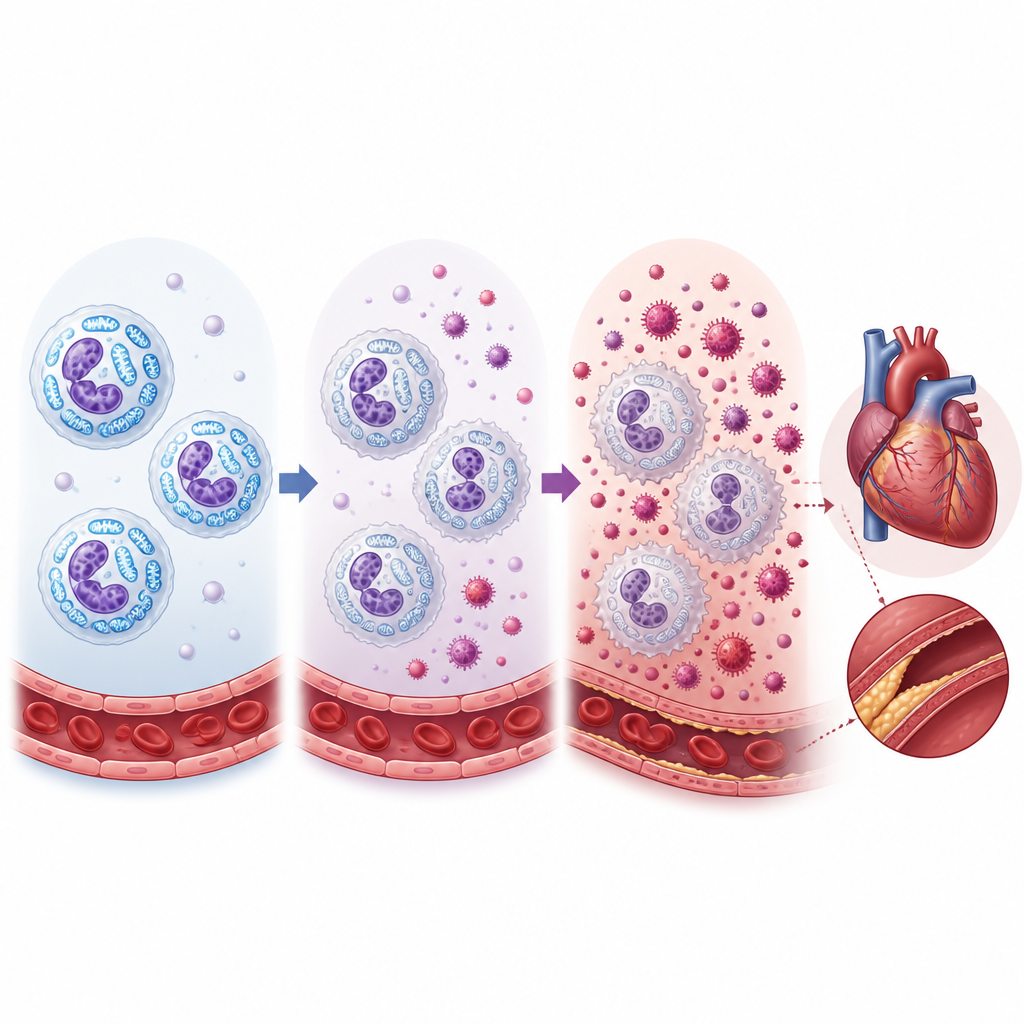
The key finding is that a decline in mitochondrial DNA inside white blood cells and an increase in inflammation did more harm together than either did alone. Older adults whose mitochondrial DNA levels stayed relatively high and whose inflammation stayed low had the lowest risk of death. In contrast, those who both lost mitochondrial DNA over time and moved from low to high inflammation had about three times the risk of dying from any cause, and nearly six times the risk of dying from heart and blood vessel disease, compared with the low risk group. A similar pattern appeared even when the drop in mitochondrial DNA was only moderate. When the researchers tested the statistics, the combined effect of falling mitochondrial DNA and rising inflammation was greater than the sum of their separate effects, suggesting a form of biological teamwork that amplifies harm.
What the results may mean for long term health
The study also showed that, after taking this teamwork into account, a drop in mitochondrial DNA by itself or a rise in inflammation by itself was not clearly tied to higher death risk. This hints that the story is more complex than simply “less mitochondrial DNA is bad” or “more inflammation is bad.” In some people, lower mitochondrial DNA at one point in time might reflect healthy adjustments or later improvement, especially if inflammation remains low. The results point toward a more nuanced picture in which aging related changes in our cellular power units and our inflammatory state interact in different ways across individuals, and may help explain why some people with similar blood test results live much longer and healthier lives than others.
Looking ahead for aging and inflammation
For readers and clinicians, the takeaway is that aging at the cellular level may make chronic inflammation more dangerous, especially for the heart and blood vessels. A simple blood measure of mitochondrial DNA in white blood cells, together with an inflammation marker like C reactive protein, might one day help identify older adults whose bodies are less able to cope with inflammatory stress. While this observational study cannot prove cause and effect, it supports the idea that protecting mitochondrial health and keeping inflammation in check could work together to reduce the toll of long term, inflammation related diseases in later life.
Citation: Wu, IC., Liu, CS., Cheng, WL. et al. Association of leukocyte mitochondrial DNA copy number and inflammation with mortality among older adults. Commun Med 6, 279 (2026). https://doi.org/10.1038/s43856-026-01531-8
Keywords: aging, inflammation, mitochondria, cardiovascular disease, older adults