Clear Sky Science · en
Breast cancer awareness and preferences for screening messaging on menstrual hygiene products in Ghana and Tanzania
Everyday Products as Health Teachers
Many women in low income countries face breast cancer without the information they need to recognize early warning signs or seek timely care. This study asks a simple question with big potential impact: can ordinary menstrual pads and related products become a quiet, regular teacher about breast health for millions of young women in Ghana and Tanzania?
Why Breast Health Knowledge Matters
Breast cancer is now the most common cancer in women worldwide, and survival is lowest in many parts of sub Saharan Africa, where women often reach the clinic only when the disease is advanced. Health experts know that recognizing changes in the breast and acting quickly can save lives, but awareness of symptoms and risk factors is often low. Reaching young women early, before they reach the ages of highest breast cancer risk, may help them grow up with more accurate knowledge and fewer fearful or fatalistic beliefs about cancer.
A New Use for Monthly Essentials
Almost all women of reproductive age menstruate, and many now use commercial menstrual hygiene products such as disposable pads every month. This repeated, predictable contact with a product designed for women offers a unique communication channel: printed images or short messages on or in the package could quietly reinforce breast health information each cycle. The researchers designed the MyCare study to find out how much women in selected areas of Ghana and Tanzania know about breast health and how willing they would be to see breast health messages on menstrual products they already use. 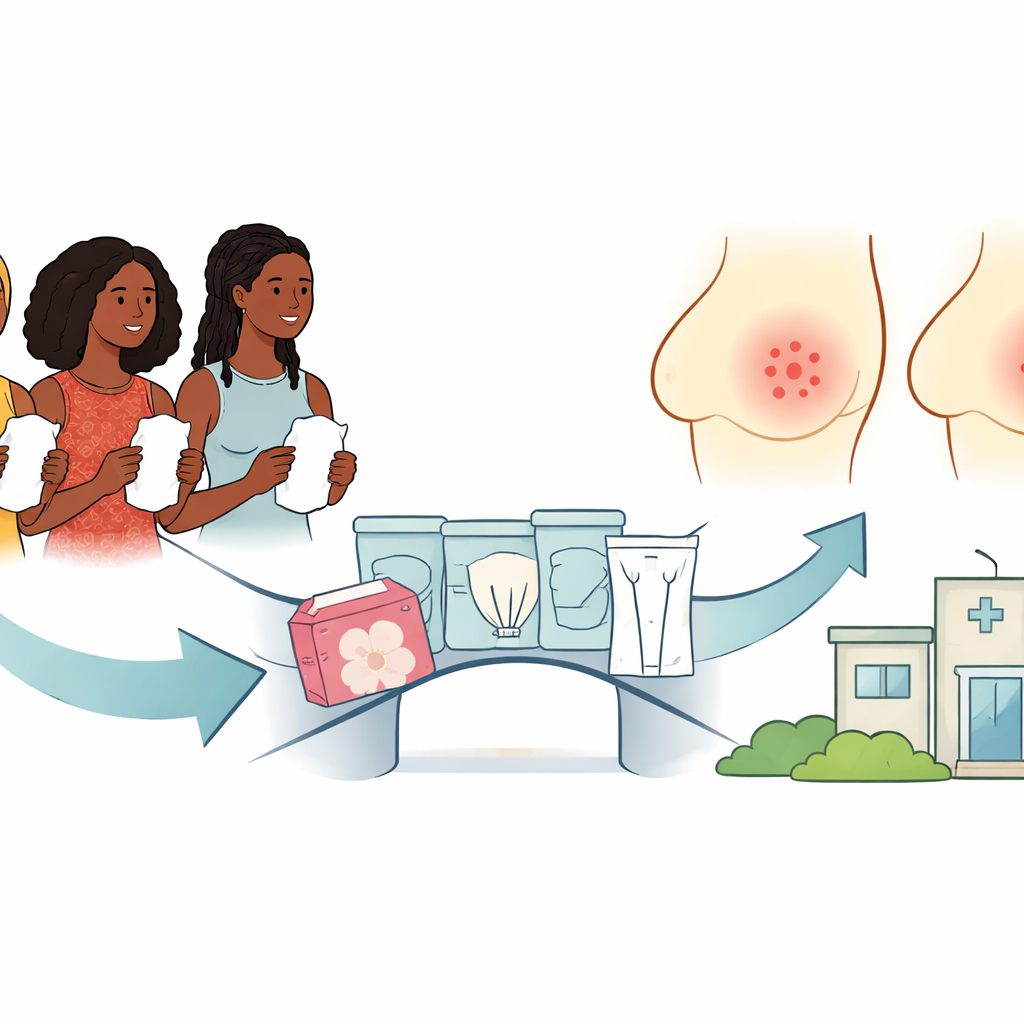
What the Survey Revealed
The team interviewed 438 women aged 18 to 49 from one urban and one rural area in each country, using a face to face questionnaire in English or local languages. They measured four aspects of breast health awareness: knowledge of warning signs, confidence and habits in checking the breasts, expectations about how quickly to seek help, and understanding of what raises breast cancer risk. Overall awareness scores were modest, slightly higher in Ghana than in Tanzania. Women tended to recognize some visible or painful warning signs, such as a lump in the breast or pain in the breast or armpit, but many could not list symptoms when asked openly. Knowledge of true risk factors, such as aging or lifestyle habits, was especially low, and myths were common; for example, large numbers believed that keeping money or a mobile phone in the bra or being cursed might cause breast cancer.
Confidence Without Matching Skills
Many participants said they felt very confident that they could notice changes in their breasts and knew they should see a doctor quickly if they did. Yet their reported skills and past behavior told a different story. Few women checked their breasts regularly or had ever seen a doctor about a breast change, showing a gap between what they believed they could do and what they actually did. Access to a mobile phone, higher education, and being older were linked to better awareness, while lack of employment or phone access were tied to lower scores. This suggests that social and economic factors shape who receives and can act on health information.
Strong Support for Messages on Menstrual Products
Despite gaps in knowledge, enthusiasm for health information on menstrual products was striking. More than nine out of ten women said they would choose a product that included extra breast health messages over one without such information. They preferred messages in their main local language, and most trusted official health bodies and doctors as the source. Visual illustrations and simple written text were favored. Women suggested several ways to place the information, most often on the outside of the package, on individual pad wrappers, or as a small leaflet inside. Preferences varied somewhat by country, area, and age, underlining the need to adapt designs to local habits and cultures. 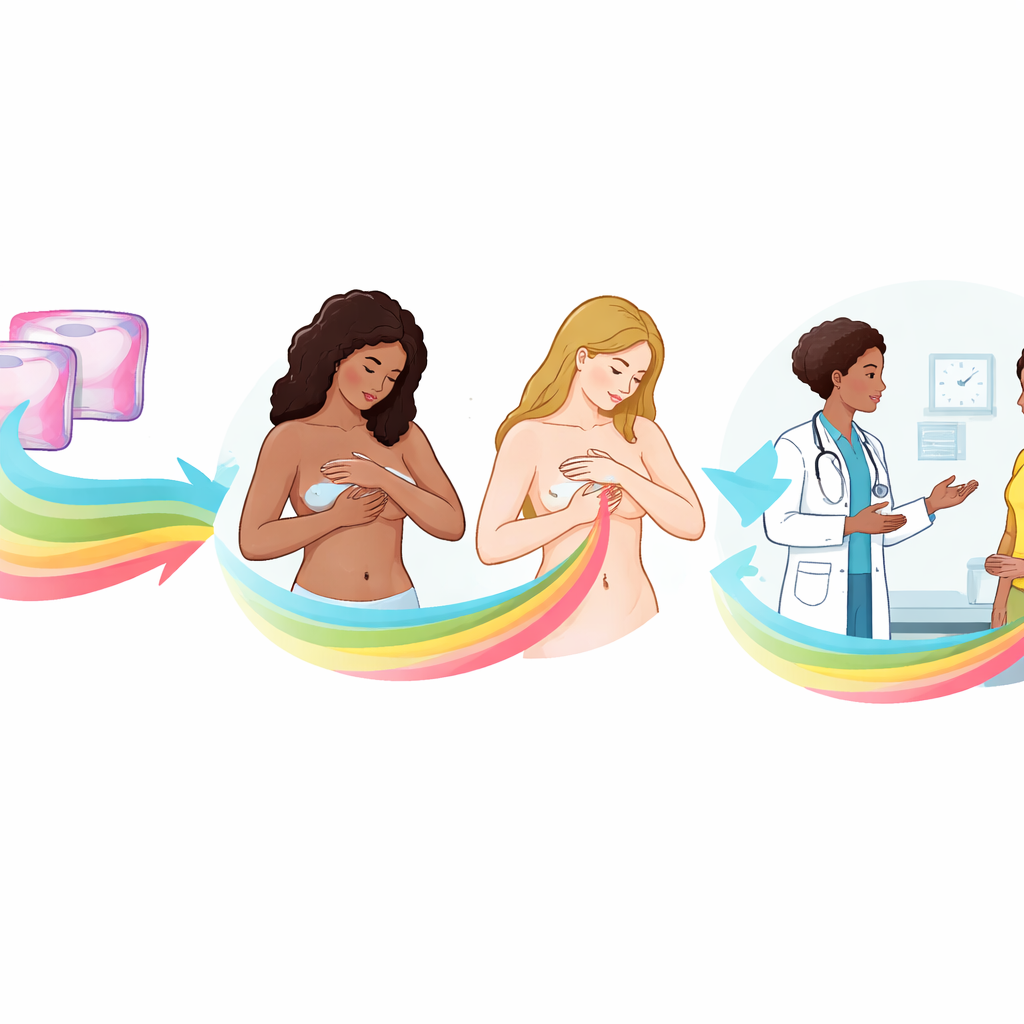
What This Could Mean for Women’s Health
The study concludes that breast health awareness is generally low among women in the surveyed areas of Ghana and Tanzania, especially around real risk factors and practical skills for checking the breasts. At the same time, the very high use of menstrual products and clear support for including breast health messages on them point to a practical way to reach large numbers of women regularly and at low cost. While the authors note that further trials are needed to test whether this approach actually changes knowledge and behavior, they argue that menstrual products could become a simple, scalable tool to encourage earlier recognition of breast problems and faster help seeking, with the long term aim of improving breast cancer outcomes in Africa.
Citation: Mo, T., Msoka, E.F., Narh, C.T. et al. Breast cancer awareness and preferences for screening messaging on menstrual hygiene products in Ghana and Tanzania. Commun Med 6, 267 (2026). https://doi.org/10.1038/s43856-026-01522-9
Keywords: breast cancer awareness, menstrual hygiene products, Ghana, Tanzania, women’s health education