Clear Sky Science · en
Adhesion molecules provide an endothelial protein signature in preclinical and clinical Alzheimer’s disease and predict clinical progression
Why tiny blood vessel signals matter for memory
Alzheimer’s disease is best known for the build up of amyloid and tau proteins in the brain, but growing evidence suggests that changes in the brain’s blood vessels and immune activity begin years before memory problems surface. This study asked whether patterns of proteins linked to blood vessel health and inflammation in spinal fluid and blood can reveal very early stages of Alzheimer’s, and even hint at who is likely to worsen over time. 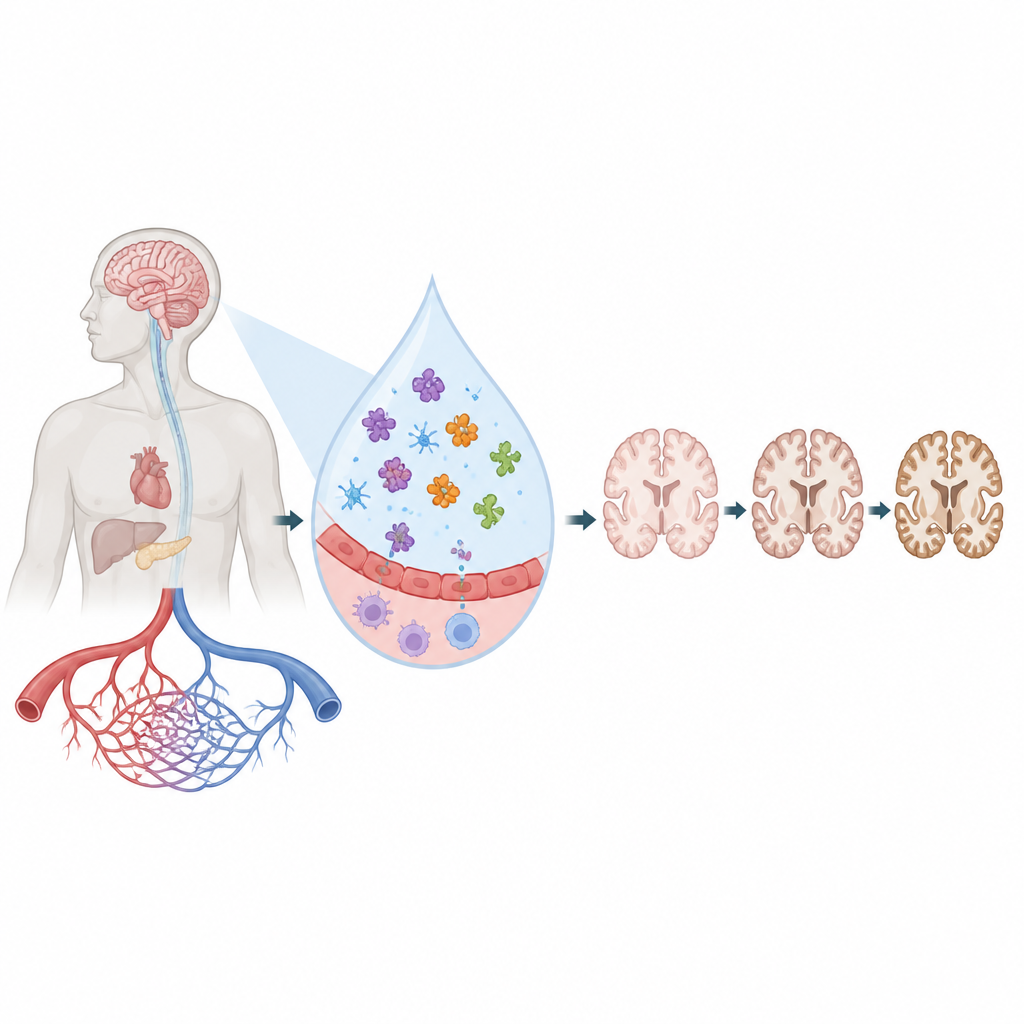
A closer look at brain and blood proteins
Researchers drew on a large study of older adults who ranged from having normal thinking to mild memory problems. Some participants already showed the telltale Alzheimer’s pattern in standard spinal fluid tests, while others did not. From each person, the team collected spinal fluid, which bathes the brain and spinal cord, and blood samples. Using a highly sensitive method that can measure hundreds of proteins at once, they focused on molecules tied to heart and metabolic health, inflammation, and nerve injury. Advanced computer tools then grouped proteins that tended to rise and fall together and related these clusters to age, race, sex, brain scans, thinking tests, and classic Alzheimer’s markers.
A protein signature that appears before symptoms
Among 276 measured proteins, the analysis uncovered five major clusters, or modules, each linked in different ways to Alzheimer’s traits. One group of proteins in spinal fluid stood out. People with either preclinical Alzheimer’s (normal thinking but abnormal amyloid and tau) or mild cognitive impairment due to Alzheimer’s had higher levels of several adhesion molecules, which help blood vessel cells interact with circulating immune cells. These included ICAM 1 and VCAM 1, along with related proteins called neuropilins, the growth factor HGF, the receptor SCARB2, and the enzyme PLAU. Strikingly, this signature was already elevated in individuals who had no noticeable memory symptoms but had Alzheimer’s type changes in their spinal fluid tests.
Linking vessel changes to disease progression
The team next looked at how these proteins related to changes in thinking and daily function over a median of just over two years. Participants whose clinical ratings worsened over time tended to have higher baseline levels of several of these adhesion molecules and related factors in their spinal fluid. The ratio of protein levels in spinal fluid to levels in blood was also higher in people with Alzheimer’s type markers, hinting that the abnormal signal is coming from within the brain or from altered transport across the blood brain barrier. In a separate group of volunteers from another study, key adhesion molecules again tracked with amyloid and tau levels, lending support to the original findings even though different testing platforms were used. 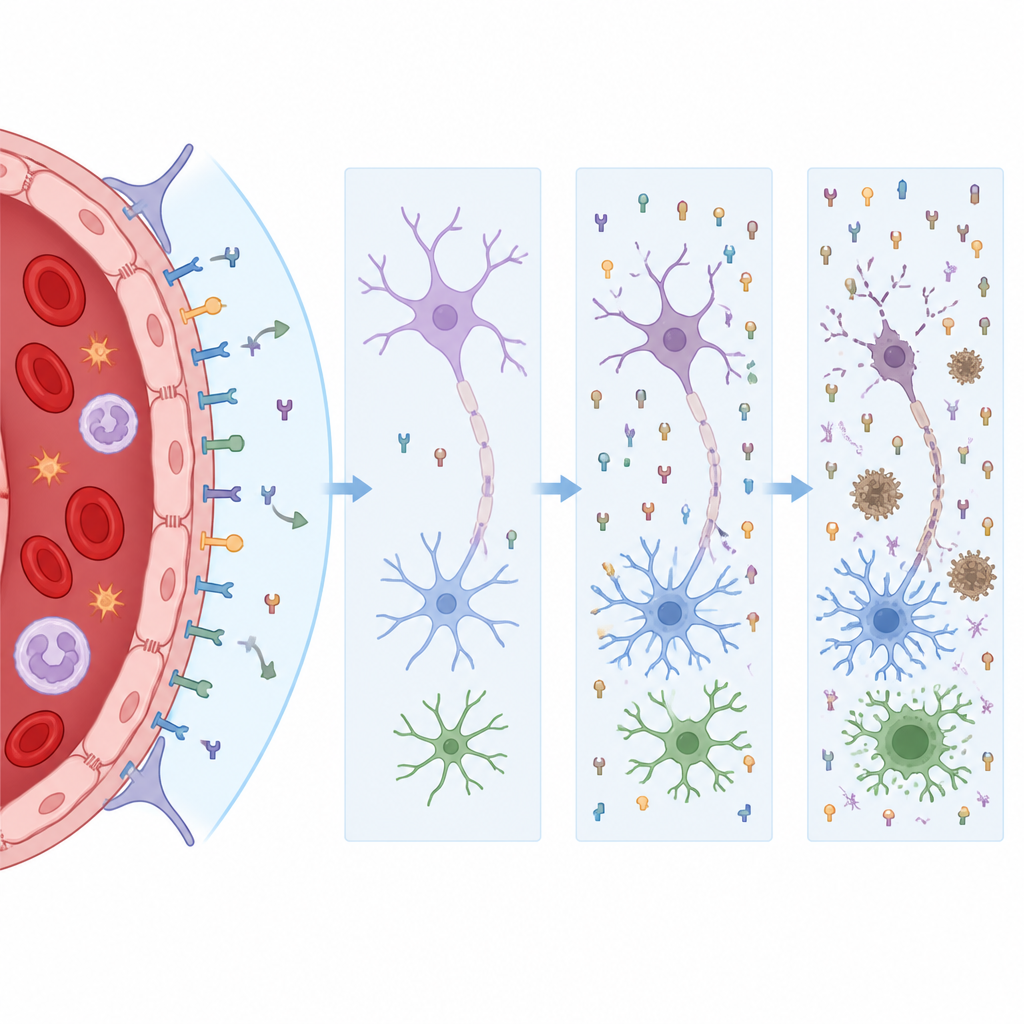
What the signals may mean for blood vessels and brain cells
Adhesion molecules such as ICAM 1 and VCAM 1 help control how white blood cells stick to and move through vessel walls. Higher levels in the brain’s fluid may point to increased traffic of immune cells, irritation of small vessels, and subtle leaks in the protective barrier that normally separates blood from brain tissue. Proteins like HGF and neuropilins are involved in vessel growth, barrier control, and responses to injury, and may represent early attempts by the brain to repair itself. Other proteins in the signature, including SCARB2 and PLAU, are tied to waste clearance and protein breakdown, processes that influence how amyloid and tau accumulate. The study also found that levels of several of these proteins differed by sex and race, underlining the importance of diverse participation in dementia research.
How this could help people in the future
Overall, the work suggests that a coordinated set of blood vessel and inflammatory proteins in spinal fluid forms an “early warning” fingerprint of Alzheimer’s related brain changes. This fingerprint shows up even before memory loss and predicts which individuals are more likely to decline, although the study cannot prove that these molecules cause the disease. If confirmed in larger and longer studies, such protein patterns could improve early detection, help track who is benefiting from treatments, and guide new therapies aimed at protecting the brain’s delicate vascular system as a way to slow or prevent Alzheimer’s disease.
Citation: Hajjar, I.M., Neal, R., Singh, N. et al. Adhesion molecules provide an endothelial protein signature in preclinical and clinical Alzheimer’s disease and predict clinical progression. Commun Med 6, 283 (2026). https://doi.org/10.1038/s43856-026-01519-4
Keywords: Alzheimer’s disease, cerebrospinal fluid, vascular adhesion molecules, neuroinflammation, biomarkers