Clear Sky Science · en
Modelling donor factors influencing pancreas transplant utilization and evolution of decision-making over time
Why this matters for people living with diabetes
For people with severe diabetes, a pancreas transplant can offer something that daily injections and pumps cannot: the possibility of long-lasting, natural blood sugar control. Yet, even as the need remains high, many donated pancreases are never used. This study looks under the hood of the U.S. transplant system to understand which features of organ donors most strongly influence whether a pancreas is transplanted or discarded, and how doctors’ decisions have shifted over the last decade.
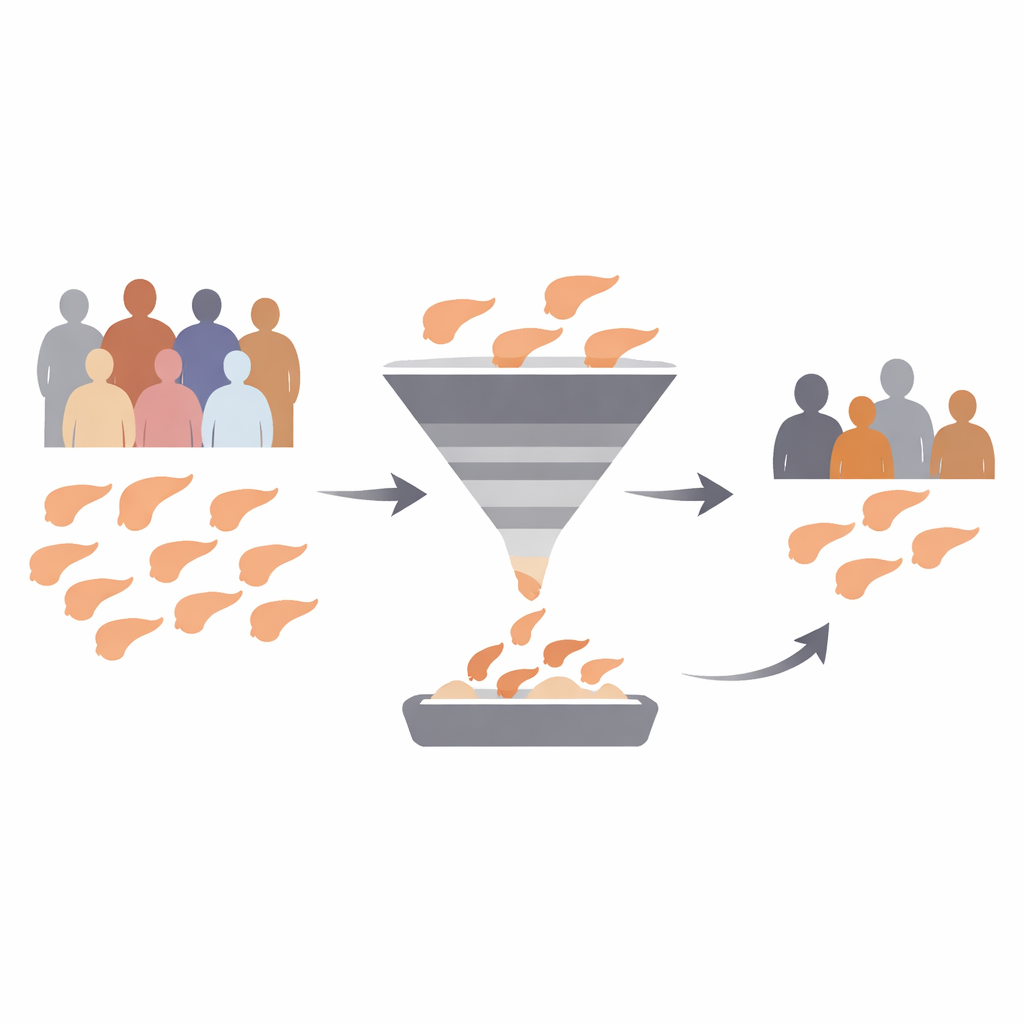
Fewer transplants from a growing donor pool
Using data from the national U.S. transplant registry between 2010 and 2024, the researchers examined more than 133,000 organ donors whose pancreases were considered for transplant. Only about one in ten of these pancreases were actually transplanted, and the number of pancreas transplants per year has steadily fallen during this period. At the same time, certain types of donors—such as those who die after their heart stops (rather than from brain death), older adults, and people with infections or a history of drug use—have become more common. This tension between rising potential and shrinking use raises an urgent question: which donor features are driving these decisions?
Key donor traits that tip the scales
The team used advanced statistical models to study how dozens of donor characteristics relate to whether a pancreas is used. They found that three continuous traits—donor age, body mass index (BMI), and kidney function (measured by peak creatinine)—stand out as especially important. Pancreases from young, lean donors in their 20s were most likely to be used, while organs from donors older than about 40, or with higher BMI, were much less likely to be chosen. Donor type was also crucial: pancreases from donors who died after circulatory death (DCD) had about 92% lower odds of being transplanted than those from donors who died after brain death (DBD), even though other research suggests outcomes can be similar.
How attitudes changed over time
Because medical practice evolves, the researchers looked at how the influence of key donor traits shifted over the 14-year study window. They found growing reluctance to use pancreases from older donors and from DCD donors, despite increasing evidence that these organs can work well when carefully selected. In contrast, the field has become more open to donors once thought too risky. Pancreases from people with hepatitis C antibody, and from donors with a history of injecting drugs, were rarely used before about 2016. As antiviral treatments for hepatitis C have become highly effective and attitudes toward infection risk have changed, these donors are now far more likely to be accepted, sometimes at rates close to donors without these conditions.
Reading real-world decision patterns
Instead of relying on doctors’ stated reasons for turning down an organ—which often oversimplify complex judgments—the study treated the final outcome (used or not used) as the most honest record of decision-making. By modeling all donor traits together and allowing for curved, rather than straight-line, relationships, the authors could see which factors truly carry the most weight and how their influence bends over time. They also checked that regional differences among organ procurement organizations did not change the overall picture: age, BMI, and donor type remained the dominant drivers of pancreas use across the country.
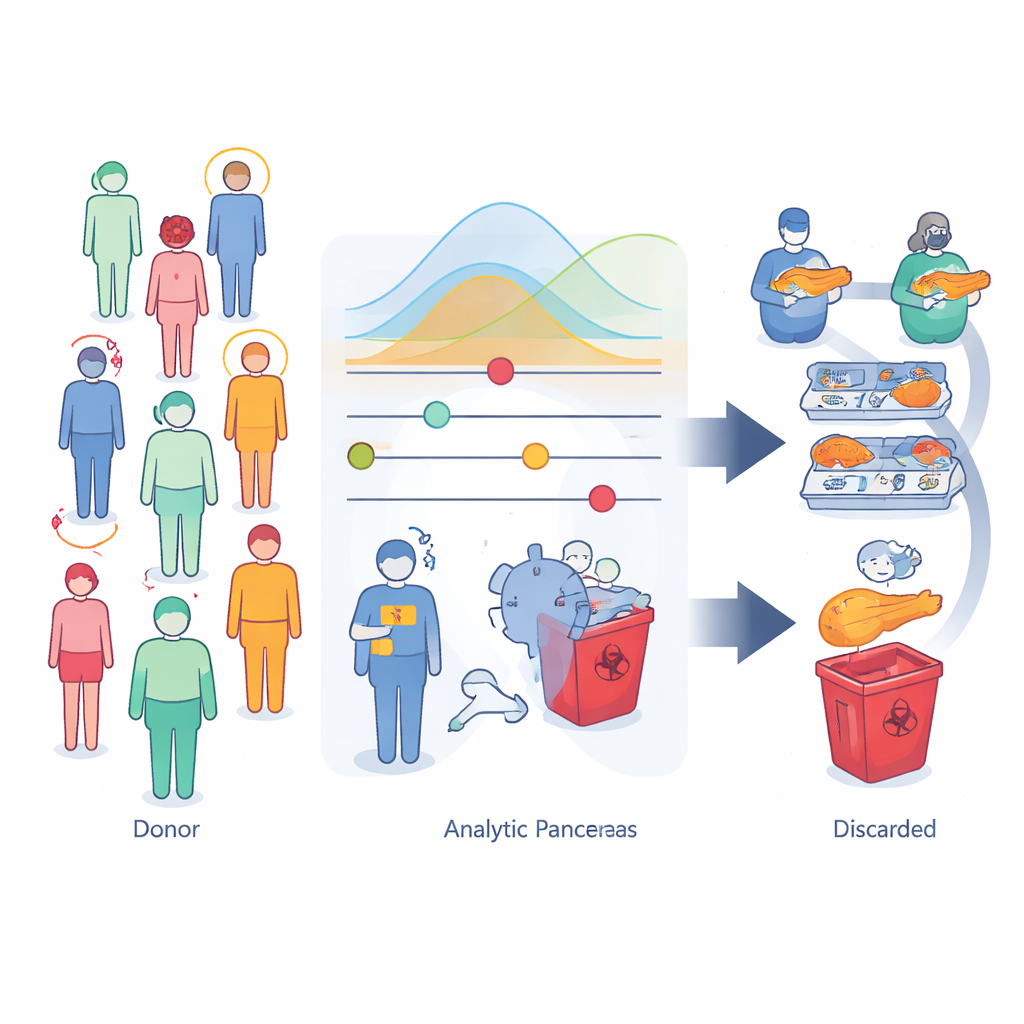
What this means for patients and policy
To a lay reader, the main message is that many pancreases that could help people with diabetes may never reach the operating room, particularly from older donors and from those who die after circulatory death. At the same time, growing acceptance of donors with hepatitis C or a history of drug use shows that practice can change when good evidence and effective treatments are available. By highlighting which donor features most strongly affect use—and where current caution may be out of step with outcomes—this work points to practical ways to expand the donor pool. If health systems can safely make better use of underutilized donor groups, more patients with diabetes could gain timely access to a transplant that dramatically improves both health and quality of life.
Citation: Patel, C., Kourounis, G., van Leeuwen, L. et al. Modelling donor factors influencing pancreas transplant utilization and evolution of decision-making over time. Commun Med 6, 231 (2026). https://doi.org/10.1038/s43856-026-01506-9
Keywords: pancreas transplantation, organ donor selection, diabetes treatment, donation after circulatory death, hepatitis C positive donors