Clear Sky Science · en
Association of pharmacotherapy with all-cause mortality among patients with irritable bowel syndrome
Why this matters to everyday patients
Irritable bowel syndrome (IBS) is more than just a "sensitive stomach"—it is a chronic condition that can disrupt work, social life, and mental well-being for millions of people. Many patients rely on long-term medications to control abdominal pain, diarrhea, or constipation. Yet most of us assume that if our doctor prescribes a pill, it has been thoroughly vetted for long-term safety. This study asks a simple but crucial question: for people with IBS, are some of the most commonly used drugs quietly linked to a higher chance of dying years down the line?
A closer look at IBS and its treatments
IBS affects roughly 10–15% of people worldwide and is especially common among younger adults and women. Symptoms range from cramping and bloating to bouts of diarrhea (IBS-D), constipation (IBS-C), or a mix of both. To manage these problems, doctors can choose from a long list of medicines. Some target the gut directly—such as antispasmodics that calm intestinal muscle, or drugs that help constipation or diarrhea. Others, particularly antidepressants, act on the nervous system and are often used to dampen pain signals between the gut and the brain. While short-term studies show that many of these drugs help symptoms, much less is known about what happens to patients who take them for many years.
How the researchers used real-world data
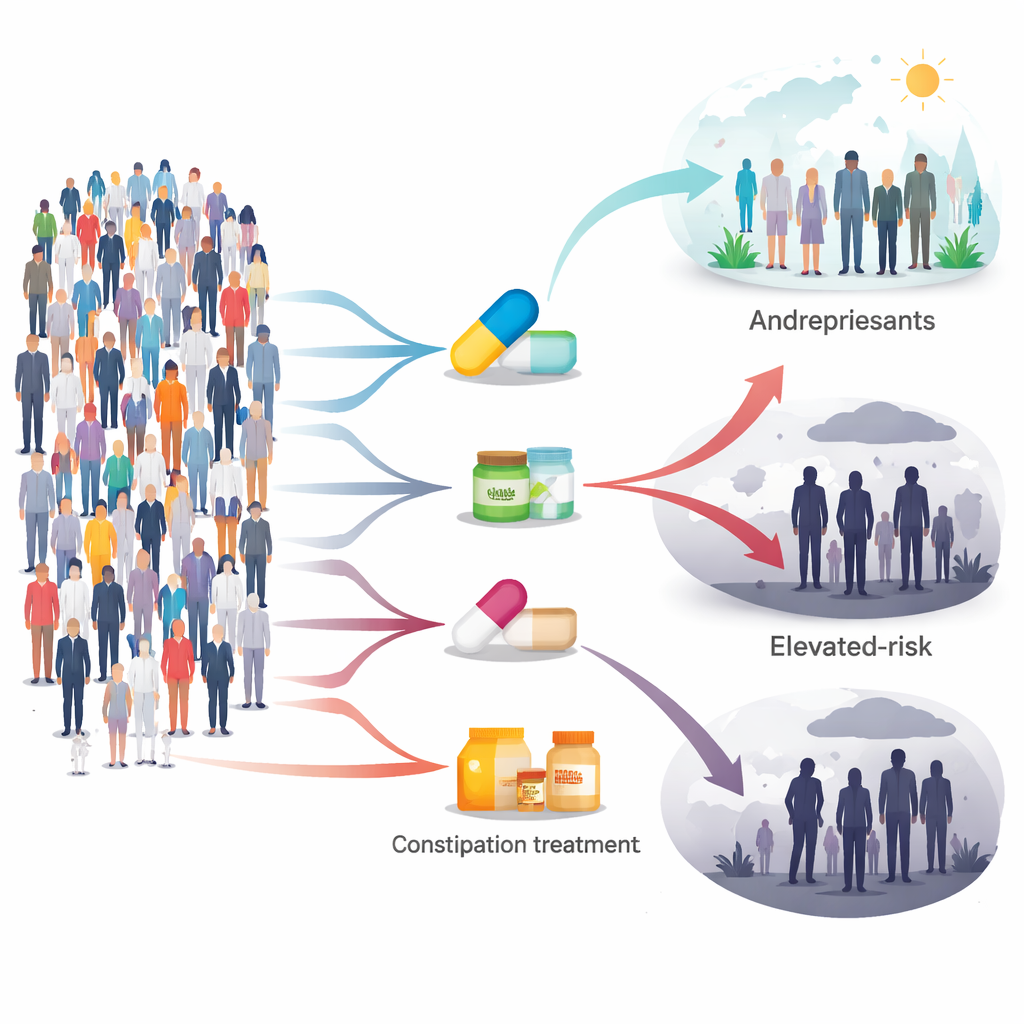
To fill this gap, the authors tapped into a massive U.S. electronic health record network including about 143 million people across all 50 states. From this, they identified more than 669,000 adults with IBS between 2005 and 2023. They then compared those who were prescribed particular IBS-related medicines with similar patients who never received those drugs. Advanced matching techniques were used to balance age, sex, weight, other diseases, and many additional factors that might influence health and survival. The team then followed people for up to 10–15 years after they started a medication, looking at overall death from any cause rather than a single disease. This "big data" approach cannot prove cause and effect, but it can reveal concerning patterns that might not show up in shorter, smaller clinical trials.
What they found about antidepressants and IBS drugs
The standout signal was linked to antidepressants. In people with IBS, those taking antidepressants had a higher risk of dying during follow-up than carefully matched patients who did not take these drugs. This pattern held across many types of antidepressants—including commonly prescribed classes such as SSRIs, SNRIs, and tricyclics, as well as mirtazapine—and across different ages, sexes, body sizes, and racial or ethnic groups. The more often patients refilled their antidepressant prescriptions, the higher the observed risk became, suggesting that longer exposure might matter. In contrast, antispasmodics—drugs that relax the gut—were widely used but were not associated with an increased risk of death.
Different risks for diarrhea and constipation types
When the researchers zoomed in on specific IBS types, the picture became more nuanced. Among patients with diarrhea-predominant IBS, two older antidiarrheal drugs that act on opioid-like receptors in the gut, loperamide and diphenoxylate, were linked to a higher risk of death over time. Other diarrhea treatments, including rifaximin, eluxadoline, and bile acid–binding drugs, did not show this signal. For constipation-predominant IBS, commonly used laxatives such as polyethylene glycol and newer constipation drugs that draw fluid into the bowel or stimulate secretion showed no significant link to increased mortality. However, once again, IBS-C patients who used antidepressants appeared to face a higher risk compared with similar patients who did not.
Possible reasons and important caveats
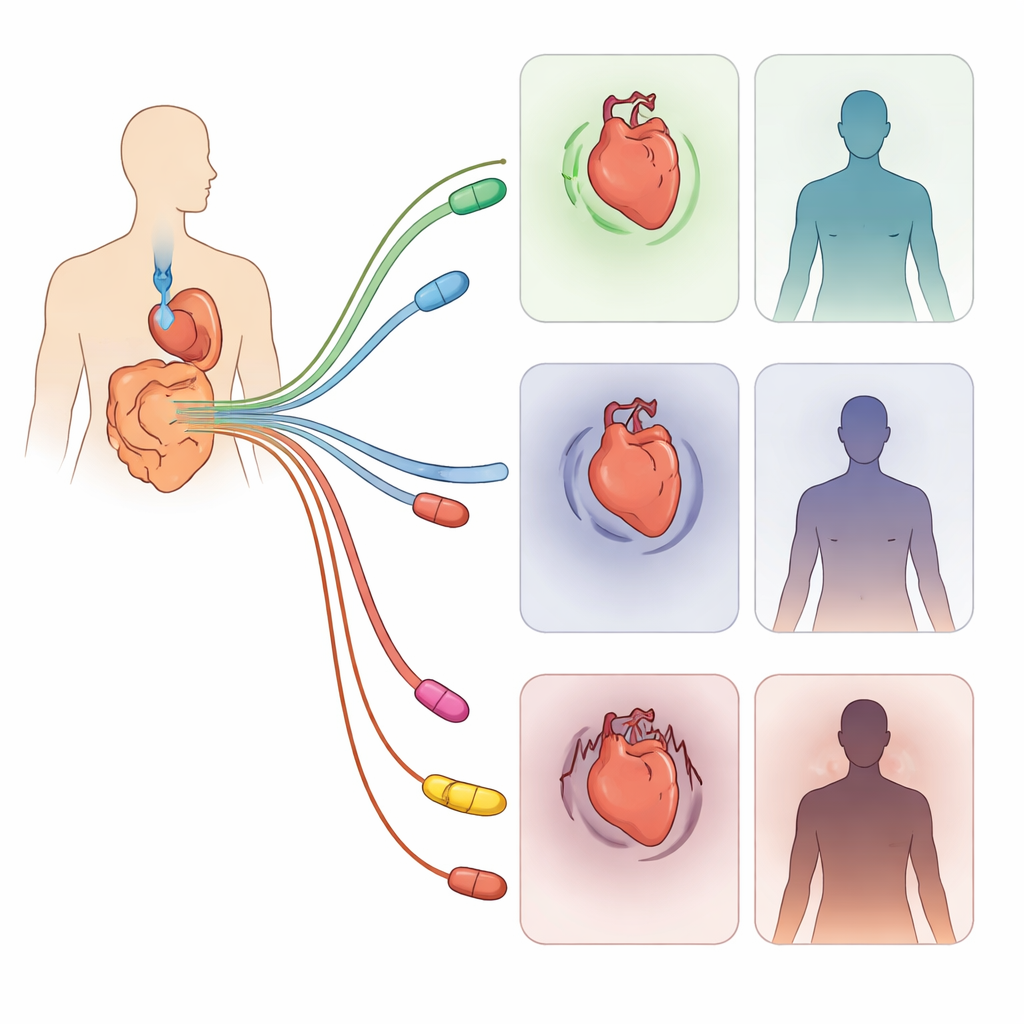
Why might antidepressants and certain antidiarrheals be tied to higher death rates in this population? The authors point to known effects of these medicines: some can disrupt heart rhythm, raise blood pressure, increase the chance of stroke, promote weight gain, or contribute to falls, bleeding, and breathing problems. In their data, IBS patients on antidepressants also had more heart disease, strokes, hypertension, obesity, and even suicidal thoughts than non-users. Opioid-like antidiarrheals, especially if misused or taken at high doses, have been linked to serious heart rhythm disturbances. Still, the study is observational, meaning unmeasured factors might partly explain the risks. The database also cannot reliably reveal the exact cause of death or whether patients took their medications as prescribed.
What this means for people living with IBS
For patients and clinicians, the message is not to panic or abruptly stop medications, but to reconsider how and when they are used. The study suggests that, in IBS, antidepressants and certain opioid-like antidiarrheals may carry more long-term risk than previously appreciated, while many gut-focused drugs appear safer in this regard. Because IBS is chronic and often begins at a young age, even small changes in risk can matter when multiplied over decades. The authors argue that treatment plans should lean more heavily on options with reassuring long-term safety data, and that antidepressants should be prescribed with particular care, weighing potential benefits against these emerging concerns. Future studies, ideally with more detailed clinical information, will be essential to confirm these findings and to guide safer, more personalized IBS care.
Citation: Mehravar, S., Yeo, Y.H., Pimentel, M. et al. Association of pharmacotherapy with all-cause mortality among patients with irritable bowel syndrome. Commun Med 6, 176 (2026). https://doi.org/10.1038/s43856-026-01498-6
Keywords: irritable bowel syndrome, antidepressant safety, antidiarrheal drugs, long-term medication risk, electronic health records